

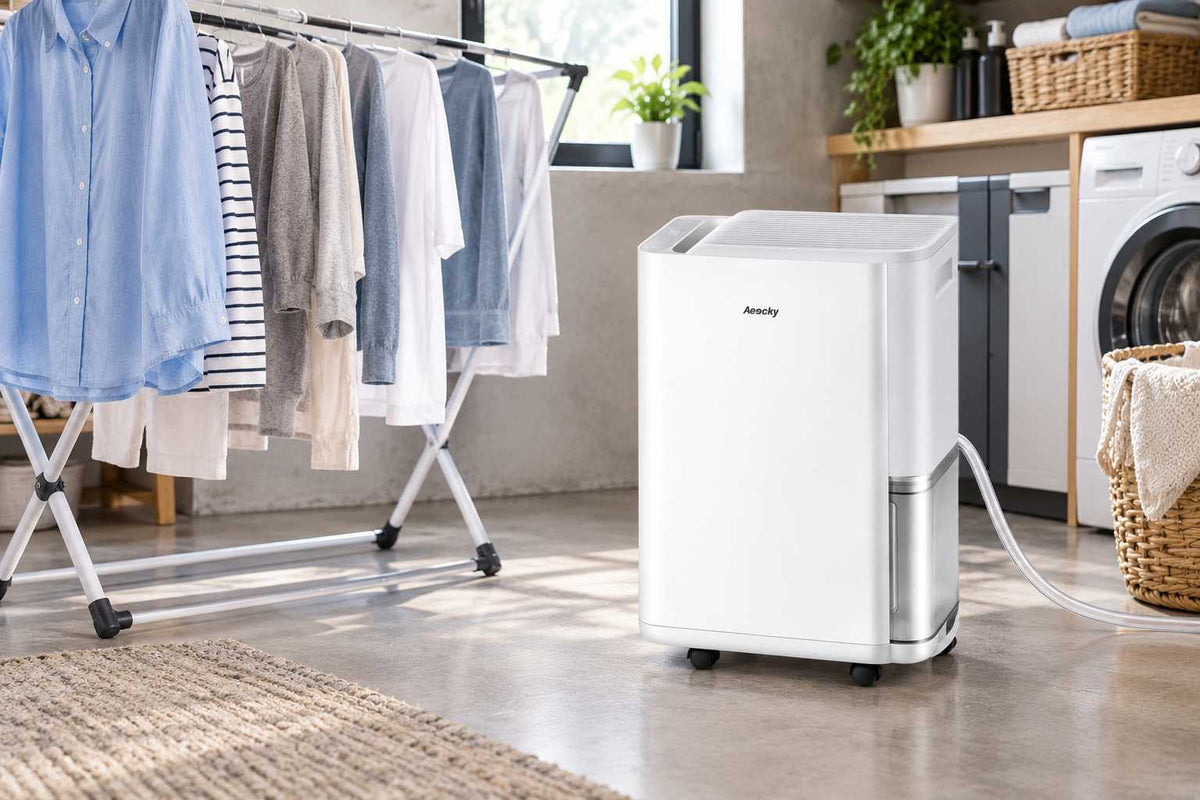
A dehumidifier can make indoor laundry drying easier by removing moisture from the air around wet clothes. The basic idea is simple: hang clothes with enough space between them, place the Dehumidifier nearby, keep the drying area reasonably enclosed, and allow air to circulate. If you are wondering can a dehumidifier dry clothes, the answer is yes, although drying speed depends on the amount of water in the clothes, room conditions, airflow, and the dehumidifier's capacity. Here is how to use one effectively without turning the room into a damp space.
Can a Dehumidifier Dry Clothes?
Yes. A dehumidifier can help remove moisture released by wet laundry as it dries.
Normally, water in wet clothes evaporates into the surrounding air. If the room becomes humid, evaporation slows down. A dehumidifier continuously removes some of that moisture, allowing the air to take on more water from the clothes.
That is why does a dehumidifier help dry clothes is a useful question when outdoor drying is not practical. It does not pull water directly out of the fabric. Instead, it helps create a drier environment where evaporation can continue.
Why Does a Dehumidifier Help Dry Clothes?
How Moisture Leaves Wet Clothes
Wet laundry dries as water moves from the fabric into the surrounding air. The process is affected by airflow, temperature, humidity, fabric thickness, and how much water remains after the washing cycle.
A strong spin cycle can remove a significant amount of water before clothes even reach the drying rack. The dehumidifier then deals with the moisture that enters the room during evaporation.
Why Indoor Humidity Slows Drying
If a room becomes very humid while laundry is drying, the difference between the moisture level in the clothes and the surrounding air becomes smaller. Drying can slow down.
A dehumidifier helps by continuously collecting moisture from the air. For a general explanation of the process, you can read what a dehumidifier does.
How to Dry Clothes Indoors With a Dehumidifier
If you want to know how to use a dehumidifier to dry clothes, follow a few simple steps.
Step 1: Remove as Much Water as Possible
Start with the washing machine. Use an appropriate spin cycle before hanging the clothes.
This is one of the simplest dehumidifier clothes drying tips because less water in the fabric means less moisture needs to evaporate into the room.
Do not place dripping-wet clothes directly on the drying rack if you can avoid it.
Step 2: Hang Clothes With Enough Space Between Them
Give each item room to breathe.
Avoid placing shirts, trousers, towels, and other heavy fabrics directly against each other. Air needs to reach the surfaces of the clothes for moisture to evaporate efficiently.
Large towels and thick garments usually need more space than lightweight shirts.
Step 3: Position the Dehumidifier Near the Drying Rack
If you are wondering where to place a dehumidifier when drying clothes, put it close enough to the drying area to collect the humid air efficiently, while maintaining the clearance recommended for the appliance.
Do not cover the air intake or outlet with clothing. The drying rack should also not block the dehumidifier's airflow.
For smaller laundry areas, a portable model such as the Aeocky Arion dehumidifier can be convenient because it is designed for portable indoor use.
Step 4: Keep the Drying Area Enclosed
Close the door to the drying room when practical. This prevents humid air from spreading throughout the rest of the home.
An enclosed area also makes it easier for the dehumidifier to control the moisture level in a defined space.
However, the room should still have enough space around the dehumidifier for normal airflow.
Step 5: Improve Air Circulation
A dehumidifier removes moisture from the air, but air movement also matters.
If possible, use a fan to move air gently around the drying rack. Leave gaps between garments and avoid packing the rack too tightly.
This combination can help how to dry laundry faster indoors by encouraging moisture to leave the fabric while the dehumidifier removes it from the surrounding air.
Step 6: Check the Clothes as They Dry
Thicker areas such as waistbands, pockets, seams, and towel edges can remain damp after thinner sections feel dry.
Check these areas before putting the laundry away.
If the clothes still feel cool or damp, give them more time rather than assuming the outside surface is completely dry.
Where to Place a Dehumidifier When Drying Clothes
The best position is usually near the drying rack without blocking the rack or the appliance's airflow.
Avoid placing the unit directly underneath dripping clothes. Water should never be allowed to fall onto the appliance.
You also do not need to place the dehumidifier immediately beside every item. The goal is to create good air circulation throughout the drying space.
For a larger laundry area, capacity becomes more important. Aeocky's Rhea Series whole-house dehumidifier is designed for larger home applications, so the appropriate model depends on the space and moisture load.
How to Dry Clothes Faster With a Dehumidifier
If you want to know how to dry clothes faster with a dehumidifier, focus on reducing the amount of water and improving air movement.
Do not overcrowd the drying rack. More space between garments exposes more fabric surface to moving air.
Use a suitable spin cycle. Removing more water during washing reduces the drying workload.
Keep air moving. A gentle fan can help prevent humid air from sitting around the clothes.
Control the room environment. A dehumidifier works more effectively when it can continuously remove moisture from the drying area.
These simple changes are often more useful than simply increasing the dehumidifier's operating time.
How Long Does It Take to Dry Clothes With a Dehumidifier?
There is no single answer to how long does it take to dry clothes with a dehumidifier.
Lightweight shirts may dry relatively quickly, while towels, denim, sweaters, and other thick fabrics can take much longer.
Drying time depends on:
-
How wet the clothes are after washing
-
Fabric thickness
-
Number of garments
-
Room temperature
-
Starting humidity
-
Air circulation
-
Dehumidifier capacity
Rather than relying on a fixed number of hours, check the thickest parts of the clothing.
How to Dry Clothes Indoors Without a Dryer
If you are looking for how to dry clothes indoors without a dryer, a drying rack combined with a dehumidifier is one practical approach.
Hang the clothes separately, remove excess water through the washing machine's spin cycle, place the rack in a suitable room, and run the dehumidifier nearby.
This setup can be particularly useful during rainy weather or when outdoor drying is not available.
If you regularly dry laundry indoors, the best dehumidifier for laundry rooms guide can help you compare the features that matter for a dedicated laundry space.
Common Mistakes When Drying Laundry With a Dehumidifier
One common mistake is placing too many clothes on one rack. The outside of the pile may feel dry while the middle remains damp.
Another is placing the dehumidifier where furniture or clothing blocks its airflow.
It is also easy to forget about the water collected by the unit. If the tank fills and the appliance stops, drying may slow down. Continuous drainage can be useful for longer drying sessions when the setup allows it.
Finally, do not rely only on surface dryness. Check thick seams, pockets, collars, and folds before storing clothes.
Final Thoughts
Learning how to dry clothes indoors with a dehumidifier is mostly about managing moisture and airflow. Start by removing as much water as possible during the washing cycle, then hang clothes with plenty of space between them. Position the dehumidifier near the drying rack without blocking airflow, and keep the drying area reasonably enclosed. A fan can provide additional air movement when needed. Drying time will vary by fabric, room conditions, and moisture level, so check thicker parts of the clothes before putting them away. With the right setup, a dehumidifier can be a practical way to make indoor laundry drying more manageable.



Leave a comment
This site is protected by hCaptcha and the hCaptcha Privacy Policy and Terms of Service apply.