


Window condensation usually appears when warm, moisture-filled indoor air meets a colder glass surface. If the moisture level inside your home is too high, a Dehumidifier can help by removing water from the air before it condenses on the glass. But simply turning on a unit is not always enough. You need to identify where the moisture is coming from, choose a suitable location, and use an appropriate humidity setting. This guide explains how to reduce window condensation with a dehumidifier, including what to do during winter and how to tell when the problem may have another cause.
Why Do My Windows Have Condensation?
If you are asking why do my windows have condensation, start by checking where the water is forming.
Indoor Condensation vs. Outdoor Condensation
Condensation on the room-facing side of the glass is usually related to indoor moisture and a cold window surface. Showers, cooking, drying clothes, and everyday activities can all add moisture to indoor air.
Outdoor condensation is different. It forms on the exterior surface of the glass and is not necessarily a sign that indoor humidity is too high.
The most useful target for a dehumidifier is indoor window condensation.
Condensation Between Window Panes
If moisture appears between the panes of a double- or triple-glazed window, lowering indoor humidity may not solve the problem. It can indicate an issue with the window's sealed unit.
So before deciding how to get rid of condensation on windows, make sure you know which surface is actually wet.
Can a Dehumidifier Stop Window Condensation?
Yes, a dehumidifier can reduce or sometimes stop window condensation when excess indoor humidity is the main cause.
If you are wondering can a dehumidifier stop window condensation, the basic principle is straightforward: the unit removes moisture from indoor air, lowering the amount of water vapor available to condense on cold glass.
This is also why does a dehumidifier help with condensation is closely connected to indoor humidity control. A dehumidifier cannot make a cold window warmer, but reducing the moisture in the room can make condensation less likely.
For a basic explanation of moisture removal, see what a dehumidifier does.
How to Reduce Window Condensation With a Dehumidifier
If you want to know how to stop condensation on windows with a dehumidifier, follow these steps.
Step 1: Check the Indoor Humidity
Do not guess the humidity level.
A simple hygrometer can show the relative humidity in the room. This gives you a useful starting point before changing your dehumidifier settings.
If humidity is consistently high and condensation appears on the inside of the windows, moisture control is worth addressing.
For more background on household humidity, see this guide to ideal indoor humidity levels.
Step 2: Identify Where the Moisture Is Coming From
A dehumidifier is more effective when you also reduce unnecessary moisture sources.
Think about what happens in the room during the day. Showering, cooking, indoor laundry, boiling water, and other activities can release moisture into the air.
If condensation is particularly heavy after a shower or while cooking, use the appropriate exhaust fan as well. The goal is not to make the dehumidifier handle every source of moisture by itself.
Step 3: Choose the Right Dehumidifier Location
A dehumidifier for window condensation should normally be positioned in the same room where condensation is occurring.
Leave enough clearance around the unit for proper airflow. Avoid pushing it directly against a wall, hiding it behind furniture, or placing curtains or other objects over the air intake or outlet.
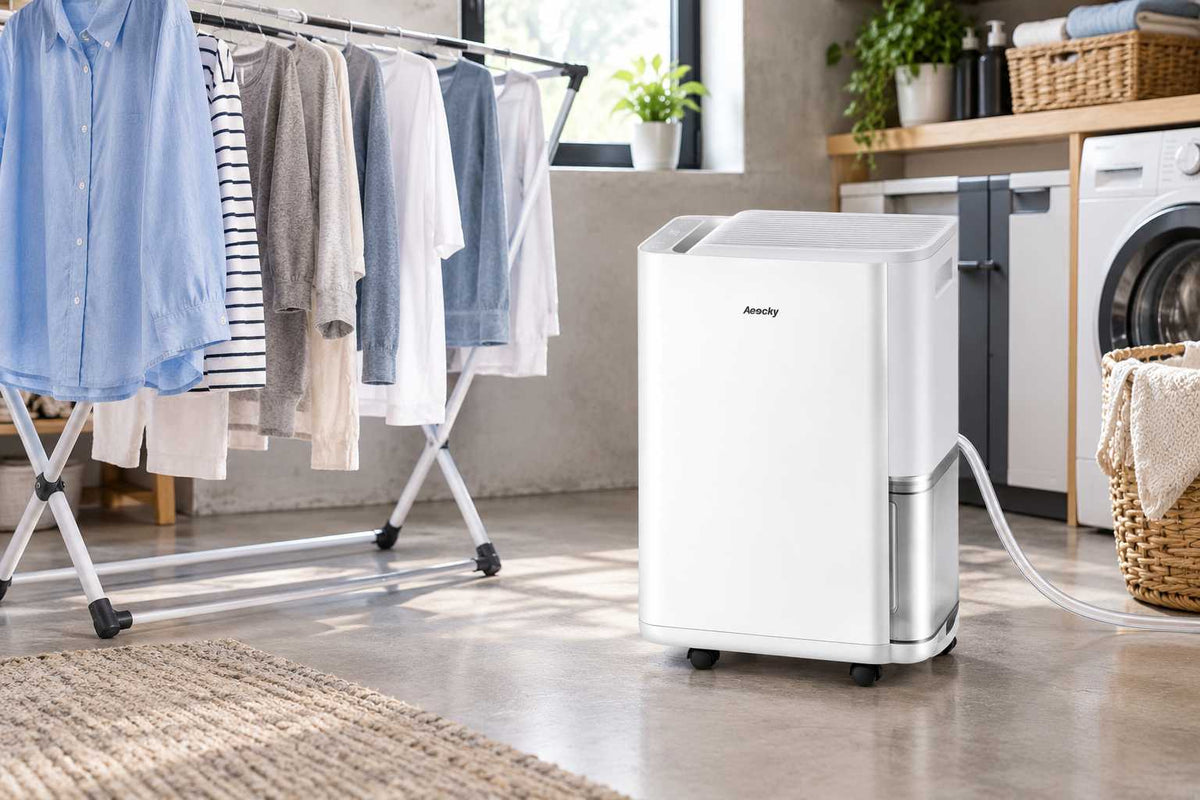
For a bedroom with condensation on the windows, a compact portable option such as the Aeocky Arion Dehumidifier may be suitable depending on the room size and moisture load.
The objective is simple: allow the unit to circulate and process the humid room air effectively.
Step 4: Set the Dehumidifier to a Suitable Humidity Level
The right dehumidifier setting for window condensation depends on the room, outdoor temperature, window type, and starting humidity.
Avoid assuming that the lowest possible setting is always better. Excessively dry indoor air is not the goal.
Instead, use the humidity reading as a guide and adjust gradually. If condensation continues, check whether the room is still producing a large amount of moisture or whether the window surface is unusually cold.
Step 5: Improve Air Circulation
Humidity can vary within a room.
A closed curtain, large piece of furniture, or poorly ventilated corner can restrict air movement around a window. This is particularly relevant when learning how to reduce moisture on windows in bedrooms or other enclosed spaces.
Leave some space around the window area and allow indoor air to circulate.
A fan can also help move air around the room, but it does not remove moisture by itself. The dehumidifier handles the moisture removal while the fan helps distribute the air.
Step 6: Wipe Away Existing Condensation and Monitor the Result
If water has already collected on the glass or windowsill, wipe it away rather than leaving it there.
Then monitor the window over the next several hours or days.
The goal is not simply to make the glass look dry for a short time. You want to see whether condensation becomes less frequent as indoor humidity is brought under control.
What Is the Best Dehumidifier Setting for Window Condensation?
There is no single setting that works for every home.
The appropriate target depends on outdoor conditions, window temperature, room temperature, and the amount of moisture generated indoors.
Instead of choosing a setting based only on the weather, monitor indoor humidity with a hygrometer and adjust the dehumidifier accordingly.
If the room remains humid despite continuous operation, consider whether the unit is appropriately sized for the space. For larger areas, a higher-capacity model may be more appropriate than a compact portable unit.
How to Prevent Window Condensation in Winter
Learning how to prevent window condensation in winter requires more than running a dehumidifier.
Cold glass makes condensation easier to form, so winter can expose humidity problems that are less noticeable during warmer months.
Try to:
- Monitor indoor humidity regularly.
- Use kitchen and bathroom exhaust fans when generating moisture.
- Avoid drying large amounts of laundry in poorly ventilated rooms.
- Keep air circulating around windows.
- Avoid blocking warm indoor air from reaching the glass completely.
- Use a dehumidifier when indoor humidity remains high.
If you are wondering how to keep windows dry in winter, the key is to manage both indoor moisture and the conditions around the window.
How to Stop Condensation on Bedroom Windows
Bedrooms can be especially prone to condensation because people release moisture while sleeping and bedrooms are often kept closed overnight.
To understand how to stop condensation on bedroom windows, first check the room's humidity in the morning. If it rises significantly overnight, moisture management may help.
Place the dehumidifier where it can circulate air through the bedroom without blocking walkways or interfering with normal use of the room.
Do not position it so close to the window that curtains or furniture restrict its airflow.
For general moisture-management techniques, you can also see this guide on how to dehumidify a room.
What If Condensation Continues After Using a Dehumidifier?
If you have tried to how to prevent window condensation through humidity control but condensation continues, look beyond indoor humidity.
First, check whether the water is on the inside, outside, or between the panes.
Then consider the window surface itself. Very cold glass can reach the point where condensation forms even when room humidity is not particularly high. Improving insulation, addressing drafts, or evaluating the window's condition may be necessary.
Persistent moisture around frames and sills should also not be ignored. Repeated wetting can affect surrounding materials over time.
A dehumidifier is a moisture-control tool, not a replacement for repairing leaks, damaged window seals, or other building problems.
Final Thoughts
The most practical way to how to reduce condensation indoors is to control the amount of moisture in the air while keeping air moving around cold surfaces. A dehumidifier can help when high indoor humidity is contributing to condensation, but it works best alongside sensible ventilation and moisture-reduction habits. Start by measuring humidity, identify the main moisture sources, position the unit correctly, and choose a reasonable setting rather than simply running it at maximum output. If condensation remains after humidity is under control, investigate the window itself. That distinction can save time and prevent you from treating the wrong problem.


Leave a comment
This site is protected by hCaptcha and the hCaptcha Privacy Policy and Terms of Service apply.