

There is a moment every homeowner dreads. You walk into your basement after a humid stretch of weather, and the smell hits you first — that distinctive, heavy, musty odor that means moisture has gotten into everything. Your walls. Your stored boxes. The carpet that seemed fine last month.
You already know what happens next. You run the dehumidifier. You open the windows. You wait. And then you wait some more.
The question is: could it have been prevented? And more specifically — is an Energy Star dehumidifier actually worth the investment, or is it just a premium label?
What Energy Star Actually Requires (And Why Most Brands Do Not Qualify)
ENERGY STAR certification is not easy to earn. For dehumidifiers, the current Version 6.0 standard sets thresholds for energy factor, standby power consumption, and real-world performance at multiple temperature and humidity levels.
But the "ENERGY STAR Most Efficient" designation goes further — it is reserved for the top performers in efficiency. In 2024, fewer than 5% of dehumidifiers on the US market carried this designation.
The Math That Makes the Decision Easy
According to the Department of Energy, the average American household runs a dehumidifier 8–12 hours per day during humid months. A standard dehumidifier might consume $150–$250 in electricity annually. An ENERGY STAR Most Efficient model like the Leo-Lite reduces that by up to 50% — saving up to $1,000 per year.
Over a three-year warranty period, the premium between an efficient unit and a standard one typically pays for itself within the first year of operation.
The Leo-Lite: Entry-Flagship Performance Without the Entry-Level Compromises
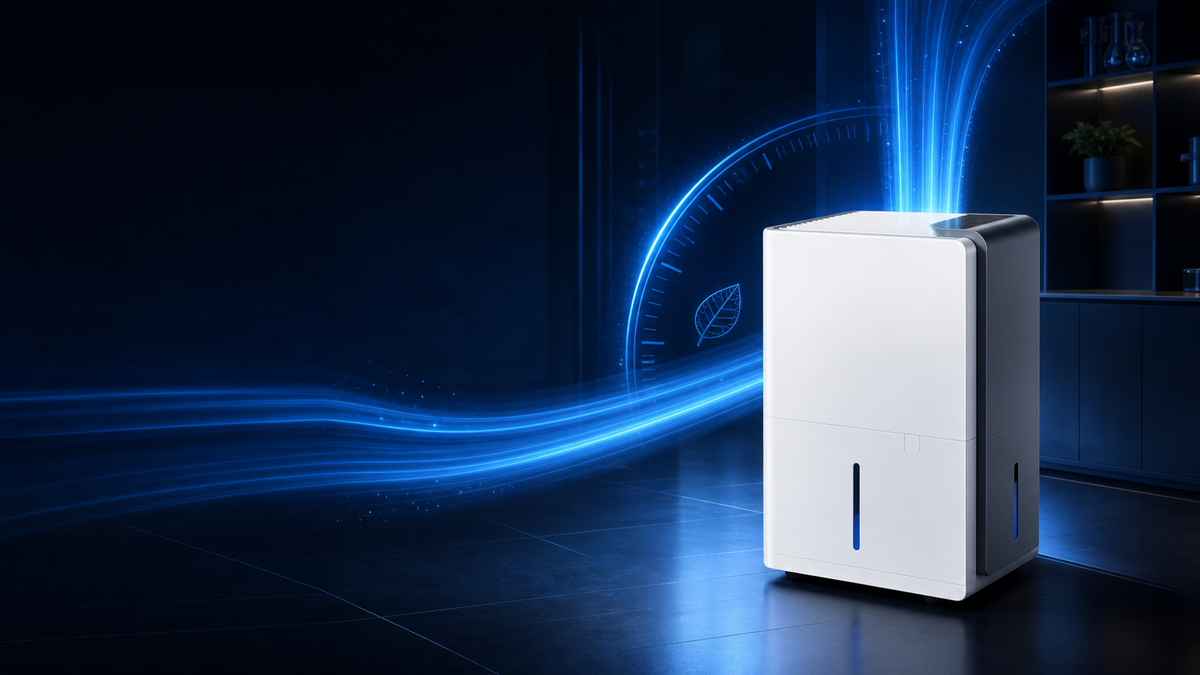
The Leo-Lite uses the same high-efficiency Rotor Compressor Pro+, the same 7mm pure copper internal thread tubes, and the same blue hydrophilic aluminum foil heat exchange system as AEOCKY flagship models. At 74 pints per day and coverage for spaces up to 4,500 square feet, it is optimized for the majority of American homes.
- 74 pints/day at 95°F, 95% RH — handles summer humidity, not just mild conditions
- 44dB quiet operation — runs quietly enough for a bedroom-level space
- Smart humidity control — millisecond-level detection with automatic adjustment
- Advanced auto-defrost — operates reliably in basements as cool as 42°F
- Pure copper components throughout — no aluminum tubes that fail within a year
- 3-year warranty — certified ETL & RoHS
The Honest Assessment
Is an Energy Star dehumidifier worth it? Only if it is actually efficient — not just labeled. The Leo-Lite earns its ENERGY STAR Version 6.0 certification through engineering, not marketing.
Explore the and see what Leo-lite entry-flagship efficiency actually looks like.


Leave a comment
This site is protected by hCaptcha and the hCaptcha Privacy Policy and Terms of Service apply.