

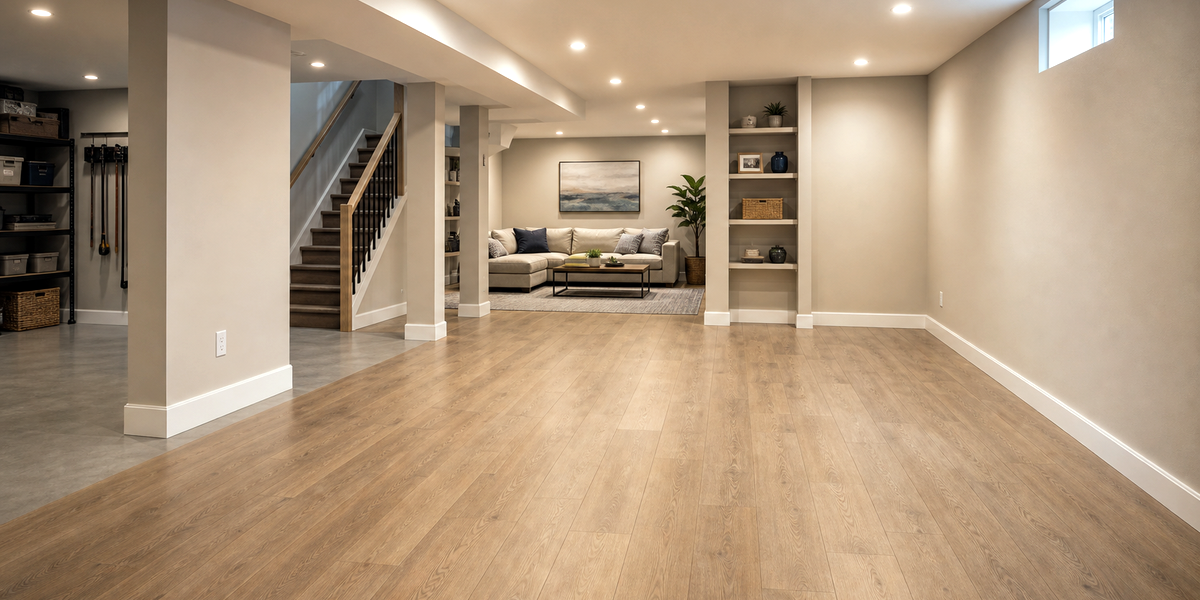
Every winter, something frustrating happens in millions of American basements. The temperature drops. The furnace runs. And yet your basement still feels damp, clammy, and cold — not the comfortable cold of a well-ventilated space, but the kind of cold that seeps into your bones and never quite leaves.
That is not just temperature. That is humidity. And it is quietly costing you more than you realize.
When Ordinary Dehumidifiers Fail
Standard compressor dehumidifiers are designed to work best above 65°F. Below that threshold, their coils frost over, their efficiency plummets, and many simply shut off entirely.
The result: your dehumidifier runs constantly but removes almost nothing. According to ENERGY STAR, the performance gap between a standard dehumidifier and one rated for low-temperature operation can be as much as 40–60% in unconditioned basements during winter months.
What "Most Efficient" Actually Means for Cold Basements
The ENERGY STAR Most Efficient 2025 designation is not a marketing label — it is a performance threshold. To earn it, a dehumidifier must demonstrate superior moisture removal at temperatures as low as 42°F, defrost cycles that do not interrupt moisture removal, and sustained efficiency across real-world operating conditions.
The Rhea-003 was engineered specifically for this. With a 140 pint per day moisture removal capacity and coverage for spaces up to 7,000 square feet, it handles the extreme, inconsistent environment of a real American basement in winter.
- 140 pints/day at peak load — strong enough for large, open basements and whole-floor coverage
- Intelligent low-temperature defrost system — operates reliably down to 42°F without cycling off
- Advanced compressor design — maintains efficiency in conditions where most units fail
- Millisecond-level humidity detection — responds to moisture changes instantly
- Pure copper heat exchange components — built for long-term reliability
The Real Cost of Doing Nothing
A damp basement in winter is not just uncomfortable — it is a liability. Mold growth can begin within 24–48 hours of sustained humidity above 60% RH. The EPA estimates that indoor air quality violations related to moisture and mold cost American homeowners an average of $3,000–$7,000 in remediation.
Who the Rhea-003 Is Built For
Large basements, whole-floor dehumidification, cold basements that stay below 65°F through winter, and homes in northern climates where basements routinely face temperatures that disable standard units.
The Quiet Factor
At 50dB on its lowest fan setting, the Rhea-003 runs quietly enough for a basement that is adjacent to or part of a living space.
The Rhea-003 comes with a 3-year warranty and ETL/RoHS certification.
See how the Rhea-003 handles your basement hardest months.


Leave a comment
This site is protected by hCaptcha and the hCaptcha Privacy Policy and Terms of Service apply.