

Dehumidifier

Best Dehumidifiers for Home in 2026: How to Choose the Right Model

Best Dehumidifiers for Home in 2026: How to Choose the Right Model
Choosing the best dehumidifier for home use is less about finding one model that works for everyone and more about matching the unit to your space. Room size, humidity level, noise, drainage, energy efficiency, and operating conditions all affect which dehumidifier makes sense for your home. A small bedroom has different requirements from a damp basement or a large living area. This guide explains how to choose the best dehumidifier for home use and what to look for when comparing different types and models.

What Makes a Dehumidifier Right for Your Home?

A good home dehumidifier should remove enough moisture for the space without creating unnecessary noise, energy use, or maintenance.
The right choice usually depends on four factors:
  • Room size: Larger spaces generally need greater moisture-removal capacity.
  • Humidity level: A mildly humid room may need less capacity than a consistently damp basement.
  • Location: Bedrooms, bathrooms, basements, and large living spaces have different requirements.
  • Daily use: A unit used occasionally has different needs from one that runs for many hours every day.
For more background on moisture removal and how these appliances work, see our guide to what a dehumidifier does.

How to Choose the Best Dehumidifier for Home

  1. Start With Room Size and Moisture Level

The first step is to consider where the dehumidifier will operate.
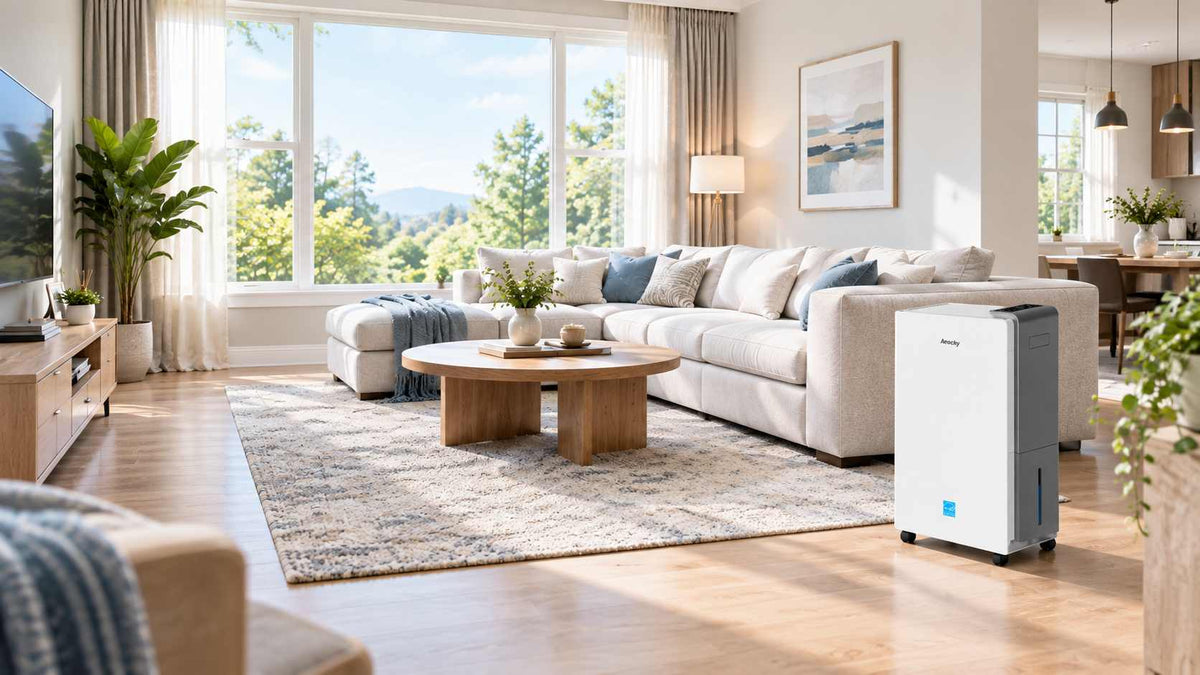
A compact room such as a bedroom or home office may work well with a portable unit. Larger living areas, basements, and other moisture-prone spaces may require a higher-capacity model.
Room size alone is not enough. Think about how damp the space feels, whether condensation appears on windows, how frequently the area becomes humid, and whether moisture problems occur seasonally or throughout the year.
If you are dealing with a particularly large area, our guide on how to choose the best dehumidifier for large rooms provides more specific considerations.
  1. Choose the Right Dehumidifier Capacity

Dehumidifier capacity refers to how much moisture a unit can remove over a given period.
For home use, capacity should be matched to both the size and moisture conditions of the room. Choosing a unit that is too small may require longer operating times, while a unit that is much larger than necessary may take up more space than you need.
For whole-home moisture control, a larger system can make more sense than moving a portable dehumidifier from room to room. The Aeocky Rhea Series whole-house dehumidifier is designed for homeowners looking for a more centralized approach to humidity management.
The goal is not simply to choose the largest unit. It is to choose enough capacity for the actual moisture load of your home.
  1. Consider Noise Level

Noise matters when a dehumidifier operates in a bedroom, home office, or other quiet area.
For a low noise dehumidifier for bedroom use, look for a model designed with quiet operation in mind. Placement also matters. Keeping the unit on a stable, level surface and leaving sufficient space around it can help avoid unnecessary vibration and airflow noise.
If the dehumidifier will run overnight, noise should be considered alongside humidity control and automatic operation. A quieter unit is generally easier to incorporate into a regular nighttime routine.
For smaller spaces, a compact model such as the Aeocky Arion Series portable dehumidifier can be considered when portability and bedroom use are priorities.
  1. Look at Energy Efficiency

If you expect to operate a dehumidifier frequently, energy efficiency becomes an important part of the buying decision.
An energy efficient home dehumidifier should provide effective moisture removal without unnecessary energy consumption. Look for features that support efficient operation, such as adjustable humidity settings and automatic shut-off.
A humidistat is particularly useful because it allows the unit to respond to the humidity level instead of simply running continuously. This can make everyday operation more convenient and help avoid unnecessary runtime.
Energy efficiency is especially worth considering when choosing a dehumidifier for a basement, large room, or other space where moisture control may be needed for extended periods.
  1. Choose the Right Drainage Method

Water removal is another practical consideration.
A standard portable dehumidifier collects extracted moisture in a tank. You will need to empty the tank regularly unless the unit provides another drainage option.
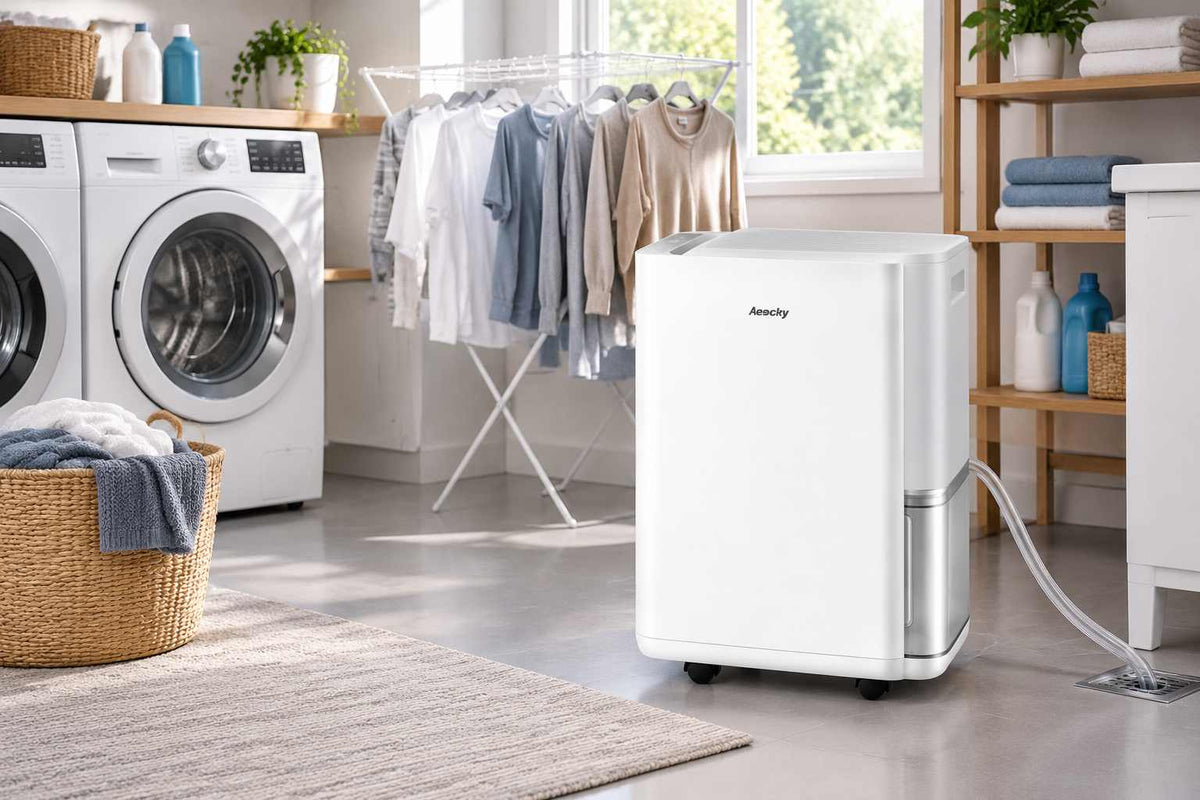
If the dehumidifier will operate for long periods, continuous drainage can be much more convenient. A drain hose can allow collected water to flow directly to a suitable drain, reducing the need to monitor the tank.
For basement applications, a unit with a pump can provide additional flexibility when the available drain is higher than the dehumidifier's outlet.
  1. Check Controls and Maintenance Features

Simple controls can make a noticeable difference in everyday use.
Useful features may include:
  • Adjustable humidity settings
  • Automatic shut-off
  • Timer functions
  • Continuous drainage
  • Washable or reusable filters
  • Auto restart
  • Clear water-level indicators
Think about how you actually plan to use the machine. A feature is useful when it solves a real problem in your home, not simply because it appears on a specification sheet.

Best Dehumidifier for Different Areas of Your Home

There is no single best home dehumidifier for every room. The ideal choice changes according to the environment.

Best Dehumidifier for Bedroom

For a bedroom, prioritize compact size, quiet operation, automatic humidity control, and convenient maintenance.
A best dehumidifier for bedroom should be easy to position without taking up excessive floor space. If you plan to operate it while sleeping, low operating noise and automatic settings become particularly important.

Best Dehumidifier for Basement

Basements often present a different moisture-control challenge. They may have higher humidity and require longer operating periods than bedrooms or living spaces.
When choosing the best dehumidifier for basement use, consider capacity, continuous drainage, operating temperature, and whether a drain pump would make installation easier.
For a basement where drainage flexibility is important, a higher-capacity model with pump-assisted drainage can be worth considering.

Best Dehumidifier for Large Rooms

Large living rooms, open-plan areas, and other spacious environments require careful attention to capacity and airflow.
The best dehumidifier for large rooms should provide sufficient moisture-removal capacity for the entire space rather than relying on a small portable unit that struggles to maintain the desired humidity level.
Consider the room's layout as well. An open space may require different positioning from several connected rooms with limited airflow between them.

Best Dehumidifier for Bathroom

Bathrooms can experience short periods of high humidity after showers and baths.
When selecting the best dehumidifier for bathroom use, consider compact dimensions, convenient placement, automatic operation, and moisture conditions. A dehumidifier can complement ventilation by helping manage excess moisture after bathing.
For more detailed bathroom-specific considerations, see How to Choose the Best Dehumidifier for Your Bathroom.

Portable or Whole-Home Dehumidifier: Which Do You Need?

The right format depends on how your home experiences excess humidity.
A portable dehumidifier is useful when moisture is concentrated in one room or when you want the flexibility to move the unit between spaces. It can be practical for bedrooms, bathrooms, offices, and individual living areas.
A whole-home dehumidifier is more appropriate when humidity is a broader household concern. Instead of treating one room at a time, it is designed for centralized moisture management.
When deciding between the two, consider the number of affected rooms, how frequently humidity occurs, installation requirements, drainage, and how much ongoing maintenance you want to handle.

How Long Does a Dehumidifier Last?

How long does a dehumidifier last? Its service life depends on factors such as operating frequency, humidity conditions, maintenance, cleaning, and overall build quality.
Regular maintenance can help keep a dehumidifier operating properly. Clean the filter as recommended, keep air inlets and outlets unobstructed, empty or drain the water appropriately, and inspect the unit if performance changes.
If a dehumidifier runs continuously in a demanding environment, components may experience more wear than a unit used occasionally in a relatively dry room.

Final Thoughts

The best dehumidifier for home use is the one that matches your space, moisture level, operating habits, and maintenance preferences. Start with room size and humidity conditions, then compare capacity, noise, energy efficiency, drainage, and useful controls. Bedrooms may call for compact and quiet operation, while basements and large rooms may benefit from greater capacity and continuous drainage. By focusing on how and where you will use the dehumidifier, you can narrow down your options and choose a model that provides practical, consistent moisture control for your home.
 

Reading next

Best Dehumidifier for Laundry Rooms: How to Prevent Moisture, Odors & Dry Clothes Faster
Energy Star Dehumidifier for Home: How to Choose an Efficient Model

Leave a comment

This site is protected by hCaptcha and the hCaptcha Privacy Policy and Terms of Service apply.

Best Dehumidifiers for Home in 2026: How to Choose the Right Model

Choosing the best dehumidifier for home use is less about finding one model that works for everyone and more about matching the unit to your space. Room size, humidity level, noise, drainage, energy efficiency, and operating conditions all affect which dehumidifier makes sense for your home. A small bedroom has different requirements from a damp basement or a large living area. This guide explains how to choose the best dehumidifier for home use and what to look for when comparing different types and models.

What Makes a Dehumidifier Right for Your Home?

A good home dehumidifier should remove enough moisture for the space without creating unnecessary noise, energy use, or maintenance.
The right choice usually depends on four factors:
  • Room size: Larger spaces generally need greater moisture-removal capacity.
  • Humidity level: A mildly humid room may need less capacity than a consistently damp basement.
  • Location: Bedrooms, bathrooms, basements, and large living spaces have different requirements.
  • Daily use: A unit used occasionally has different needs from one that runs for many hours every day.
For more background on moisture removal and how these appliances work, see our guide to what a dehumidifier does.

How to Choose the Best Dehumidifier for Home

  1. Start With Room Size and Moisture Level

The first step is to consider where the dehumidifier will operate.
A compact room such as a bedroom or home office may work well with a portable unit. Larger living areas, basements, and other moisture-prone spaces may require a higher-capacity model.
Room size alone is not enough. Think about how damp the space feels, whether condensation appears on windows, how frequently the area becomes humid, and whether moisture problems occur seasonally or throughout the year.
If you are dealing with a particularly large area, our guide on how to choose the best dehumidifier for large rooms provides more specific considerations.
  1. Choose the Right Dehumidifier Capacity

Dehumidifier capacity refers to how much moisture a unit can remove over a given period.
For home use, capacity should be matched to both the size and moisture conditions of the room. Choosing a unit that is too small may require longer operating times, while a unit that is much larger than necessary may take up more space than you need.
For whole-home moisture control, a larger system can make more sense than moving a portable dehumidifier from room to room. The Aeocky Rhea Series whole-house dehumidifier is designed for homeowners looking for a more centralized approach to humidity management.
The goal is not simply to choose the largest unit. It is to choose enough capacity for the actual moisture load of your home.
  1. Consider Noise Level

Noise matters when a dehumidifier operates in a bedroom, home office, or other quiet area.
For a low noise dehumidifier for bedroom use, look for a model designed with quiet operation in mind. Placement also matters. Keeping the unit on a stable, level surface and leaving sufficient space around it can help avoid unnecessary vibration and airflow noise.
If the dehumidifier will run overnight, noise should be considered alongside humidity control and automatic operation. A quieter unit is generally easier to incorporate into a regular nighttime routine.
For smaller spaces, a compact model such as the Aeocky Arion Series portable dehumidifier can be considered when portability and bedroom use are priorities.
  1. Look at Energy Efficiency

If you expect to operate a dehumidifier frequently, energy efficiency becomes an important part of the buying decision.
An energy efficient home dehumidifier should provide effective moisture removal without unnecessary energy consumption. Look for features that support efficient operation, such as adjustable humidity settings and automatic shut-off.
A humidistat is particularly useful because it allows the unit to respond to the humidity level instead of simply running continuously. This can make everyday operation more convenient and help avoid unnecessary runtime.
Energy efficiency is especially worth considering when choosing a dehumidifier for a basement, large room, or other space where moisture control may be needed for extended periods.
  1. Choose the Right Drainage Method

Water removal is another practical consideration.
A standard portable dehumidifier collects extracted moisture in a tank. You will need to empty the tank regularly unless the unit provides another drainage option.
If the dehumidifier will operate for long periods, continuous drainage can be much more convenient. A drain hose can allow collected water to flow directly to a suitable drain, reducing the need to monitor the tank.
For basement applications, a unit with a pump can provide additional flexibility when the available drain is higher than the dehumidifier's outlet.
  1. Check Controls and Maintenance Features

Simple controls can make a noticeable difference in everyday use.
Useful features may include:
  • Adjustable humidity settings
  • Automatic shut-off
  • Timer functions
  • Continuous drainage
  • Washable or reusable filters
  • Auto restart
  • Clear water-level indicators
Think about how you actually plan to use the machine. A feature is useful when it solves a real problem in your home, not simply because it appears on a specification sheet.

Best Dehumidifier for Different Areas of Your Home

There is no single best home dehumidifier for every room. The ideal choice changes according to the environment.

Best Dehumidifier for Bedroom

For a bedroom, prioritize compact size, quiet operation, automatic humidity control, and convenient maintenance.
A best dehumidifier for bedroom should be easy to position without taking up excessive floor space. If you plan to operate it while sleeping, low operating noise and automatic settings become particularly important.

Best Dehumidifier for Basement

Basements often present a different moisture-control challenge. They may have higher humidity and require longer operating periods than bedrooms or living spaces.
When choosing the best dehumidifier for basement use, consider capacity, continuous drainage, operating temperature, and whether a drain pump would make installation easier.
For a basement where drainage flexibility is important, a higher-capacity model with pump-assisted drainage can be worth considering.

Best Dehumidifier for Large Rooms

Large living rooms, open-plan areas, and other spacious environments require careful attention to capacity and airflow.
The best dehumidifier for large rooms should provide sufficient moisture-removal capacity for the entire space rather than relying on a small portable unit that struggles to maintain the desired humidity level.
Consider the room's layout as well. An open space may require different positioning from several connected rooms with limited airflow between them.

Best Dehumidifier for Bathroom

Bathrooms can experience short periods of high humidity after showers and baths.
When selecting the best dehumidifier for bathroom use, consider compact dimensions, convenient placement, automatic operation, and moisture conditions. A dehumidifier can complement ventilation by helping manage excess moisture after bathing.
For more detailed bathroom-specific considerations, see How to Choose the Best Dehumidifier for Your Bathroom.

Portable or Whole-Home Dehumidifier: Which Do You Need?

The right format depends on how your home experiences excess humidity.
A portable dehumidifier is useful when moisture is concentrated in one room or when you want the flexibility to move the unit between spaces. It can be practical for bedrooms, bathrooms, offices, and individual living areas.
A whole-home dehumidifier is more appropriate when humidity is a broader household concern. Instead of treating one room at a time, it is designed for centralized moisture management.
When deciding between the two, consider the number of affected rooms, how frequently humidity occurs, installation requirements, drainage, and how much ongoing maintenance you want to handle.

How Long Does a Dehumidifier Last?

How long does a dehumidifier last? Its service life depends on factors such as operating frequency, humidity conditions, maintenance, cleaning, and overall build quality.
Regular maintenance can help keep a dehumidifier operating properly. Clean the filter as recommended, keep air inlets and outlets unobstructed, empty or drain the water appropriately, and inspect the unit if performance changes.
If a dehumidifier runs continuously in a demanding environment, components may experience more wear than a unit used occasionally in a relatively dry room.

Final Thoughts

The best dehumidifier for home use is the one that matches your space, moisture level, operating habits, and maintenance preferences. Start with room size and humidity conditions, then compare capacity, noise, energy efficiency, drainage, and useful controls. Bedrooms may call for compact and quiet operation, while basements and large rooms may benefit from greater capacity and continuous drainage. By focusing on how and where you will use the dehumidifier, you can narrow down your options and choose a model that provides practical, consistent moisture control for your home.