


Maintaining the right humidity level is one of the most important parts of indoor gardening. A grow room with excessive moisture can create an environment where mold, mildew, and plant diseases become more likely. The right dehumidifier helps remove excess moisture from the air and keeps growing conditions more stable.
Choosing the best dehumidifier for grow room use depends on several factors, including room size, plant density, ventilation, and how much moisture your plants release. Small grow tents may only need a compact unit, while larger indoor gardens often require a higher-capacity model with continuous operation features.
Why Do Grow Rooms Need a Dehumidifier?
Indoor plants naturally release moisture through a process called transpiration. As plants absorb water, part of that moisture returns to the surrounding air. In enclosed spaces such as grow tents and indoor gardens, humidity can build up quickly.
Other sources of moisture include:
-
watering plants
-
hydroponic systems
-
humidifiers used for seedlings
-
limited ventilation
When humidity remains too high, growers may experience:
-
mold growth on leaves and soil
-
fungal diseases
-
slow plant development
-
unpleasant odors
Using a dehumidifier for indoor plants can help maintain a more balanced environment by removing excess moisture before these problems occur.
What Is the Ideal Humidity Level for Indoor Plants?
Different plants require different humidity conditions, but many indoor growing environments perform better when humidity is carefully monitored.
Young plants and seedlings often prefer higher humidity levels, while mature plants may require lower humidity to reduce the risk of fungal problems.
Signs your grow room may have excessive humidity include:
-
condensation on walls or equipment
-
wet surfaces after watering
-
persistent musty smells
-
visible mold growth
If these issues appear, improving ventilation and adding a suitable dehumidifier can help restore balance.
How to Choose the Best Dehumidifier for a Grow Room
The right unit depends mainly on the size of your growing area and the amount of moisture produced.
What Size Dehumidifier for a Grow Tent?
A common question is:
What size dehumidifier for a grow tent should I choose?
For small grow tents, compact models are usually enough because the enclosed space contains less air volume. A small portable unit can help manage humidity without taking up valuable growing space.
Larger grow rooms with many plants or hydroponic systems usually require higher-capacity models that can remove more moisture throughout the day.
When selecting capacity, consider:
-
room square footage
-
number of plants
-
ventilation quality
-
local climate
-
watering frequency
Consider Moisture Production and Runtime
A grow room is not like a bedroom where humidity changes mainly during certain periods. Plants continuously release moisture, especially in active growth stages.
For growers who need long operating periods, choosing an energy-efficient model is important.
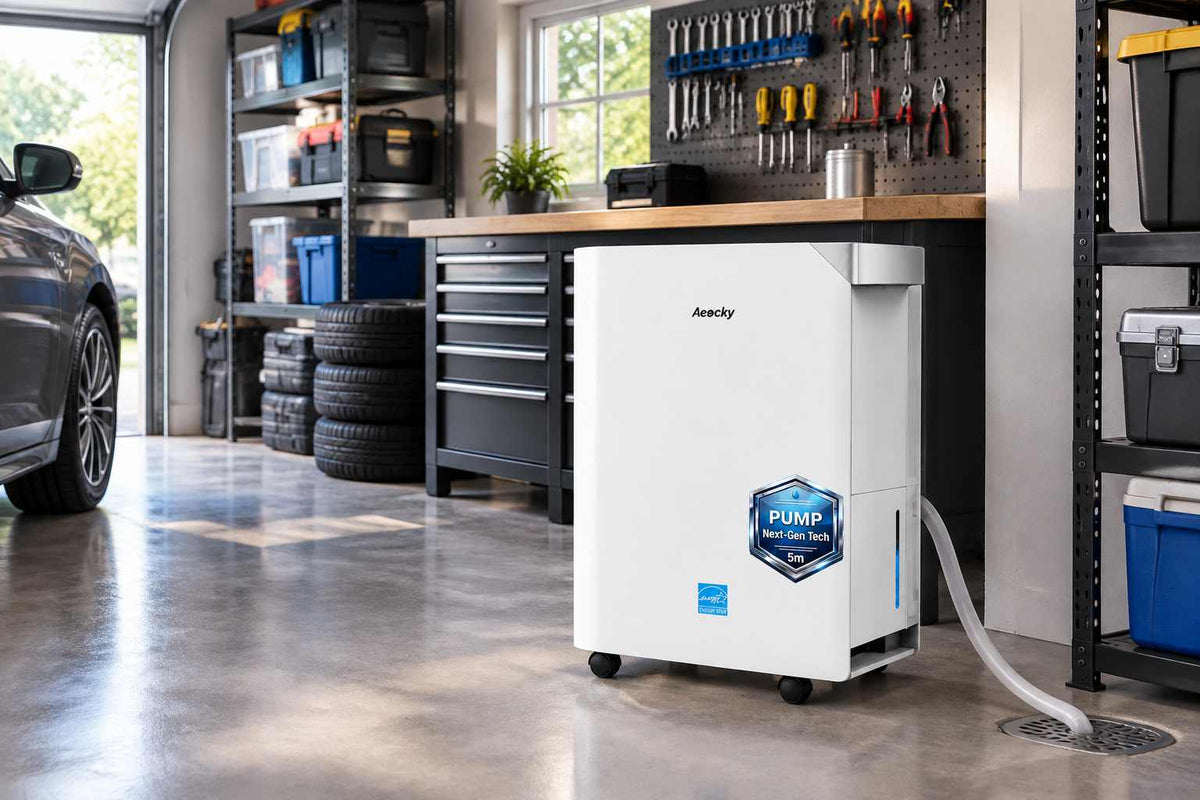
The Aeocky Rhea Series Energy-Efficient Whole House Dehumidifier can be considered for larger indoor spaces where consistent moisture control is needed.
For smaller plant areas or grow tents, a compact option such as the Aeocky Arion Small Portable Dehumidifier may be more suitable because of its smaller footprint and flexible placement.
Important Features of a Grow Room Dehumidifier
Energy Efficiency for Long-Term Operation
Grow room equipment often runs for extended periods. An energy-efficient unit can help reduce electricity consumption while maintaining stable humidity.
Look for:
-
efficient compressor operation
-
automatic humidity adjustment
-
suitable capacity for the room size
An oversized unit may waste energy, while an undersized unit may need to run constantly.
Continuous Drainage Capability
A continuous drainage dehumidifier for grow room use can make maintenance easier, especially in spaces where humidity levels require frequent operation.
Instead of manually emptying the water tank, continuous drainage allows collected moisture to flow directly into a drain or collection system.
This feature is especially useful for:
-
hydroponic rooms
-
large grow spaces
-
growers who are away for several days
Quiet Operation and Convenient Controls
Noise can be an important factor when a grow room is located near living areas.
A quieter unit allows growers to maintain humidity control without creating unnecessary background noise.
Useful features include:
-
adjustable fan speeds
-
automatic shut-off
-
humidity settings
-
simple controls
How to Reduce Humidity in a Grow Room
A dehumidifier works best when combined with good growing practices.
Improve Air Circulation
Fans and proper ventilation help distribute air evenly and prevent moisture from collecting in certain areas.
Control Water Sources
Simple changes can reduce humidity:
-
avoid overwatering
-
remove standing water
-
improve drainage around plants
Use a Dehumidifier Consistently
Waiting until mold appears can make humidity problems harder to manage.
Consistent moisture control helps create a more stable environment for indoor plants.
How a Dehumidifier Helps Prevent Mold in Grow Rooms
One of the main reasons growers use a dehumidifier is to reduce the conditions that allow mold to develop.
A dehumidifier cannot remove existing mold, but it can help:
-
lower excess moisture
-
improve air conditions
-
reduce mold risk with dehumidifier use
To prevent mold in grow room environments, humidity management should be combined with:
-
proper airflow
-
clean growing practices
-
regular equipment maintenance
Final Thoughts: Choosing the Right Grow Room Dehumidifier
The best dehumidifier for grow room applications depends on your growing setup, moisture levels, and space requirements. Small grow tents may benefit from compact portable units, while larger indoor gardens often need higher-capacity solutions with continuous drainage.
Before purchasing, focus on practical factors such as size, energy efficiency, drainage options, and operating noise. A properly selected dehumidifier can help maintain a more stable indoor growing environment and reduce moisture-related problems over time.



Leave a comment
This site is protected by hCaptcha and the hCaptcha Privacy Policy and Terms of Service apply.