

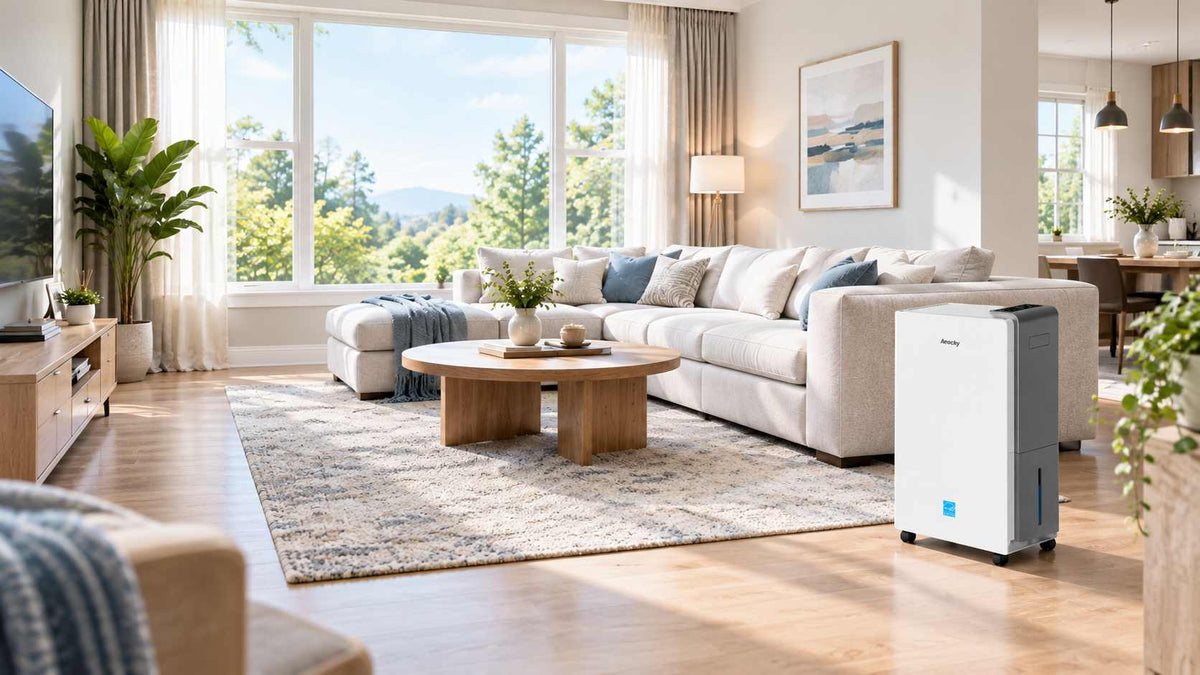
If you want to lower humidity without unnecessary electricity use, an Energy Star dehumidifier is a practical place to start. But the label alone does not tell you which model fits your home. Consider room size, moisture level, capacity, operating time, drainage, and humidity controls. The right energy efficient dehumidifier for home use should remove enough moisture for the space while avoiding unnecessary runtime. This guide explains how to choose an energy efficient dehumidifier, what affects dehumidifier energy consumption, and which features matter when you compare models for bedrooms, basements, large rooms, or whole-home use.
What Makes a Dehumidifier Energy Efficient?
Energy efficiency is not simply about using fewer watts. Consider how much moisture a dehumidifier removes for the energy it consumes.
An Energy Star certified dehumidifier meets established efficiency requirements. An energy efficient Energy Star dehumidifier can be a useful benchmark, but actual energy use also depends on space, humidity, runtime, and settings.
When comparing models, look at:
- Moisture-removal capacity
- Energy efficiency rating
- Humidity control
- Operating modes
- Automatic shut-off
- Drainage options
- Filter and maintenance requirements
- Noise level
These factors give you a better picture of dehumidifier energy efficiency than a single specification.
How to Choose an Energy Star Dehumidifier
1. Match Capacity to the Space
Capacity should come before wattage. A low wattage dehumidifier for home use may use less power at a given moment, but if it is too small, longer runtime can offset that advantage. The most energy efficient dehumidifier for home use is the one that matches the space and moisture load.
Consider the room's size and moisture conditions. A bedroom with occasional humidity needs a different solution from a consistently damp basement.
For larger spaces, our Leo Lite Series Energy Star dehumidifier for home is designed for homeowners looking for an energy-conscious option with higher moisture-removal capacity.
2. Consider How Often the Unit Will Run
Two homes can use the same dehumidifier and have very different electricity consumption. A low energy consumption dehumidifier is not automatically the best choice if it cannot control humidity efficiently.
A unit that runs for several hours every day will naturally use more electricity than one that operates occasionally. This is why dehumidifier energy efficiency should be considered together with operating time.
A built-in humidistat can help the unit respond to the selected humidity level rather than run continuously.
3. Look for Humidity Control
Humidity control is one of the most useful features for efficient operation. An energy saving dehumidifier for home use should be able to respond to changing conditions instead of relying on constant manual operation.
An Energy Star dehumidifier with humidity control lets you select a target humidity level and allows the unit to cycle according to indoor conditions. This is more practical than manually turning the machine on and off throughout the day.
Look for adjustable humidity settings, automatic shut-off, and clear tank indicators.
4. Think About Drainage
If you run a dehumidifier for many hours, drainage can affect convenience as much as efficiency.
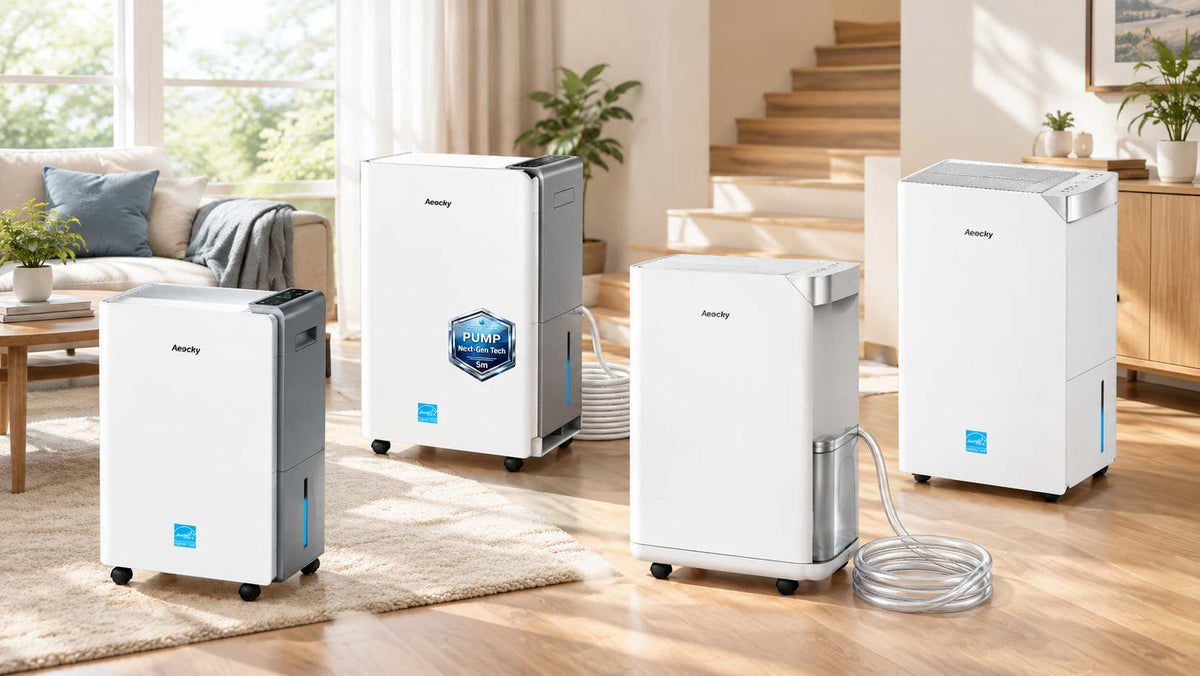
An energy efficient dehumidifier with continuous drainage can reduce the need to empty the water tank repeatedly. A hose connection can direct collected water toward an appropriate drain, making continuous operation easier.
For a basement, drainage becomes especially important. An efficient dehumidifier for basement use may need continuous drainage or a pump depending on where the unit sits and where the available drain is located.
Is an Energy Star Dehumidifier Worth It?
For many households, the answer depends on operating time and what you expect from it. If humidity is recurring and the unit runs regularly, efficiency can have a greater effect on long-term operating costs.
The key question is not simply whether a model carries an efficiency label. Ask whether its capacity and features fit your actual space. This is especially important when comparing the best Energy Star dehumidifier options for different rooms.
The best energy efficient dehumidifier is not necessarily the largest or most powerful model. The better choice is the one that provides the required moisture control without unnecessary runtime.
Choosing an Energy Efficient Dehumidifier by Room
Energy Efficient Dehumidifier for Bedroom
A bedroom usually calls for a quieter, compact solution. An energy efficient dehumidifier for bedroom use should offer practical humidity control without becoming a distraction during sleep.
An Energy Star dehumidifier for bedroom use can also be a sensible option when efficiency is a priority. For smaller spaces, portability and simple controls can be more useful than maximum capacity.
Energy Star Dehumidifier for Basement
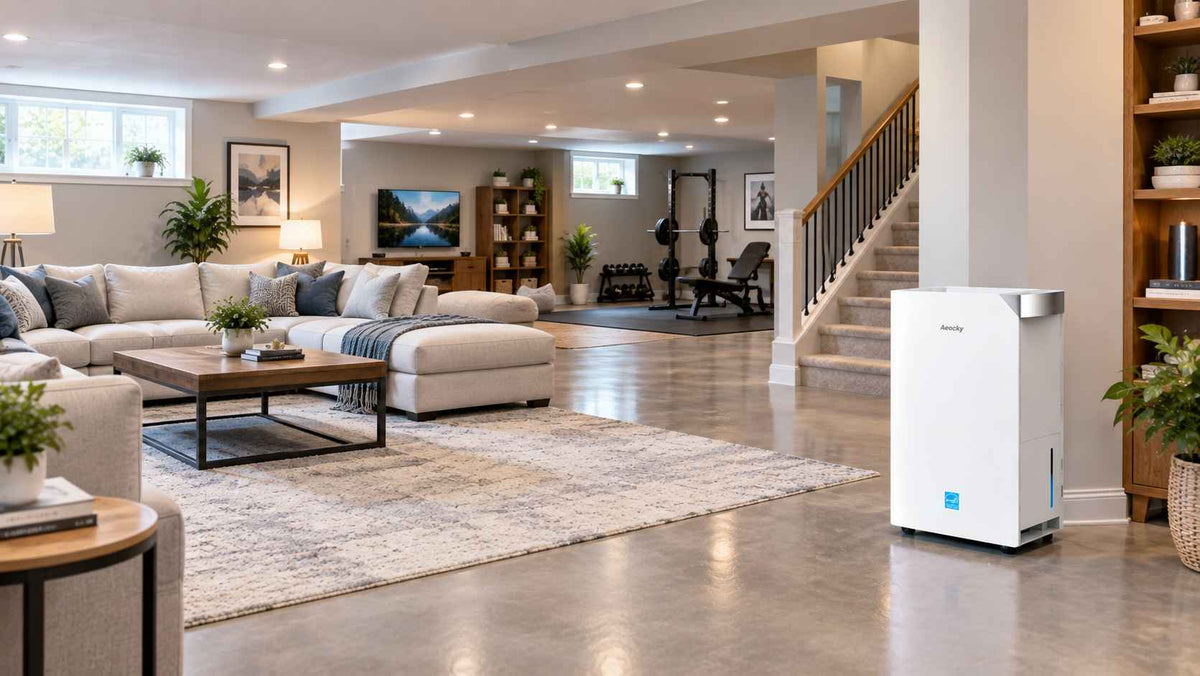
Basements can have persistent moisture and may require longer operating periods. An Energy Star dehumidifier for basement use should therefore be selected based on moisture level, capacity, drainage, and operating conditions.
If water needs to be moved to a higher drain point, a model with a pump can simplify the setup. Continuous drainage is also useful when the unit is expected to run for extended periods.
Energy Star Dehumidifier for Large Rooms
For open living areas or larger spaces, capacity becomes especially important. An Energy Star dehumidifier for large rooms should handle the moisture load without excessive runtime. An energy efficient dehumidifier for large rooms should balance capacity with efficient operation.
If you need more guidance on sizing and placement, see our guide to choosing a dehumidifier for large rooms.
Whole-Home Dehumidification
A whole-home system may make sense when humidity is not limited to one room. It is designed to manage moisture across a larger area instead of being moved from room to room.
For this type of application, the Aeocky Rhea Series energy-efficient whole-house dehumidifier is an option to consider when centralized moisture control is the priority.
How Much Energy Does a Dehumidifier Use?
How much energy does a dehumidifier use? There is no single number for every home.
Energy use depends on the unit's power consumption, how efficiently it removes moisture, how often it operates, the humidity level, room conditions, and the selected settings.
A simple way to think about it is:
Energy use = power consumption × operating time
Correct sizing, humidity control, and regular maintenance can help reduce unnecessary runtime.
What to Check Before Buying
Before choosing an energy efficient home dehumidifier, compare capacity, efficiency, humidity control, drainage, operating conditions, noise, and maintenance. For a bedroom, an Energy Star dehumidifier for bedroom use should also fit your noise and space requirements. For larger areas, focus more heavily on capacity and drainage.
Final Thoughts
Choosing an energy-efficient dehumidifier is about more than finding the lowest power rating. Start with the space, moisture level, and expected operating time. Then compare capacity, humidity control, drainage, noise, and maintenance. An Energy Star certified model can provide an efficiency benchmark, but the best fit still depends on your home's specific needs. For a bedroom, quiet operation and compact design may matter most. A basement may need stronger moisture control and easier drainage, while a large or whole-home space may call for greater capacity. Match the dehumidifier to the job, and efficient operation becomes much easier to maintain.


Leave a comment
This site is protected by hCaptcha and the hCaptcha Privacy Policy and Terms of Service apply.