

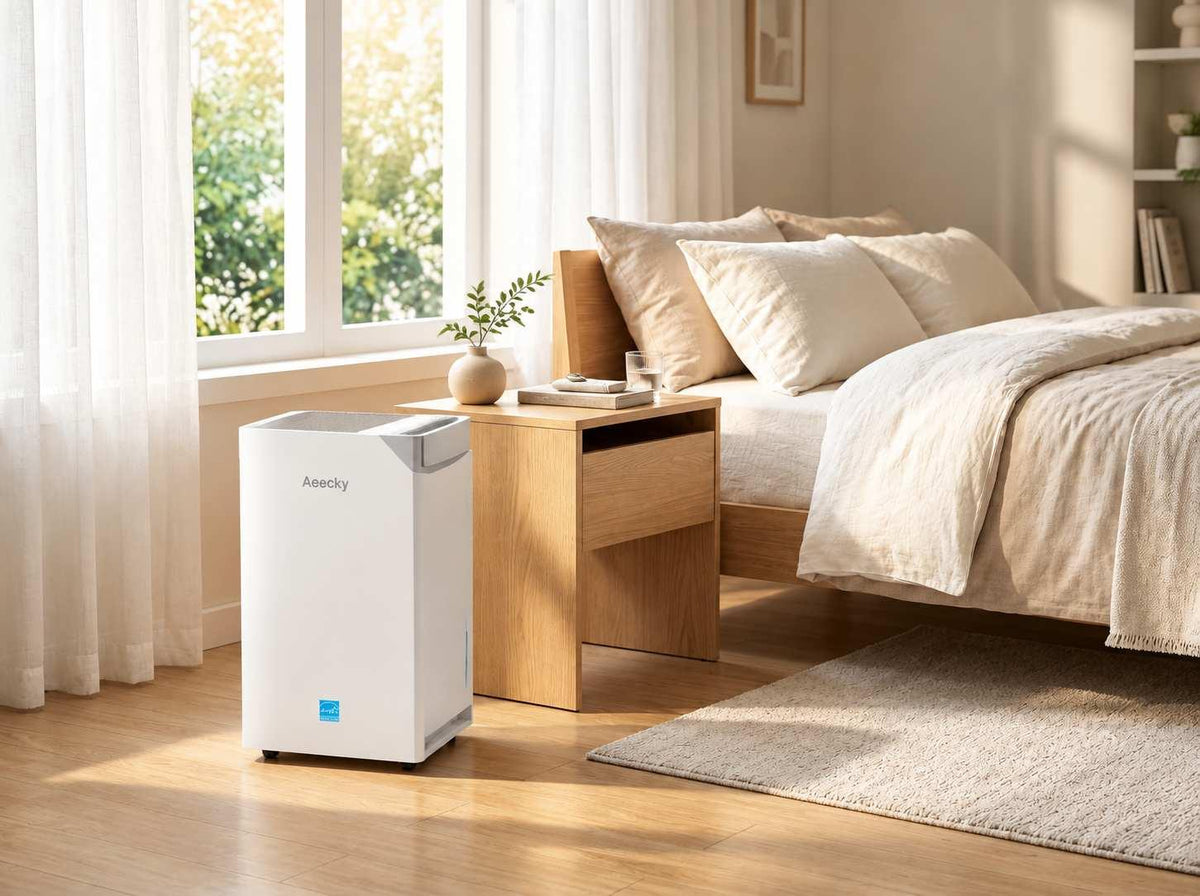
The most energy efficient dehumidifier depends on how and where you use it. For a typical warm, humid room, compressor dehumidifiers generally offer strong energy efficiency because they remove moisture through refrigeration. Desiccant models, however, can be more practical in colder spaces where compressor performance drops. The better way to compare a Dehumidifier is not simply to look at wattage. Check its Integrated Energy Factor (IEF), moisture removal capacity, operating temperature, and ENERGY STAR status. These details show how much moisture a unit removes for the electricity it consumes.
What Makes a Dehumidifier Energy Efficient?
Energy efficiency means getting more moisture removal from the electricity a machine uses. A model with a lower wattage is not automatically more efficient if it also removes substantially less water.
Understanding Integrated Energy Factor (IEF)
ENERGY STAR measures dehumidifier efficiency using Integrated Energy Factor (IEF), expressed in liters of water removed per kilowatt-hour (L/kWh). In general, a higher IEF indicates a more efficient unit. The measurement also accounts for energy consumed in dehumidification and standby or off modes, making it more useful than looking at running wattage alone.
If you are wondering how to compare dehumidifier energy efficiency, start by comparing IEF values within the same capacity category. A 50-pint unit should not be judged directly against a small bedroom model because their moisture-removal capacities are different.
ENERGY STAR's current portable-dehumidifier criteria require minimum IEF levels that vary by capacity. For example, the current thresholds are 1.70 L/kWh for units rated at 25 pints/day or less, 2.01 L/kWh for 25.01–50 pints/day, and 3.30 L/kWh for units rated at 50 pints/day or more.
Why Wattage Alone Can Be Misleading
Consider two machines. One consumes more electricity per hour but removes twice as much water. The second machine may actually provide more moisture removal per unit of electricity.
That is why dehumidifier electricity consumption should be considered together with water-removal performance, rather than treated as a standalone number.
Compressor vs. Desiccant Dehumidifier Energy Efficiency
The main technologies work differently, which affects where each performs best.
How Compressor Dehumidifiers Work
A compressor Dehumidifier uses a refrigeration system to cool a coil below the air's dew point. Moisture condenses on the cold surface and is collected or drained away.
This approach is generally well suited to warm and humid indoor environments. Published comparisons also show that compressor models tend to use electricity more efficiently than desiccant models under typical room-temperature conditions.
For shoppers considering a larger portable unit, options such as the Rhea 4500 sq. ft. dehumidifier or Leo 001 Max 80-pint dehumidifier illustrate the type of higher-capacity compressor products commonly considered for larger areas.
How Desiccant Dehumidifiers Work
A desiccant Dehumidifier uses a moisture-absorbing material rather than relying on a cold evaporator coil. Moisture is absorbed from the air and later removed from the desiccant through a regeneration process.
The trade-off is important. The heating process used to regenerate the desiccant can increase electricity use. However, desiccant technology can maintain useful moisture removal in colder environments where compressor units may lose capacity or require more defrosting.
Which Technology Works Better at Different Temperatures?
There is no single answer to compressor vs desiccant dehumidifier energy efficiency without considering temperature.
For a heated home, bedroom, living room, or other normally warm space, a compressor unit is often the more energy-efficient choice. In a cold garage, basement, cabin, or other unheated area, a desiccant unit may provide more consistent moisture removal even if its electrical demand is higher.
So the question is not simply which technology uses less electricity. It is which technology can remove the required amount of moisture efficiently under your actual operating conditions.
How to Compare Dehumidifier Energy Efficiency
Check IEF and ENERGY STAR Certification
When looking for an ENERGY STAR most efficient dehumidifier, check the current ENERGY STAR database rather than relying only on advertising claims. ENERGY STAR's Most Efficient listings identify products that meet its higher efficiency criteria.
For example, the current ENERGY STAR database lists portable models with IEF values above the minimum certification thresholds, including Aeocky LEO models.
You can also review the Leo 4500 sq. ft. ENERGY STAR dehumidifier and the broader AEOKY ENERGY STAR series when comparing available product options.
The key is to compare verified efficiency information with similar capacity models rather than assuming that a larger unit is automatically less efficient.
Match Capacity to Your Space
Choosing the right capacity also affects energy use. An undersized unit may need to operate for long periods without adequately controlling humidity. An oversized unit may remove moisture quickly but can involve a higher upfront cost than necessary.
For medium-sized areas, a product such as the Arion Max 40-pint dehumidifier represents a higher-capacity portable option to consider when comparing moisture-removal needs and efficiency specifications.
Consider Operating Temperature
Temperature is especially important when comparing compressor and desiccant technology. A compressor's efficiency and moisture-removal capacity can decline as the surrounding air becomes colder. Desiccant systems are less dependent on a cold coil, so they can be useful for low-temperature applications.
What Is the Most Energy Efficient Dehumidifier for Different Situations?
For a warm, humid room, a high-IEF compressor model is generally a sensible place to start.
For a cold basement or unheated garage, look beyond the headline efficiency number. A desiccant model may deliver more useful moisture removal at low temperatures, even if its electricity use is higher.
For a large space, capacity matters just as much as efficiency. ENERGY STAR separately evaluates different capacity classes, so compare IEF values within the relevant class.
The best energy efficient dehumidifier is therefore the one that combines suitable capacity, strong efficiency, and performance at the temperature where it will actually operate.
How to Reduce Dehumidifier Electricity Consumption
A few practical choices can reduce electricity use:
-
Set a reasonable target humidity instead of running the unit continuously.
-
Keep doors and windows closed when outdoor air is very humid.
-
Clean the air filter regularly so airflow is not restricted.
-
Use continuous drainage when appropriate so the unit can operate without frequent tank interruptions.
-
Choose a capacity suited to the room rather than relying only on the largest available model.
-
Compare IEF values when purchasing a new unit.
These steps can matter because efficiency depends not only on the machine itself, but also on how long it needs to run.
Final Thoughts
So, what is the most efficient type of dehumidifier? For most warm and humid indoor environments, compressor technology generally offers strong energy efficiency. Desiccant technology has a different advantage: it can perform more consistently in colder spaces where compressor performance declines. The most useful comparison is therefore based on IEF, capacity, temperature, and actual moisture-removal needs. If energy savings are the priority, look for a high IEF and current ENERGY STAR certification, then make sure the unit is properly sized for the space. A Dehumidifier that matches the room and operating conditions can be more efficient in practice than simply choosing the model with the lowest advertised wattage.


Leave a comment
This site is protected by hCaptcha and the hCaptcha Privacy Policy and Terms of Service apply.