


A Dehumidifier can help control excess moisture in your bathroom, especially when steam from showers, poor ventilation, and high humidity create ongoing problems. A bathroom dehumidifier is not only about removing water from the air. The right model should match your room size, humidity level, noise preferences, and daily usage habits. Choosing the wrong capacity may lead to poor performance or unnecessary energy costs. This guide explains what to look for when choosing a dehumidifier for your bathroom and how to find a suitable option for different spaces.
Why Do You Need a Dehumidifier for Your Bathroom?
Bathrooms naturally produce a lot of moisture. Hot showers release steam into the air, while wet towels, sinks, and limited airflow can keep humidity levels high for hours.
High humidity can create several common issues:
-
Foggy mirrors that take a long time to clear
-
Musty odors
-
Condensation on walls and ceilings
-
Increased risk of mold growth
-
A damp feeling inside the room
A bathroom fan can help remove some moisture, but it may not always be enough, especially in bathrooms with poor ventilation or in homes located in humid climates.
A Dehumidifier works by pulling humid air into the unit, removing excess moisture, and releasing drier air back into the room. This helps maintain a more comfortable indoor environment.
What to Consider When Choosing a Bathroom Dehumidifier
1. Choose the Right Dehumidifier Size and Capacity
One of the most important factors is choosing the correct capacity. A larger unit is not always better. The best choice depends on the room size and how much moisture needs to be removed.
Dehumidifier capacity is usually measured in pints of moisture removed per day. A small bathroom may only require a compact model, while larger or heavily humid spaces need higher-capacity units.
When comparing options, consider:
-
Bathroom or room square footage
-
Current humidity level
-
Frequency of use
-
Whether the space has ventilation
If you are also choosing a unit for other rooms, questions like “what size dehumidifier do I need for a bedroom” can help you understand how capacity relates to room size.
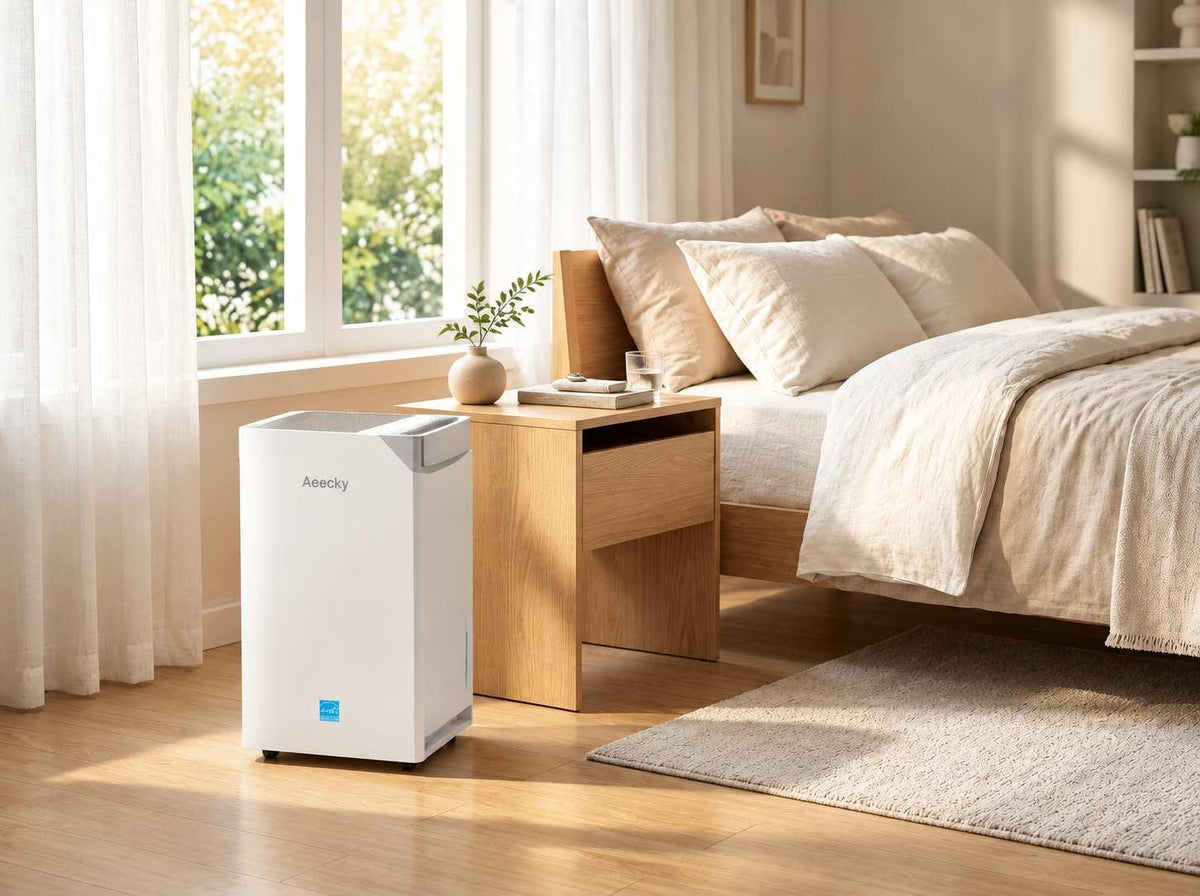
For smaller spaces such as guest bathrooms or bedrooms, a compact option like the Aeocky Arion Max 40 Pint Dehumidifier may be suitable for areas that need regular moisture control without a larger footprint.
2. Consider Noise Level for Bedrooms and Sleeping Areas
Noise matters when the bathroom is close to a bedroom or when you plan to run the unit overnight.
Many people searching for the best quiet dehumidifier for bedroom are looking for a balance between moisture removal and comfortable operation.
Before buying, check:
-
Noise level during operation
-
Fan speed settings
-
Sleep mode availability
-
Whether the unit will be placed near living or sleeping areas
A quieter model can be useful for homes where humidity control needs to continue during nighttime hours.
For those comparing options for bedrooms, terms like best dehumidifier for sleeping room usually indicate that low operating noise and compact design are important factors, not just moisture removal capacity.
3. Check Energy Efficiency for Long-Term Use
A bathroom dehumidifier may run frequently, especially during humid seasons. Energy efficiency can affect long-term operating costs.
Look for features such as:
-
Energy Star certification
-
Automatic humidity control
-
Efficient compressor operation
-
Adjustable settings
Energy-efficient models can reduce unnecessary operation by maintaining humidity levels instead of running continuously.
Aeocky’s Energy Star Series Dehumidifiers are designed for users who want to consider energy performance when selecting a home humidity control solution.
4. Look at Drainage Options and Water Tank Size
A dehumidifier collects water removed from the air. The way that water is handled affects daily convenience.
Common drainage options include:
Manual Water Tank
You empty the tank when it becomes full. This works well for occasional use.
Continuous Drainage
Some models support hose connections for longer operation without frequent emptying.
Larger Water Tank Capacity
A bigger tank means fewer interruptions, which can be useful in humid environments.
When choosing a bathroom dehumidifier, think about where the unit will be placed and how often you want to check the water level.
What Size Dehumidifier Do You Need for Different Rooms?
Different spaces have different humidity challenges. The right capacity depends on both room size and moisture conditions.
Small Bathroom or Bedroom
Small bathrooms, bedrooms, and guest rooms usually need a compact solution.
People often search for the best small dehumidifier for bedroom because these spaces require:
-
Smaller footprint
-
Lower noise
-
Easy placement
-
Efficient moisture control
A smaller-capacity model may work well when humidity problems are limited and the room size is modest.
Medium Rooms and Larger Bedrooms
For larger bedrooms or open areas, a higher-capacity unit may provide better coverage.
Searches such as best dehumidifier for bedroom usually focus on:
-
Room coverage
-
Quiet operation
-
Reliable humidity control
-
Low maintenance
A model like the Aeocky Rhea 4500 Sq Ft Dehumidifier can be considered for larger residential spaces where broader moisture control is needed.
Large Spaces or High Humidity Areas
Large rooms, basements, and areas with persistent humidity often require stronger moisture removal capacity.
Higher-capacity options can be useful when:
-
Humidity remains high after ventilation
-
The space is used frequently
-
Moisture problems affect multiple areas
The Aeocky Leo 001 Max 80 Pint Dehumidifier and Aeocky Leo 4500 Sq Ft Energy Star Dehumidifier provide higher-capacity options for larger spaces that require more intensive moisture control.
Common Mistakes When Buying a Bathroom Dehumidifier
Choosing Only Based on Price
A cheaper model may not provide enough capacity for your space. If it runs constantly but cannot control humidity effectively, it may not be the most practical choice.
Buying a Unit That Is Too Large
A very large dehumidifier in a small bathroom may take up unnecessary space and may not match your actual needs.
The goal is not the biggest machine. It is the right capacity for your environment.
Ignoring Placement and Noise
A bathroom near a bedroom requires more attention to sound levels and placement. A unit that works well technically may not be comfortable if it creates unwanted noise.
Bathroom Dehumidifier Buying Checklist
Before choosing a model, check these points:
-
Match the capacity with your room size
-
Consider how humid the space is
-
Look for suitable noise levels
-
Check drainage options
-
Compare energy efficiency features
-
Think about daily maintenance needs
A few minutes of comparison can help you avoid choosing a model that does not fit your home.
Final Buying Recommendation
Choosing the right Dehumidifier for your bathroom depends on more than moisture removal power. Room size, humidity level, noise, energy use, and drainage options all affect whether a unit works well in daily life.
For small spaces, focus on compact size and quiet operation. For larger or more humid areas, choose a model with higher capacity and stronger moisture control. By matching the dehumidifier to your actual needs, you can create a more comfortable indoor environment without paying for features you do not need.


Leave a comment
This site is protected by hCaptcha and the hCaptcha Privacy Policy and Terms of Service apply.