

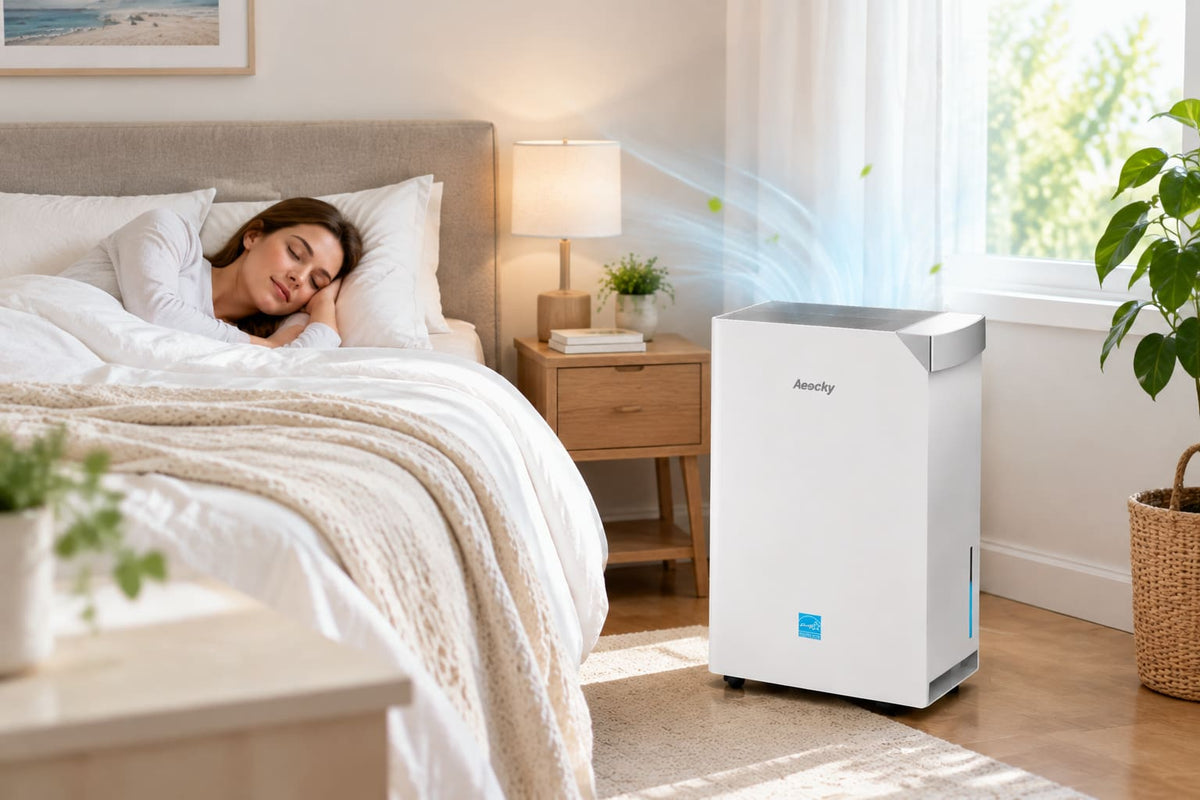
A dehumidifier can help reduce allergy triggers by lowering indoor humidity, but it does not directly remove allergens or kill dust mites. Dust mites and mold tend to grow more easily in damp environments, so controlling moisture can make your home less suitable for these common allergy sources. For people dealing with symptoms such as sneezing, itchy eyes, or morning nasal congestion, maintaining balanced indoor humidity may improve overall comfort.
A dehumidifier works by removing excess moisture from the air. When indoor humidity stays between about 30% and 50%, it becomes harder for dust mites and mold to thrive. However, a dehumidifier works differently from an air purifier and should be chosen based on your specific indoor air concerns.
How Humidity Affects Allergies and Dust Mites
Dust mites are microscopic organisms commonly found in bedding, carpets, and upholstered furniture. They do not bite people, but their waste particles can trigger allergic reactions.
Why Dust Mites Thrive in Humid Environments
Dust mites need moisture to survive. Homes with high humidity provide the conditions they need to reproduce and remain active. Bedrooms are often a problem area because mattresses, pillows, and bedding can hold moisture from daily activities such as sleeping.
This is why many homeowners ask: does a dehumidifier help with dust mites?
The answer is yes, but indirectly. A dehumidifier does not remove dust mites from your home. Instead, it reduces the humidity level that supports their growth.
How High Humidity Can Increase Allergy Triggers
High humidity can also encourage mold growth. Mold spores are another common indoor allergen that may cause respiratory irritation. By controlling excess moisture, a dehumidifier can help create a healthier indoor environment.
For homeowners looking for a compact solution in bedrooms or smaller spaces, products such as the AEOKY Arion Small Portable Dehumidifier are designed for areas where space and quiet operation are important.
Does a Dehumidifier Help with Dust Mites?
A common misconception is that a dehumidifier kills dust mites. In reality, does dehumidifier kill dust mites is not the right way to describe its function.
A dehumidifier does not work like a pesticide or cleaning product. Instead, it lowers humidity levels and makes the environment less favorable for dust mites. Over time, maintaining proper humidity may help reduce their population and limit allergy exposure.
For better results, humidity control should be combined with regular cleaning, washing bedding in hot water when appropriate, and reducing dust buildup.
Can a Dehumidifier Help with Morning Nasal Congestion?
Many people experience worse allergy symptoms in the morning because they spend several hours in a bedroom environment where dust mites and allergens can accumulate.
A dehumidifier for morning nasal congestion may help when symptoms are connected to excessive indoor moisture, mold, or dust mite activity. Keeping bedroom humidity within a comfortable range can reduce conditions that contribute to these triggers.
However, nasal congestion can have many causes. A dehumidifier may support better indoor conditions, but it is not a medical treatment for allergies.
Dehumidifier vs Air Purifier for Dust Mites: What Is the Difference?
The choice between a dehumidifier vs air purifier for dust mites depends on what problem you are trying to solve.
A dehumidifier controls moisture. It reduces the humidity that dust mites and mold need to grow.
An air purifier focuses on airborne particles. It can capture dust, pollen, pet dander, and some airborne allergens through filtration.
If dust mites are the main concern, humidity control is an important step because dust mite populations are strongly connected to moisture levels. If airborne particles are also a problem, using both devices may provide broader indoor air management.
Features to Look for in a Dehumidifier for Allergies
When selecting a device, consider these features to look for in a dehumidifier for allergies:
Adjustable Humidity Settings
A built-in humidistat allows the unit to maintain a target humidity level automatically. This prevents the room from becoming too dry.
Proper Room Coverage
Choose a model based on your room size. A small bedroom requires different capacity than a basement or whole-house application.
For larger homes, the AEOKY Rhea Series Energy Efficient Whole House Dehumidifier provides a higher-capacity option for broader moisture control.
Energy Efficiency and Quiet Operation
Since dehumidifiers often run for several hours each day, energy consumption matters. Energy-efficient models can help reduce operating costs while maintaining humidity control.
The AEOKY Leo Lite Series Energy Star Dehumidifier is designed for homeowners who want efficient moisture management.
Easy Drainage and Maintenance
Features such as continuous drainage options, washable filters, and easy cleaning access can make daily use more convenient.
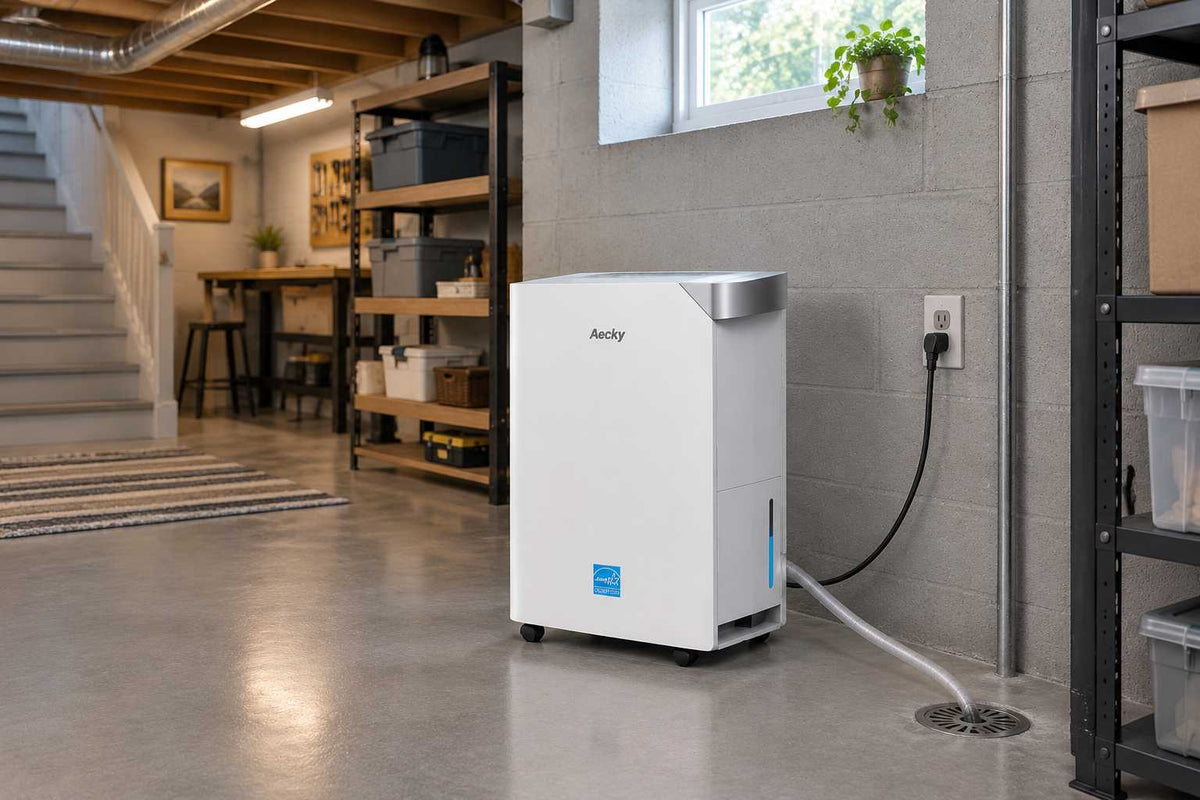
For areas with higher moisture problems, including basements, models like the AEOKY Leo Series Energy Efficient Dehumidifier with Pump can provide additional flexibility.
Choosing the Right Dehumidifier for Different Home Needs
Different spaces require different approaches.
For bedrooms, offices, and smaller areas, compact portable units are usually easier to place and operate.
For larger homes, whole-house dehumidifiers can provide more consistent humidity control across multiple rooms.
Basements often need stronger moisture removal because they tend to collect damp air. Choosing a model with sufficient capacity and drainage options is important.
AEOKY’s Energy Star Series Dehumidifiers include different capacity options designed for various home environments.
Final Thoughts
A dehumidifier can help with allergies by controlling one of the biggest factors behind dust mites and mold growth: excess moisture. While it does not kill dust mites directly, reducing humidity can make indoor spaces less favorable for these allergens.
When choosing a dehumidifier, focus on room size, humidity control features, energy efficiency, and maintenance needs. For allergy-sensitive households, combining proper humidity management with regular cleaning and effective air filtration can create a more comfortable indoor environment.



Leave a comment
This site is protected by hCaptcha and the hCaptcha Privacy Policy and Terms of Service apply.