

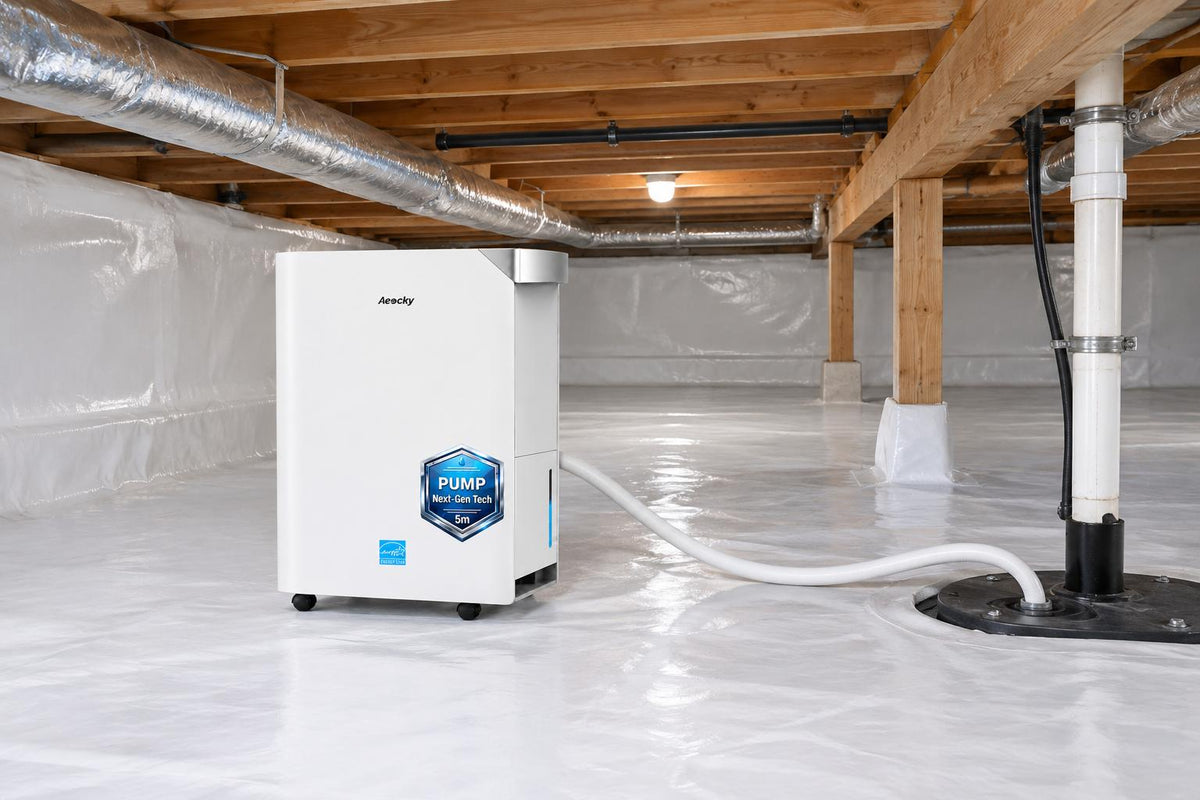
The best dehumidifier for crawl space use needs to do more than remove moisture. It should match the size and moisture level of the space, provide a practical drainage solution, and operate reliably under crawl-space conditions. A small, sealed crawl space may need a very different unit from a large, damp area with limited airflow. Before choosing a crawl space dehumidifier, check for standing water, plumbing leaks, exposed soil, and other sources of moisture. Fixing those problems comes first. Then choose the right capacity, drainage method, and humidity setting for long-term crawl space humidity control.
Why Does a Crawl Space Need a Dehumidifier?
Crawl spaces are naturally prone to moisture problems. They are enclosed, often poorly ventilated, and located close to soil that can introduce water vapor into the surrounding air.
High humidity can contribute to condensation, musty odors, mold growth, and moisture-related deterioration of wood and insulation. A dehumidifier helps by removing water vapor from the air, but it is only one part of a moisture-control system.
A sealed or encapsulated crawl space is generally a better environment for mechanical dehumidification because outside humid air is not constantly replacing the air that has already been dried. Current crawl-space guidance similarly emphasizes sealing the space and controlling ground moisture before relying on a dehumidifier.
What Is the Best Dehumidifier for a Crawl Space?
The best dehumidifier for a crawl space depends on the moisture load, floor area, temperature, and drainage setup.
For Small or Moderately Damp Crawl Spaces
A smaller unit may be sufficient when the crawl space is well sealed and has a relatively light moisture load. However, compact does not automatically mean better.
The unit needs enough capacity to maintain the target humidity without running continuously. It should also fit the available clearance and leave enough room around the air intake and outlet.
For homeowners comparing general-purpose units, Aeocky's Rhea Series Energy Star Most Efficient Dehumidifier is one option to consider for larger residential moisture-control applications. The current Rhea range offers models rated up to 80, 105, and 140 pints per day, with continuous gravity drainage and automatic humidity control.
It should not be treated as automatically suitable for every crawl space. Check the specific model's dimensions, operating conditions, drainage requirements, and installation instructions before placing it below a home.
For Large or Very Damp Crawl Spaces
A high capacity dehumidifier for crawl space use becomes more appropriate when the area is large, the humidity remains high, or the space has a heavier moisture load.
But buying the largest machine available is not a reliable sizing method. A recent sizing guide notes that square footage should be combined with humidity, sealing, temperature, drainage, and layout.
A 2,000-square-foot crawl space with proper encapsulation and moderate humidity may have a very different requirement from a 2,000-square-foot space with damp soil and uncontrolled air leakage.
When You Need a Dehumidifier With a Pump
Drainage can be more important than another few pints of rated capacity.
If the crawl space does not have a convenient gravity drain, a crawl space dehumidifier with pump can move collected water to a higher drain location. This is especially useful when the available drain or sump is above the dehumidifier.
For this type of installation, the Aeocky Leo Series Energy Star Most Efficient Dehumidifier with Pump is particularly relevant because the product is designed with a built-in drain pump. The current Leo Series is available in capacities up to 140 pints per day and includes automatic humidity control.
What Is the Best Size Dehumidifier for a Crawl Space?
There is no universal answer to best size dehumidifier for crawl space applications.
Square footage is the starting point, not the entire calculation.
Square Footage Is Only the Starting Point
Current crawl-space sizing guidance commonly considers professional-grade units in roughly the 50–100 PPD range, but the correct capacity depends on conditions and the rating method used.
For example, a compact unit may work in a small, properly sealed crawl space with moderate humidity. A larger space, humid climate, divided layout, or heavier moisture load may call for more capacity.
Also compare pint ratings carefully. Different test conditions can make two units with similar headline numbers appear more comparable than they really are.
Consider Moisture Load and Crawl Space Conditions
Ask these questions before buying:
-
Is the crawl space encapsulated?
-
What is the current relative humidity?
-
Is there exposed soil?
-
Is standing water present?
-
How large is the crawl space?
-
How cold does it get?
-
Is there a suitable drain nearby?
-
Will the unit be difficult to access after installation?
If water is entering through a leak or drainage problem, installing a larger dehumidifier for crawl space moisture is not the first solution. Stop the water source first.
Why Continuous Drainage Matters
A tank that needs to be emptied every day may be inconvenient in a crawl space. In some cases, it can make long-term humidity control impractical.
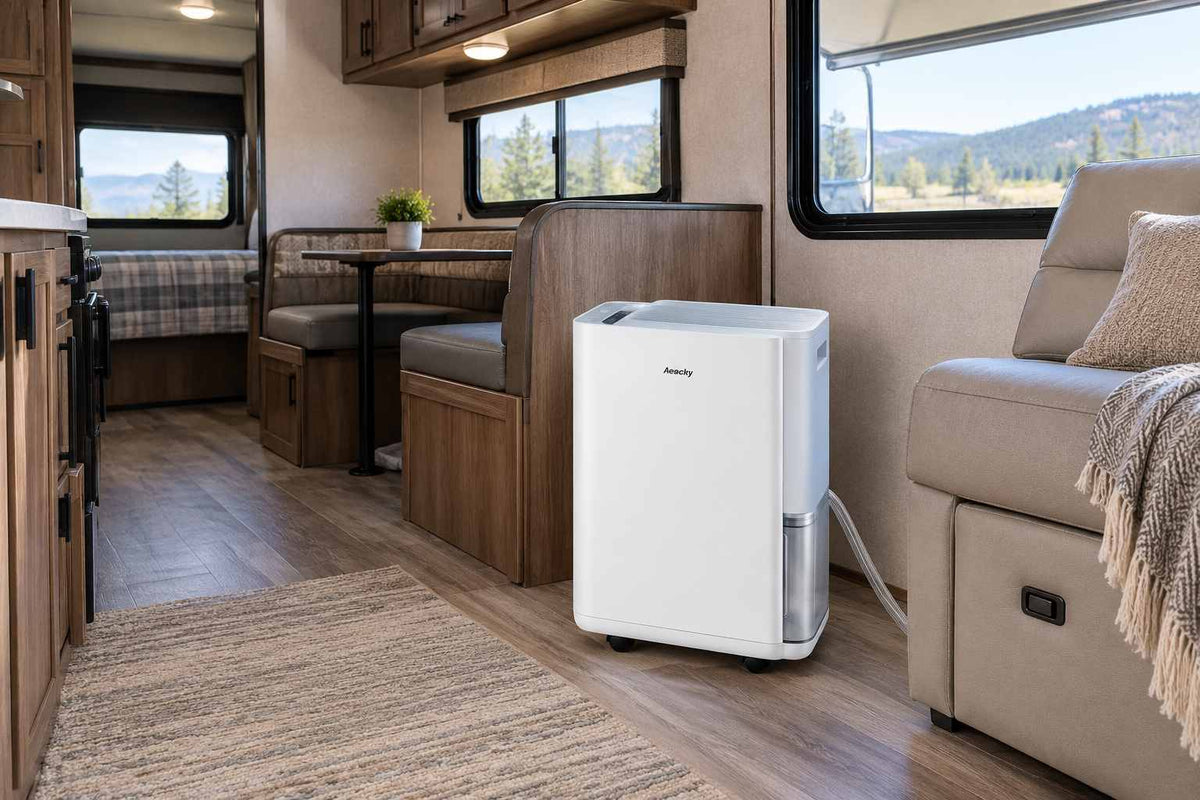
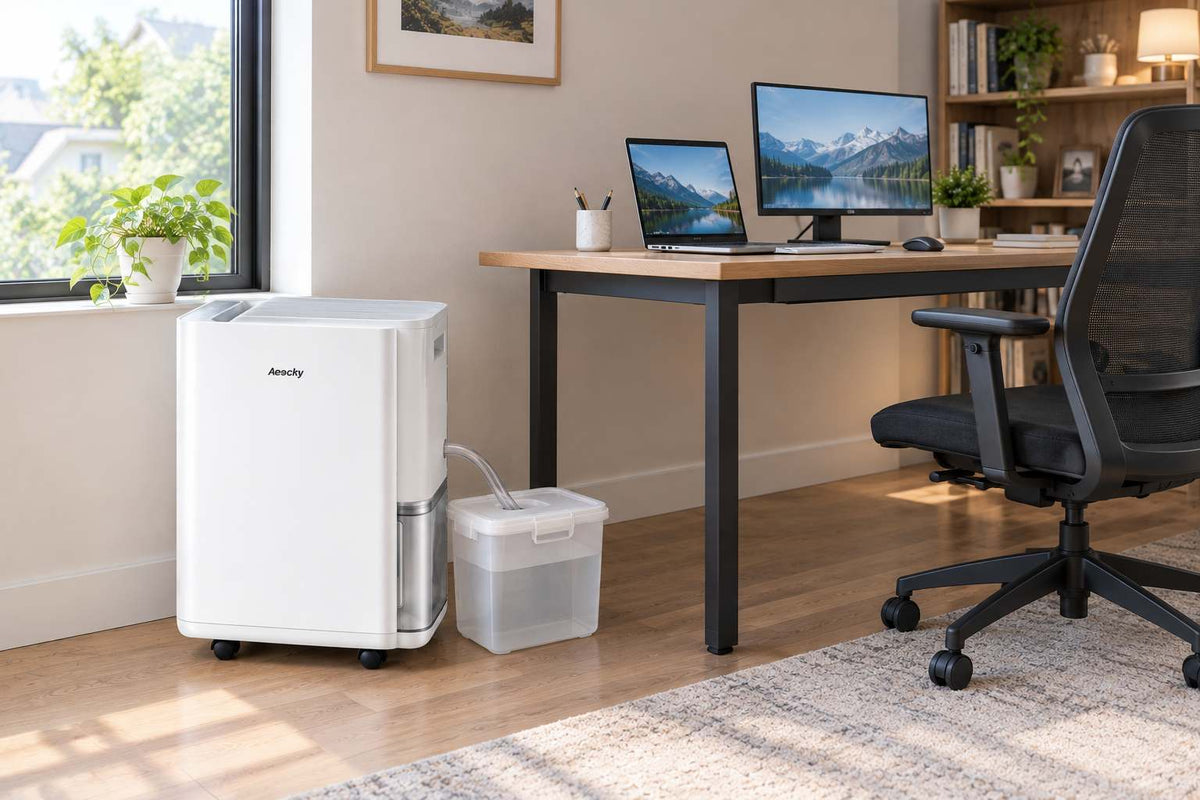
A dehumidifier with continuous drainage for crawl space use allows condensate to leave the unit automatically through a hose. Gravity drainage works when the drain is lower than the unit and the hose can maintain a suitable slope.
If the drain is higher, a built-in pump can be the better option.
The important thing is to design the drainage path before installing the machine. A high-capacity unit that fills its tank because the drainage setup is wrong is not a useful long-term solution.
How to Control Humidity in a Crawl Space
Effective crawl space humidity control starts before the dehumidifier is switched on.
Seal Moisture Sources First
Check for plumbing leaks, foundation seepage, standing water, wet insulation, and exposed soil. A vapor barrier or encapsulation system can reduce moisture entering from the ground.
A dehumidifier controls moisture in the air. It does not replace waterproofing, drainage, or leak repair.
Set a Practical Humidity Target
Many homeowners aim for roughly 50% to 55% relative humidity in a crawl space, depending on local conditions and the equipment being used. The exact setting should follow the needs of the building and the manufacturer's recommendations.
For general humidity guidance, Aeocky's guide to ideal indoor humidity levels explains how relative humidity affects moisture control and why maintaining a stable range matters.
Check Temperature and Airflow
Temperature matters because dehumidifier performance can change as air gets colder. Crawl spaces are often cooler than finished rooms, so check the unit's operating-temperature specifications before installation.
Airflow matters too. Keep the intake and outlet clear, and avoid placing the machine in a cramped corner where it cannot circulate air effectively.
Features to Look for in a Crawl Space Dehumidifier
Energy Efficiency
An energy efficient crawl space dehumidifier can be useful because crawl-space units may operate for long periods. Look at energy performance together with actual moisture-removal capacity. A low-energy machine that cannot control the humidity is not necessarily the better choice.
Aeocky's Energy Star dehumidifier collection includes Rhea and Leo models with automatic humidity control and drainage options.
Low-Temperature Operation
If your crawl space gets cold, check the manufacturer's minimum operating temperature and whether the unit has features designed for colder conditions.
Do not assume that a standard bedroom dehumidifier will perform properly in a cold crawl space.
Quiet Operation
A quiet crawl space dehumidifier is useful when the crawl space sits directly beneath bedrooms or living areas. Noise is less important than moisture control, but lower operating noise can make long-term operation less noticeable.
Automatic Humidity Control
Automatic humidity control allows the unit to cycle according to the humidity level rather than running continuously. This can help maintain a more stable environment and avoid unnecessary operation.
Final Thoughts
The best crawl space dehumidifier is the one that matches the actual conditions beneath your home. Start with floor area, then consider moisture load, sealing, temperature, airflow, and drainage. For spaces where gravity drainage is difficult, a crawl space dehumidifier with pump can make installation much easier. For larger or wetter areas, higher capacity may be justified, but only after the underlying moisture sources are addressed.
A good installation is about more than the dehumidifier itself. Control ground moisture, repair leaks, choose the right size, provide reliable drainage, and monitor humidity over time. That approach gives the equipment a much better chance of maintaining a consistently dry crawl space.


Leave a comment
This site is protected by hCaptcha and the hCaptcha Privacy Policy and Terms of Service apply.