

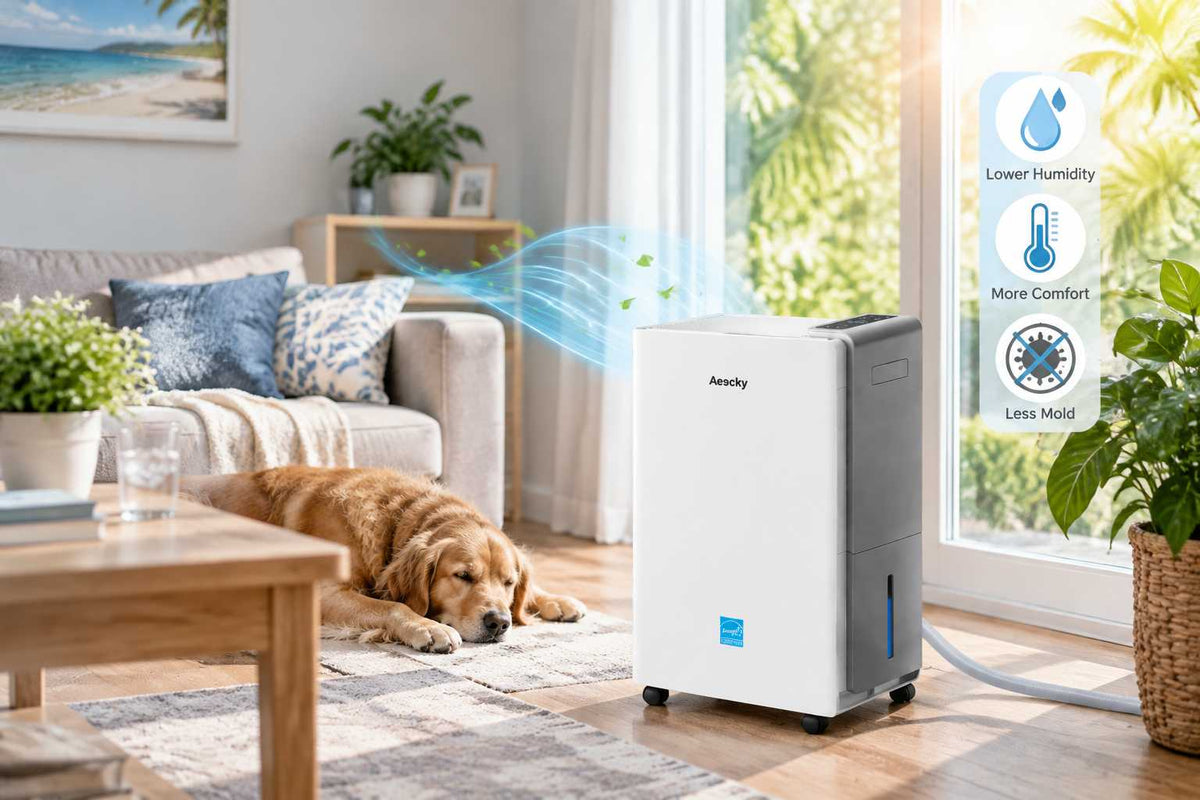
control moisture

Should I Use a Dehumidifier in the Summer?

Should I Use a Dehumidifier in the Summer?
Yes, using a dehumidifier in the summer can help make your home more comfortable, especially when humidity levels are high. While an air conditioner mainly lowers temperature, a dehumidifier removes excess moisture from the air. This difference matters because humid air can make a room feel warmer, heavier, and less comfortable even when the AC is running.
A dehumidifier does not replace air conditioning, but it can work alongside your cooling system to create a more balanced indoor environment. For homes affected by summer humidity, moisture control can help reduce stuffiness, condensation, and musty odors.

Why Is My House Humid in Summer?

Many homeowners ask, why is my house humid in summer?
The answer usually comes down to moisture entering or building up inside the home.
Warm outdoor air naturally contains more moisture. When doors and windows open frequently, humid air can enter living spaces. Everyday activities also add moisture, including:
  • Cooking.
  • Showering.
  • Drying clothes indoors.
  • Running appliances.
  • Household activities involving water.
Basements, bathrooms, and poorly ventilated rooms are often affected the most.
High humidity can make indoor spaces feel uncomfortable even when the temperature appears normal.

How Does a Dehumidifier Help in Summer?

Understanding how does a dehumidifier help in summer starts with knowing what humidity does.
A dehumidifier pulls moist air through the unit, removes water vapor, and releases drier air back into the room.
This process can help:
  • Reduce excessive moisture.
  • Improve indoor comfort.
  • Limit damp smells.
  • Support better moisture control.
For smaller spaces such as bedrooms, apartments, or RVs, the AEOKY Arion Small Portable Dehumidifier can provide localized humidity control.
A portable unit is useful when moisture problems are limited to one specific area rather than the entire home.

How Humidity Affects Indoor Temperature

Why Humid Air Feels Hotter

Many people notice that a summer day feels much hotter when humidity is high.
This happens because moisture in the air affects how the body cools itself. When humidity increases, sweat evaporates more slowly, making the environment feel warmer.
This is why how humidity affects indoor temperature is an important part of summer comfort.
Reducing excess moisture can help rooms feel less sticky without lowering the thermostat significantly.

Dehumidifier vs Air Conditioner in Summer

A common question is whether homeowners should choose a dehumidifier or air conditioner in summer.
The two appliances serve different purposes:

Air Conditioner:

  • Lowers temperature.
  • Removes some moisture as part of cooling.
  • Provides cold air.

Dehumidifier:

  • Focuses on moisture removal.
  • Helps control humidity levels.
  • Supports comfort in damp areas.
In some homes, especially humid climates, using both together may help maintain a more comfortable environment.

How to Reduce Humidity in Summer

If you are looking for how to reduce humidity in summer, several steps can help.

Improve Ventilation

Good airflow helps prevent moisture from becoming trapped.
Use exhaust fans in:
  • Bathrooms.
  • Kitchens.
  • Laundry areas.

Use a Dehumidifier in Moisture-Prone Areas

Rooms such as basements, bedrooms, and storage areas often benefit from additional humidity control.
For larger homes requiring broader coverage, the AEOKY Rhea Series Energy Efficient Whole House Dehumidifier is designed for whole-home moisture management.

Maintain Proper Humidity Levels

A comfortable indoor humidity range is generally around 40%–60%.
Keeping humidity within this range can help reduce:
  • Damp feelings.
  • Musty odors.
  • Excess moisture problems.

Where to Place a Dehumidifier in Summer

Knowing where to place a dehumidifier in summer affects how effectively it works.

Bedroom

Place the unit away from walls and furniture so air can circulate properly.
Bedrooms may benefit from quieter models that can operate while people sleep.

Basement

Basements often collect moisture during summer because they are cooler and naturally prone to dampness.
A model with drainage options, such as the AEOKY Leo Series Energy Efficient Dehumidifier with Pump for Basement, can be useful for areas where frequent emptying is inconvenient.

Living Areas

For larger open spaces, a higher-capacity unit may provide better coverage.
The AEOKY Leo Lite Series Energy Star Dehumidifier is an option for homeowners looking for energy-conscious operation during extended summer use.
Users comparing efficiency-focused models can also explore the AEOKY Energy Star Series Dehumidifiers.

Choosing the Right Dehumidifier for Summer Humidity

The right choice depends on your home size, moisture level, and usage needs.

Small Spaces

Portable units work well for:
  • Bedrooms.
  • Apartments.
  • Home offices.

Larger Homes

Whole-home models may be better for:
  • Multiple rooms.
  • Open floor plans.
  • Persistent humidity issues.

Long-Term Summer Operation

Energy-efficient models can be useful when a unit needs to run frequently throughout humid months.
A properly sized dehumidifier can help maintain stable humidity without unnecessary energy use.

Final Thoughts

Using a dehumidifier in the summer can be helpful when excess moisture makes your home feel uncomfortable. It does not cool air in the same way as an air conditioner, but it can reduce humidity that contributes to a warmer, stickier indoor environment.
Understanding why your house becomes humid, how to reduce humidity in summer, and where to place a dehumidifier can help you create a more comfortable living space. The right solution depends on your room size, humidity level, and whether you need portable or whole-home moisture control.


Reading next

Dehumidifiers for Pet Owners: Reducing Odors, Dampness & Pet Dander
How to Tell If Your House Needs a Dehumidifier: Signs of High Humidity

Leave a comment

This site is protected by hCaptcha and the hCaptcha Privacy Policy and Terms of Service apply.

Should I Use a Dehumidifier in the Summer?

Yes, using a dehumidifier in the summer can help make your home more comfortable, especially when humidity levels are high. While an air conditioner mainly lowers temperature, a dehumidifier removes excess moisture from the air. This difference matters because humid air can make a room feel warmer, heavier, and less comfortable even when the AC is running.
A dehumidifier does not replace air conditioning, but it can work alongside your cooling system to create a more balanced indoor environment. For homes affected by summer humidity, moisture control can help reduce stuffiness, condensation, and musty odors.

Why Is My House Humid in Summer?

Many homeowners ask, why is my house humid in summer?
The answer usually comes down to moisture entering or building up inside the home.
Warm outdoor air naturally contains more moisture. When doors and windows open frequently, humid air can enter living spaces. Everyday activities also add moisture, including:
  • Cooking.
  • Showering.
  • Drying clothes indoors.
  • Running appliances.
  • Household activities involving water.
Basements, bathrooms, and poorly ventilated rooms are often affected the most.
High humidity can make indoor spaces feel uncomfortable even when the temperature appears normal.

How Does a Dehumidifier Help in Summer?

Understanding how does a dehumidifier help in summer starts with knowing what humidity does.
A dehumidifier pulls moist air through the unit, removes water vapor, and releases drier air back into the room.
This process can help:
  • Reduce excessive moisture.
  • Improve indoor comfort.
  • Limit damp smells.
  • Support better moisture control.
For smaller spaces such as bedrooms, apartments, or RVs, the AEOKY Arion Small Portable Dehumidifier can provide localized humidity control.
A portable unit is useful when moisture problems are limited to one specific area rather than the entire home.

How Humidity Affects Indoor Temperature

Why Humid Air Feels Hotter

Many people notice that a summer day feels much hotter when humidity is high.
This happens because moisture in the air affects how the body cools itself. When humidity increases, sweat evaporates more slowly, making the environment feel warmer.
This is why how humidity affects indoor temperature is an important part of summer comfort.
Reducing excess moisture can help rooms feel less sticky without lowering the thermostat significantly.

Dehumidifier vs Air Conditioner in Summer

A common question is whether homeowners should choose a dehumidifier or air conditioner in summer.
The two appliances serve different purposes:

Air Conditioner:

  • Lowers temperature.
  • Removes some moisture as part of cooling.
  • Provides cold air.

Dehumidifier:

  • Focuses on moisture removal.
  • Helps control humidity levels.
  • Supports comfort in damp areas.
In some homes, especially humid climates, using both together may help maintain a more comfortable environment.

How to Reduce Humidity in Summer

If you are looking for how to reduce humidity in summer, several steps can help.

Improve Ventilation

Good airflow helps prevent moisture from becoming trapped.
Use exhaust fans in:
  • Bathrooms.
  • Kitchens.
  • Laundry areas.

Use a Dehumidifier in Moisture-Prone Areas

Rooms such as basements, bedrooms, and storage areas often benefit from additional humidity control.
For larger homes requiring broader coverage, the AEOKY Rhea Series Energy Efficient Whole House Dehumidifier is designed for whole-home moisture management.

Maintain Proper Humidity Levels

A comfortable indoor humidity range is generally around 40%–60%.
Keeping humidity within this range can help reduce:
  • Damp feelings.
  • Musty odors.
  • Excess moisture problems.

Where to Place a Dehumidifier in Summer

Knowing where to place a dehumidifier in summer affects how effectively it works.

Bedroom

Place the unit away from walls and furniture so air can circulate properly.
Bedrooms may benefit from quieter models that can operate while people sleep.

Basement

Basements often collect moisture during summer because they are cooler and naturally prone to dampness.
A model with drainage options, such as the AEOKY Leo Series Energy Efficient Dehumidifier with Pump for Basement, can be useful for areas where frequent emptying is inconvenient.

Living Areas

For larger open spaces, a higher-capacity unit may provide better coverage.
The AEOKY Leo Lite Series Energy Star Dehumidifier is an option for homeowners looking for energy-conscious operation during extended summer use.
Users comparing efficiency-focused models can also explore the AEOKY Energy Star Series Dehumidifiers.

Choosing the Right Dehumidifier for Summer Humidity

The right choice depends on your home size, moisture level, and usage needs.

Small Spaces

Portable units work well for:
  • Bedrooms.
  • Apartments.
  • Home offices.

Larger Homes

Whole-home models may be better for:
  • Multiple rooms.
  • Open floor plans.
  • Persistent humidity issues.

Long-Term Summer Operation

Energy-efficient models can be useful when a unit needs to run frequently throughout humid months.
A properly sized dehumidifier can help maintain stable humidity without unnecessary energy use.

Final Thoughts

Using a dehumidifier in the summer can be helpful when excess moisture makes your home feel uncomfortable. It does not cool air in the same way as an air conditioner, but it can reduce humidity that contributes to a warmer, stickier indoor environment.
Understanding why your house becomes humid, how to reduce humidity in summer, and where to place a dehumidifier can help you create a more comfortable living space. The right solution depends on your room size, humidity level, and whether you need portable or whole-home moisture control.


Popular Posts
Best Dehumidifier for a Home Office: Quiet, Compact & Efficient Options
Best Dehumidifier for Crawl Spaces: Size, Drainage & Humidity Control
Best Dehumidifier for RV Storage: How to Protect Your RV When It's Not in Use
Best Dehumidifier for Cars: How to Prevent Moisture, Foggy Windows & Musty Odors
Is It Okay to Sleep With a Dehumidifier On? Bedroom Safety Tips
Should I run my dehumidifier during the day or at night
How to Tell If Your House Needs a Dehumidifier: Signs of High Humidity
Should I Use a Dehumidifier in the Summer?
Dehumidifiers for Pet Owners: Reducing Odors, Dampness & Pet Dander
Can Humidity Damage Your Home? How a Dehumidifier Protects Walls, Wood & Electronics
Best Dehumidifier Setup for Basements: Size, Placement & Drainage Guide
Can a Dehumidifier Help with Allergies and Dust Mites?
Ultimate Guide to Dehumidifier: How It Works and How to Choose the Right One
10 Signs Your Home Is Too Humid and How a Dehumidifier Can Help
What Is the Ideal Indoor Humidity Level? A Complete Guide for Your Home
How Long Do Dehumidifiers Last?
Do Dehumidifiers Use a Lot of Electricity?
Can a Dehumidifier Kill Mold? What You Need to Know
Dehumidifier: What It Does, How It Works, and When You Need One
Does a Dehumidifier Cool a Room? Dehumidifier vs. Air Conditioner
Subscribe Us
Subscribe to our newsletter and receive a selection of cool articles every weeks