

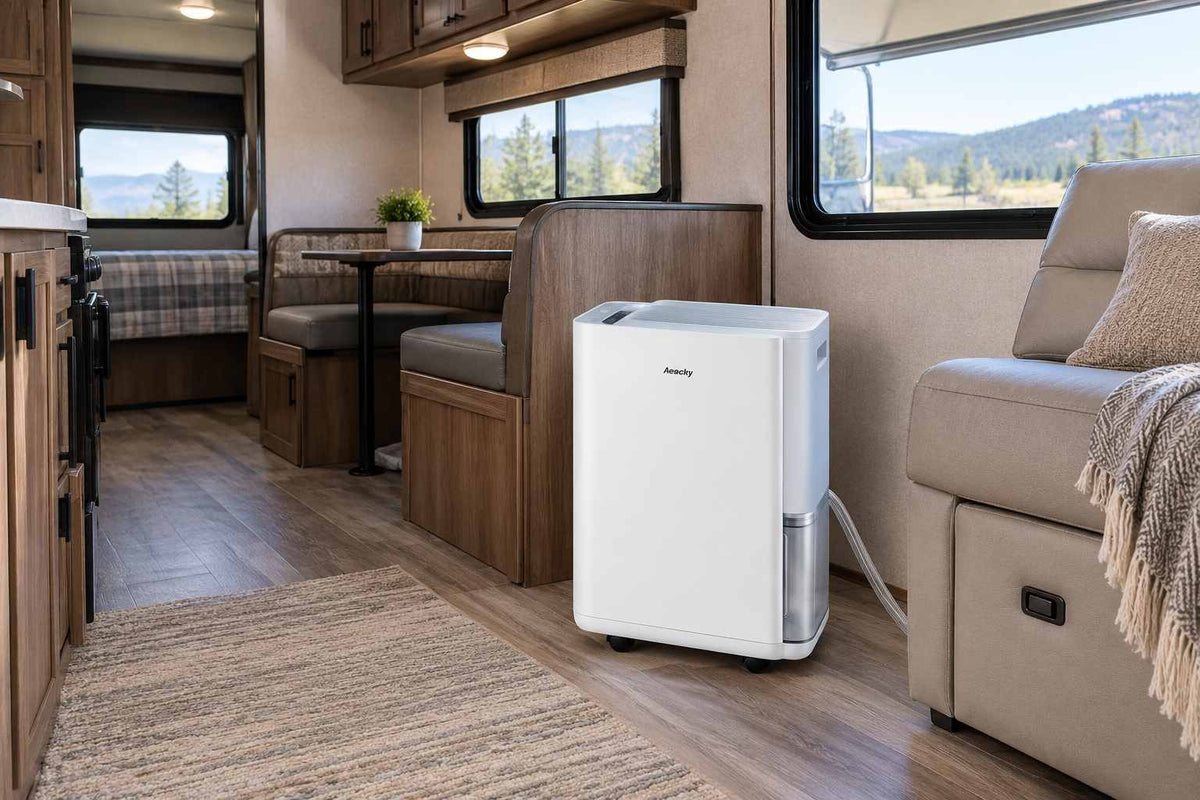
The best dehumidifier for RV storage depends on three things: whether your RV has access to electricity, how cold the storage area gets, and how much moisture is already inside. A stored RV can develop condensation, musty odors, mold, and mildew even when there is no obvious water leak. A small, enclosed interior simply has fewer ways for humid air to escape. Before storage, dry the RV thoroughly, remove moisture-holding items, and check for leaks. Then choose a dehumidifier for RV storage that can operate safely for the conditions your RV will actually face.
Why Does an RV Need Humidity Control During Storage?
An RV may be empty during storage, but moisture does not disappear when people leave.
Wet carpets, upholstery, bedding, towels, cooking residue, and condensation can leave water inside the vehicle. Temperature changes can then cause moisture in the air to condense on windows, walls, cabinets, and other cooler surfaces.
Over time, that moisture can contribute to musty odors and mold growth. Airstream recommends maintaining RV relative humidity at 60% or below and notes that colder climates may require even lower humidity to reduce condensation.
That is why RV humidity control should be part of the storage routine rather than an afterthought.
What Is the Best Dehumidifier for RV Storage?
There is no single machine that is best for every RV. The right choice depends heavily on the storage setup.
RV Storage With Power
If your RV remains connected to reliable shore power, a compact electric dehumidifier can actively remove moisture while the vehicle is stored.
A small dehumidifier for RV storage is particularly practical when space is limited. One option worth considering is the Aeocky Arion Small Portable Dehumidifier. Its portable design is intended for smaller environments, including motorhomes, making it more relevant to RV use than a large whole-house unit.
The important point is not to judge a unit only by its maximum capacity. For storage, look at its footprint, operating requirements, water collection method, automatic controls, and whether it can safely operate for extended periods.
RV Storage Without Power
A powered RV dehumidifier for storage cannot do much without a power source. In this situation, rechargeable desiccant products or passive moisture absorbers may be more practical.
They remove moisture more slowly than powered equipment, but they require little or no electricity while working. This makes them useful for sealed RVs that will remain unattended for weeks or months.
Cold-Weather and Winter Storage
Winter changes the equation.
A best RV dehumidifier for winter storage should be selected according to the actual temperature inside the RV. Some compressor-style dehumidifiers become less effective as temperatures fall and may not be suitable for very cold conditions. Current RV guides repeatedly identify temperature as one of the main factors separating ordinary RV dehumidification from winter storage.
If your RV is stored in an unheated location, check the manufacturer's minimum operating temperature before leaving an electric unit unattended.
How to Choose a Dehumidifier for RV Storage
Size and Moisture-Removal Capacity
An RV does not have the same air volume as a house, so a large residential dehumidifier may be unnecessary.
A dehumidifier for camper storage should fit the available floor or counter space while providing enough moisture control for the interior. For a small camper, a compact model may be more practical than a large appliance.
At the same time, do not assume that the smallest model is always sufficient. A large fifth-wheel stored in a humid climate may have a considerably higher moisture load than a small camper.
Temperature
Temperature is especially important during winter storage.
Before buying a best dehumidifier for stored RV, check the manufacturer's stated operating temperature range. A unit designed for warm indoor rooms may not perform the same way in an unheated storage building.
Auto Shut-Off and Drainage
An RV dehumidifier with auto shut off can be useful when the unit has a collection tank. Automatic shut-off helps prevent continued operation after the tank reaches capacity.
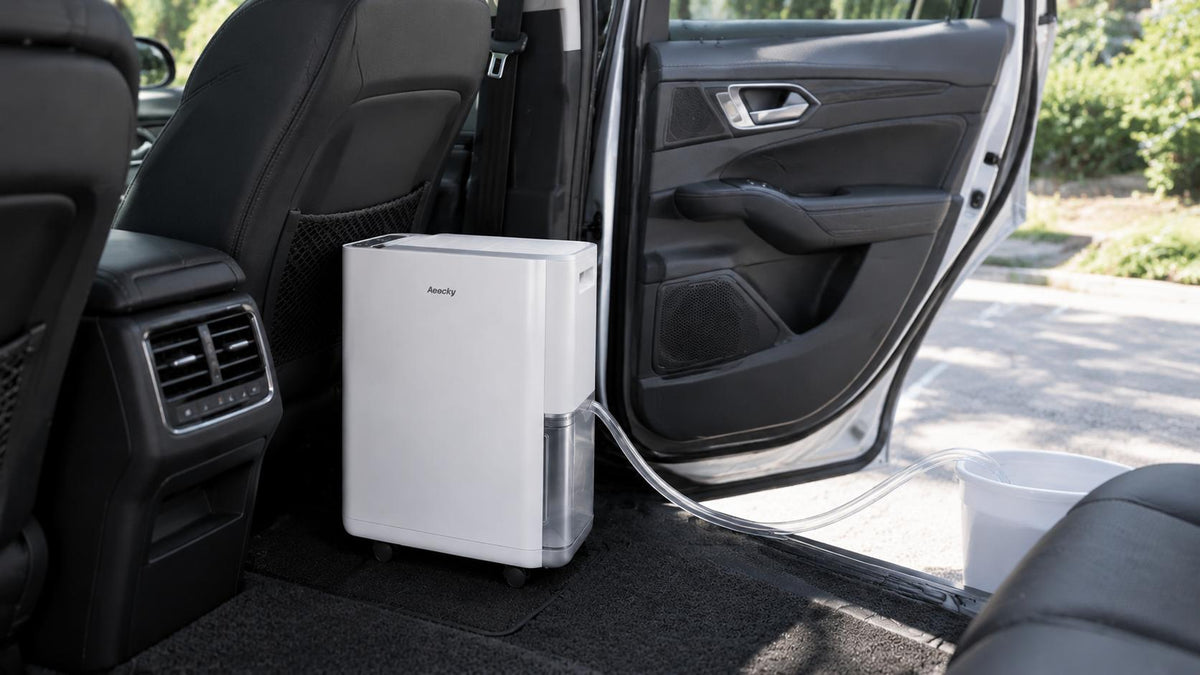
For long-term storage, however, drainage needs careful consideration. If the machine requires frequent emptying, it may not be practical to leave it unattended.
Energy Consumption
If electricity is available, energy use becomes another consideration.
A low energy dehumidifier for RV storage can reduce ongoing electricity consumption, particularly when the unit may operate for extended periods. But power efficiency should be considered alongside actual moisture removal. A very low-power unit that removes little moisture may not provide enough control in a damp environment.
For more information about how dehumidifiers actually remove moisture, see Aeocky's guide to what a dehumidifier does.
How to Keep an RV Dry in Storage
Knowing how to keep an RV dry in storage starts before the RV is parked.
First, dry the interior completely. Remove wet clothing, towels, bedding, and floor mats. Clean up spills and wipe down damp surfaces.
Next, inspect likely moisture-entry points. Check roof seams, windows, doors, plumbing areas, refrigerator areas, and other potential sources of water intrusion.
Then consider ventilation. Depending on the storage conditions and RV manufacturer's recommendations, vents or controlled airflow may help prevent humid air from becoming trapped inside.
Finally, use a suitable dehumidifier or moisture absorber based on whether electricity is available and how cold the storage area becomes.
If the RV is kept in a garage or enclosed building, the surrounding environment matters as well. Aeocky's guide to the best dehumidifier for garages is useful when the storage space itself has a humidity problem.
How to Prevent Mold in RV Storage
If you want to know how to prevent mold in RV storage, controlling humidity is only one part of the process.
Start by removing anything that can hold moisture. Damp fabrics, mattresses, carpets, and clothing can continue releasing water vapor after the RV has been closed.
Clean the interior before storage, especially areas where food residue or dirt may remain. Then make sure the RV is dry before sealing it up.
A humidity monitor can also be useful. Instead of guessing whether the RV is dry, you can check the actual relative humidity during storage and respond when readings remain too high.
Most importantly, inspect the RV periodically. Look for condensation, damp smells, visible mold, water stains, and signs of leaks. Long-term storage should not mean completely ignoring the vehicle until spring.
RV Humidity Control Checklist
Before storing your RV, use this simple checklist:
-
Dry carpets, upholstery, and hard surfaces.
-
Remove wet clothing, bedding, towels, and food.
-
Inspect windows, doors, roof seams, and plumbing for leaks.
-
Clean the refrigerator and kitchen areas.
-
Check the storage area's temperature and humidity.
-
Decide whether shore power is available.
-
Choose a suitable RV dehumidifier for storage or passive moisture absorber.
-
Use an RV dehumidifier with auto shut off when appropriate for unattended operation.
-
Place the unit where airflow is not blocked.
-
Check humidity periodically during long-term storage.
For additional ways to reduce indoor moisture, Aeocky's guide on how to dehumidify a room provides useful background that also applies to enclosed RV storage environments.
Final Thoughts
The best dehumidifier for RV storage is the one that matches your RV's actual storage conditions. A compact electric unit can make sense when reliable power is available, while passive moisture absorbers may be more practical when an RV is stored without electricity. Cold winter temperatures also need to be considered before choosing an electric model.
More importantly, a dehumidifier should be part of a broader moisture-control routine. Dry the RV before storage, remove moisture-holding materials, inspect for leaks, monitor humidity, and check the vehicle periodically. That combination gives your RV a much better chance of staying dry, clean, and ready for the next trip.


Leave a comment
This site is protected by hCaptcha and the hCaptcha Privacy Policy and Terms of Service apply.