

Arion

Best Dehumidifier for Cars: How to Prevent Moisture, Foggy Windows & Musty Odors

Best Dehumidifier for Cars: How to Prevent Moisture, Foggy Windows & Musty Odors
If your car smells musty, the inside of the windshield keeps fogging up, or the floor mats stay damp after rain, excess moisture is usually part of the problem. The best dehumidifier for car use depends on where the moisture comes from and whether the vehicle is parked or being driven. For a parked vehicle, a compact moisture absorber or suitable portable dehumidifier can help reduce humidity in the cabin. While driving, however, the car's air-conditioning and defrost system is the right tool for clearing fog quickly. The goal is simple: remove moisture at the source, lower cabin humidity, and keep condensation from returning.

Why Does a Car Get Humid?

Wet shoes, umbrellas, damp floor mats, spilled drinks, and passengers' breath all add water vapor to the cabin. Rain can also enter through doors, windows, sunroofs, or damaged seals.
When humid cabin air meets cold glass, condensation forms. That is why foggy windows are often worse on cool mornings.
If the same area stays wet after you dry the cabin, do not rely on a dehumidifier alone. Check for leaks, wet insulation, clogged drains, or soaked carpeting first.

What Is the Best Dehumidifier for a Car?

For most parked vehicles, the best dehumidifier for cars is a compact, secure moisture-control solution that matches the amount of humidity in the cabin.
A reusable desiccant bag is a simple option for mild moisture because it requires no electrical connection. It can sit inside a parked car and absorb water vapor over time.
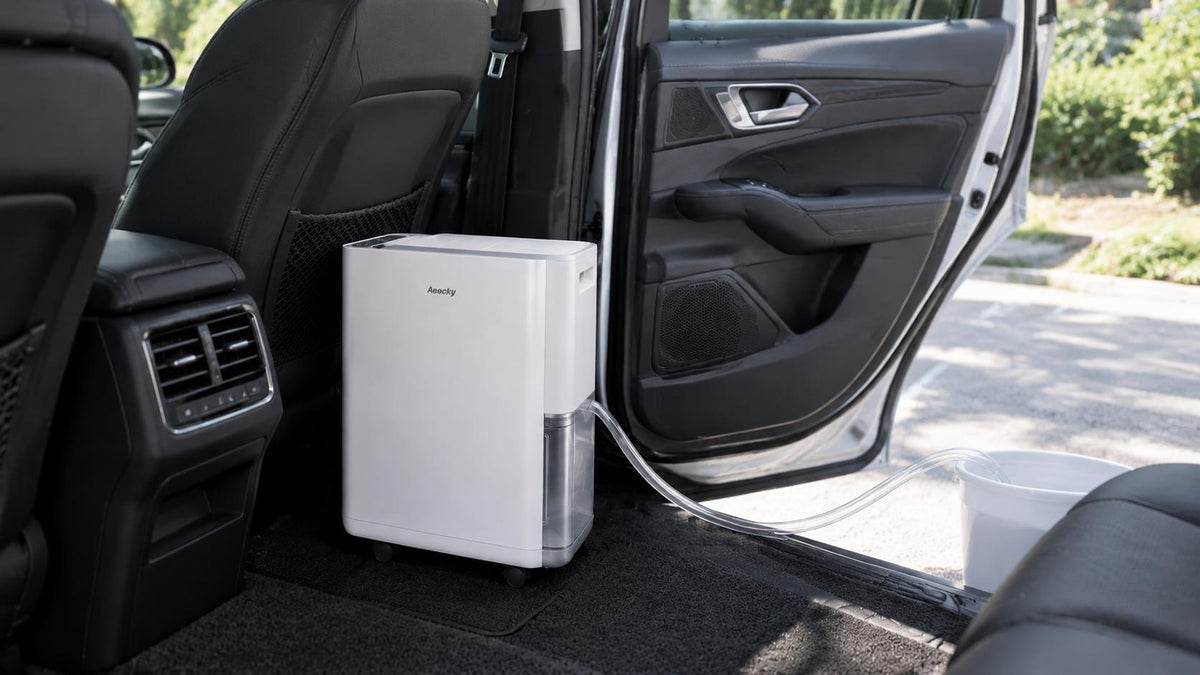
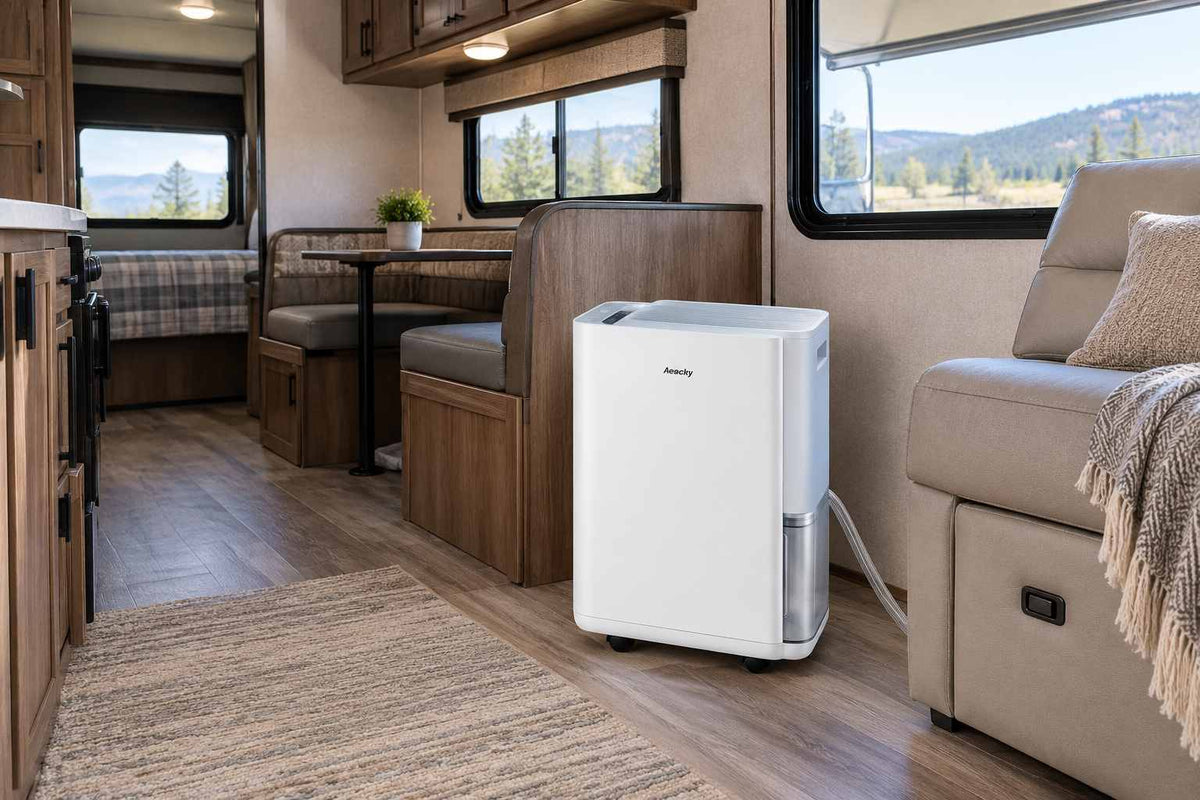
For users who need a powered solution in a suitable stationary environment, a compact unit such as the Aeocky Arion Small Portable Dehumidifier is worth considering. Its portable design makes it more relevant to car, motorhome, and other smaller-space applications than Aeocky's larger whole-house models.
However, an electric dehumidifier should not simply be placed loose inside a moving vehicle. Power access, drainage, ventilation, stable placement, and the manufacturer's operating instructions all need to be considered. In practice, the Arion is better suited to a parked vehicle, motorhome, or enclosed storage environment than to use while driving.
The right choice therefore depends on the situation. A small dehumidifier for car use can help with recurring humidity when the vehicle is parked, while a passive absorber may be enough for occasional moisture.

Car Dehumidifier Types: Which One Fits Your Situation?

Passive Desiccant Bags

A rechargeable silica-gel bag is one of the simplest types of car dehumidifier for a parked vehicle. It needs no power, produces no noise, and can be reused when properly recharged according to the manufacturer's instructions.
This option works well when the problem is mild condensation or humidity rather than a large amount of water inside the vehicle.

Small Electric Dehumidifiers

A portable dehumidifier for car use can remove moisture more actively, but the surrounding conditions matter.
Before using an electric unit, check its power requirements, operating temperature, drainage method, and placement requirements. It should never block pedals, interfere with vehicle controls, obstruct visibility, or create a spill hazard.
For a vehicle that remains parked in a garage or other suitable enclosed space, a compact electric model may be more practical than a passive absorber.

Disposable Moisture Absorbers

Disposable moisture absorbers can collect water without electricity and are easy to use. However, many contain liquid once saturated, so they need to remain upright and secure.
That matters in a vehicle because sudden braking, turning, or vibration can cause a poorly positioned container to tip over.

How to Remove Moisture From a Car

If you are searching for how to remove moisture from car interiors, start with the source rather than the dehumidifier.
  1. Remove wet items. Take out soaked mats, umbrellas, jackets, and other damp objects.
  2. Dry the interior. Use towels or a wet vacuum on carpets and upholstery where necessary.
  3. Check for leaks. Inspect door seals, window seals, the sunroof area, trunk seals, and drainage points.
  4. Improve ventilation. When weather conditions permit, air out the vehicle so trapped humid air can escape.
  5. Use a car dehumidifier while parked. Place a suitable absorber or approved portable unit where air can circulate around it.
  6. Monitor recurring condensation. If the windows continue fogging despite a dry interior, investigate hidden moisture or ventilation problems.
A dehumidifier can control humidity, but it cannot repair a leaking door seal or dry out a seriously waterlogged floor by itself.

How to Reduce Humidity in a Car While Driving

Knowing how to reduce humidity in car cabins while driving is different from controlling moisture overnight.
If the windshield is already fogged, use the vehicle's defrost setting. Air conditioning can also help remove moisture from cabin air. In many situations, switching off recirculation allows the vehicle to bring in outside air rather than continually circulating humid cabin air.
This is why a dehumidifier for foggy car windows should not be treated as a replacement for the vehicle's defroster. A passive moisture absorber works gradually. It cannot clear a windshield instantly while you are driving.
For a deeper explanation of how dehumidifiers remove moisture from air, see Aeocky's guide to what a dehumidifier does.

Best Way to Dehumidify a Car Without Creating New Problems

The best way to dehumidify a car is to match the solution to the moisture load.
For light overnight humidity, a reusable desiccant absorber may be enough. For a damp vehicle stored in a garage or other enclosed area with suitable power, an electric dehumidifier can provide more active moisture control.
If there is standing water, wet carpeting, or a persistent leak, drying and repair should come first.
Placement also matters. Keep moisture-control products away from pedals, airbags, electrical connections, vents, and the driver's line of sight. Any liquid-collecting product should remain stable and upright.
If you are deciding whether a dehumidifier is appropriate for your particular situation, Aeocky's dehumidifier guide provides additional background on how these appliances work and what they are designed to do.

Car Humidity Control: A Simple Routine

Good car humidity control does not require running a dehumidifier constantly.
  • Remove wet floor mats and dry them outside the vehicle.
  • Do not leave wet umbrellas, towels, or clothing in the cabin.
  • Clean the inside of the windshield regularly.
  • Check door, trunk, and sunroof seals if dampness keeps returning.
  • Air out the car when weather conditions permit.
  • Use a suitable moisture absorber when the vehicle will remain closed for several days.
  • If the vehicle is stored in a humid garage, control the humidity of the garage as well.
This last point is particularly important. If the surrounding garage is humid, a dehumidifier for car moisture may only address part of the problem. Reducing humidity throughout the garage can help protect the vehicle as well as tools, stored belongings, and other moisture-sensitive items.
For this situation, see Aeocky's guide to choosing a dehumidifier for garages.

When Should You Replace a Car Dehumidifier?

A passive absorber needs attention once its desiccant is saturated or its indicator shows that it needs recharging. Follow the manufacturer's instructions rather than assuming all desiccant products can be reactivated in the same way.
Electric units require their own maintenance. Depending on the model, this can include emptying the water tank, cleaning the filter, or setting up continuous drainage.
If a unit becomes damaged, leaks, overheats, or no longer operates normally, stop using it.
Remember that a dehumidifier for car interior moisture is a humidity-control tool, not a substitute for repairing water intrusion.

Final Thoughts

The best dehumidifier for car use is not necessarily the most powerful model. For mild humidity in a parked vehicle, a rechargeable desiccant absorber can be simple and convenient. For a vehicle stored in a suitable enclosed space, a compact electric unit such as the Aeocky Arion Small Portable Dehumidifier may provide more active moisture control.
But foggy windows while driving are a different problem. The vehicle's defroster and air-conditioning system should handle immediate condensation, while a dehumidifier helps manage moisture over time.
The most reliable approach is to remove wet items, identify leaks, dry the interior, and then use appropriate humidity control to prevent the problem from returning.

 

Reading next

Is It Okay to Sleep With a Dehumidifier On? Bedroom Safety Tips
Best Dehumidifier for RV Storage: How to Protect Your RV When It's Not in Use

Leave a comment

This site is protected by hCaptcha and the hCaptcha Privacy Policy and Terms of Service apply.

Best Dehumidifier for Cars: How to Prevent Moisture, Foggy Windows & Musty Odors

If your car smells musty, the inside of the windshield keeps fogging up, or the floor mats stay damp after rain, excess moisture is usually part of the problem. The best dehumidifier for car use depends on where the moisture comes from and whether the vehicle is parked or being driven. For a parked vehicle, a compact moisture absorber or suitable portable dehumidifier can help reduce humidity in the cabin. While driving, however, the car's air-conditioning and defrost system is the right tool for clearing fog quickly. The goal is simple: remove moisture at the source, lower cabin humidity, and keep condensation from returning.

Why Does a Car Get Humid?

Wet shoes, umbrellas, damp floor mats, spilled drinks, and passengers' breath all add water vapor to the cabin. Rain can also enter through doors, windows, sunroofs, or damaged seals.
When humid cabin air meets cold glass, condensation forms. That is why foggy windows are often worse on cool mornings.
If the same area stays wet after you dry the cabin, do not rely on a dehumidifier alone. Check for leaks, wet insulation, clogged drains, or soaked carpeting first.

What Is the Best Dehumidifier for a Car?

For most parked vehicles, the best dehumidifier for cars is a compact, secure moisture-control solution that matches the amount of humidity in the cabin.
A reusable desiccant bag is a simple option for mild moisture because it requires no electrical connection. It can sit inside a parked car and absorb water vapor over time.
For users who need a powered solution in a suitable stationary environment, a compact unit such as the Aeocky Arion Small Portable Dehumidifier is worth considering. Its portable design makes it more relevant to car, motorhome, and other smaller-space applications than Aeocky's larger whole-house models.
However, an electric dehumidifier should not simply be placed loose inside a moving vehicle. Power access, drainage, ventilation, stable placement, and the manufacturer's operating instructions all need to be considered. In practice, the Arion is better suited to a parked vehicle, motorhome, or enclosed storage environment than to use while driving.
The right choice therefore depends on the situation. A small dehumidifier for car use can help with recurring humidity when the vehicle is parked, while a passive absorber may be enough for occasional moisture.

Car Dehumidifier Types: Which One Fits Your Situation?

Passive Desiccant Bags

A rechargeable silica-gel bag is one of the simplest types of car dehumidifier for a parked vehicle. It needs no power, produces no noise, and can be reused when properly recharged according to the manufacturer's instructions.
This option works well when the problem is mild condensation or humidity rather than a large amount of water inside the vehicle.

Small Electric Dehumidifiers

A portable dehumidifier for car use can remove moisture more actively, but the surrounding conditions matter.
Before using an electric unit, check its power requirements, operating temperature, drainage method, and placement requirements. It should never block pedals, interfere with vehicle controls, obstruct visibility, or create a spill hazard.
For a vehicle that remains parked in a garage or other suitable enclosed space, a compact electric model may be more practical than a passive absorber.

Disposable Moisture Absorbers

Disposable moisture absorbers can collect water without electricity and are easy to use. However, many contain liquid once saturated, so they need to remain upright and secure.
That matters in a vehicle because sudden braking, turning, or vibration can cause a poorly positioned container to tip over.

How to Remove Moisture From a Car

If you are searching for how to remove moisture from car interiors, start with the source rather than the dehumidifier.
  1. Remove wet items. Take out soaked mats, umbrellas, jackets, and other damp objects.
  2. Dry the interior. Use towels or a wet vacuum on carpets and upholstery where necessary.
  3. Check for leaks. Inspect door seals, window seals, the sunroof area, trunk seals, and drainage points.
  4. Improve ventilation. When weather conditions permit, air out the vehicle so trapped humid air can escape.
  5. Use a car dehumidifier while parked. Place a suitable absorber or approved portable unit where air can circulate around it.
  6. Monitor recurring condensation. If the windows continue fogging despite a dry interior, investigate hidden moisture or ventilation problems.
A dehumidifier can control humidity, but it cannot repair a leaking door seal or dry out a seriously waterlogged floor by itself.

How to Reduce Humidity in a Car While Driving

Knowing how to reduce humidity in car cabins while driving is different from controlling moisture overnight.
If the windshield is already fogged, use the vehicle's defrost setting. Air conditioning can also help remove moisture from cabin air. In many situations, switching off recirculation allows the vehicle to bring in outside air rather than continually circulating humid cabin air.
This is why a dehumidifier for foggy car windows should not be treated as a replacement for the vehicle's defroster. A passive moisture absorber works gradually. It cannot clear a windshield instantly while you are driving.
For a deeper explanation of how dehumidifiers remove moisture from air, see Aeocky's guide to what a dehumidifier does.

Best Way to Dehumidify a Car Without Creating New Problems

The best way to dehumidify a car is to match the solution to the moisture load.
For light overnight humidity, a reusable desiccant absorber may be enough. For a damp vehicle stored in a garage or other enclosed area with suitable power, an electric dehumidifier can provide more active moisture control.
If there is standing water, wet carpeting, or a persistent leak, drying and repair should come first.
Placement also matters. Keep moisture-control products away from pedals, airbags, electrical connections, vents, and the driver's line of sight. Any liquid-collecting product should remain stable and upright.
If you are deciding whether a dehumidifier is appropriate for your particular situation, Aeocky's dehumidifier guide provides additional background on how these appliances work and what they are designed to do.

Car Humidity Control: A Simple Routine

Good car humidity control does not require running a dehumidifier constantly.
  • Remove wet floor mats and dry them outside the vehicle.
  • Do not leave wet umbrellas, towels, or clothing in the cabin.
  • Clean the inside of the windshield regularly.
  • Check door, trunk, and sunroof seals if dampness keeps returning.
  • Air out the car when weather conditions permit.
  • Use a suitable moisture absorber when the vehicle will remain closed for several days.
  • If the vehicle is stored in a humid garage, control the humidity of the garage as well.
This last point is particularly important. If the surrounding garage is humid, a dehumidifier for car moisture may only address part of the problem. Reducing humidity throughout the garage can help protect the vehicle as well as tools, stored belongings, and other moisture-sensitive items.
For this situation, see Aeocky's guide to choosing a dehumidifier for garages.

When Should You Replace a Car Dehumidifier?

A passive absorber needs attention once its desiccant is saturated or its indicator shows that it needs recharging. Follow the manufacturer's instructions rather than assuming all desiccant products can be reactivated in the same way.
Electric units require their own maintenance. Depending on the model, this can include emptying the water tank, cleaning the filter, or setting up continuous drainage.
If a unit becomes damaged, leaks, overheats, or no longer operates normally, stop using it.
Remember that a dehumidifier for car interior moisture is a humidity-control tool, not a substitute for repairing water intrusion.

Final Thoughts

The best dehumidifier for car use is not necessarily the most powerful model. For mild humidity in a parked vehicle, a rechargeable desiccant absorber can be simple and convenient. For a vehicle stored in a suitable enclosed space, a compact electric unit such as the Aeocky Arion Small Portable Dehumidifier may provide more active moisture control.
But foggy windows while driving are a different problem. The vehicle's defroster and air-conditioning system should handle immediate condensation, while a dehumidifier helps manage moisture over time.
The most reliable approach is to remove wet items, identify leaks, dry the interior, and then use appropriate humidity control to prevent the problem from returning.


Popular Posts
Best Dehumidifier for a Home Office: Quiet, Compact & Efficient Options
Best Dehumidifier for Crawl Spaces: Size, Drainage & Humidity Control
Best Dehumidifier for RV Storage: How to Protect Your RV When It's Not in Use
Best Dehumidifier for Cars: How to Prevent Moisture, Foggy Windows & Musty Odors
Is It Okay to Sleep With a Dehumidifier On? Bedroom Safety Tips
Should I run my dehumidifier during the day or at night
How to Tell If Your House Needs a Dehumidifier: Signs of High Humidity
Should I Use a Dehumidifier in the Summer?
Dehumidifiers for Pet Owners: Reducing Odors, Dampness & Pet Dander
Can Humidity Damage Your Home? How a Dehumidifier Protects Walls, Wood & Electronics
Best Dehumidifier Setup for Basements: Size, Placement & Drainage Guide
Can a Dehumidifier Help with Allergies and Dust Mites?
Ultimate Guide to Dehumidifier: How It Works and How to Choose the Right One
10 Signs Your Home Is Too Humid and How a Dehumidifier Can Help
What Is the Ideal Indoor Humidity Level? A Complete Guide for Your Home
How Long Do Dehumidifiers Last?
Do Dehumidifiers Use a Lot of Electricity?
Can a Dehumidifier Kill Mold? What You Need to Know
Dehumidifier: What It Does, How It Works, and When You Need One
Does a Dehumidifier Cool a Room? Dehumidifier vs. Air Conditioner
Subscribe Us
Subscribe to our newsletter and receive a selection of cool articles every weeks