

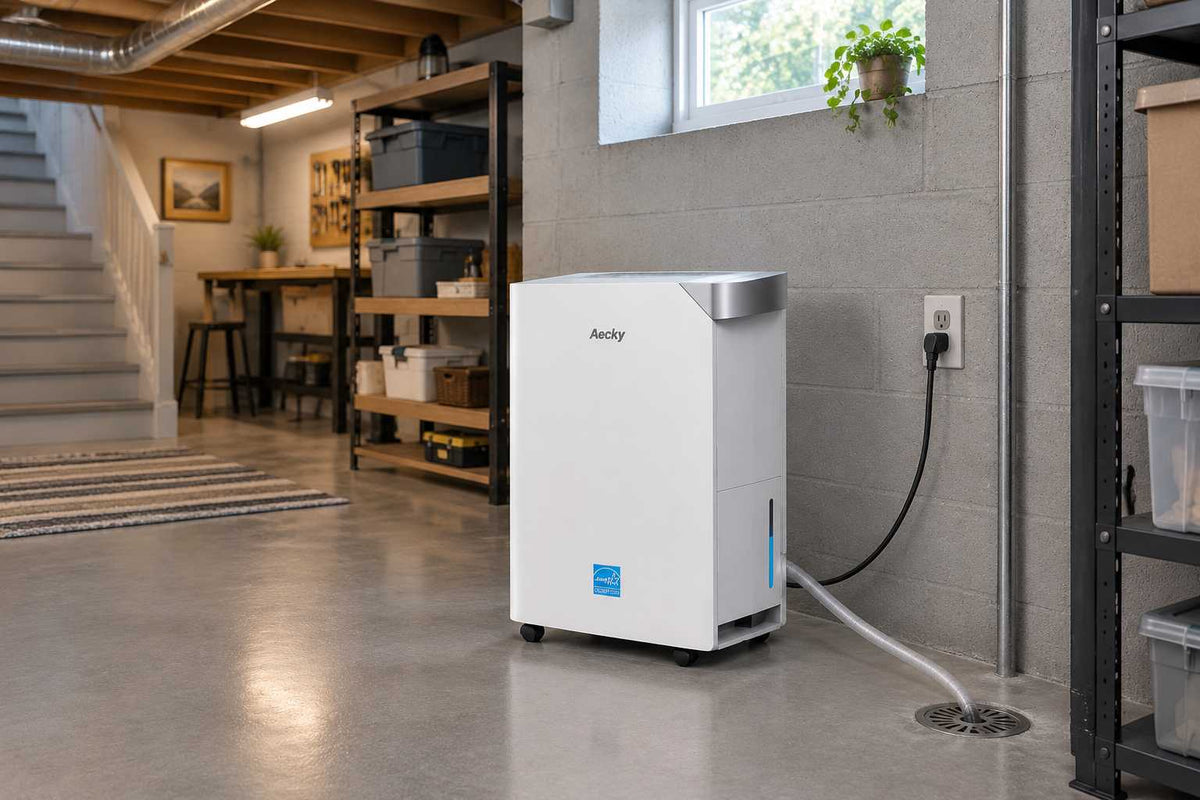
A basement dehumidifier works best when the unit size, placement, and drainage setup match your space. Choosing the right dehumidifier is not only about removing moisture but also about maintaining stable humidity levels over time. A unit that is too small may run constantly without controlling humidity, while one that is too large may waste energy.
For most basement owners, the key factors are capacity, airflow, location, and drainage. Understanding these details can help you create a more comfortable and better-protected basement environment.
Why Basements Need a Dehumidifier
Basements naturally tend to collect moisture because they are below ground level and often have limited air circulation. Water can enter through foundation walls, floors, plumbing areas, or humid outdoor air.
High humidity can contribute to:
-
Musty odors.
-
Mold and mildew growth.
-
Condensation on pipes and walls.
-
Damage to stored items and furniture.
A properly sized dehumidifier helps remove excess moisture and keeps indoor humidity under control.
How to Choose the Best Dehumidifier Size for Basement
Finding the best dehumidifier size for basement spaces depends on two main factors: room size and moisture level.
Understanding Pint Capacity
Dehumidifier capacity is measured by how many pints of water the unit can remove from the air in 24 hours.
Common residential sizes include:
-
Small capacity units for less humid spaces.
-
Medium capacity units for average basements.
-
Large capacity units for very damp or large areas.
The larger the basement and the higher the moisture level, the greater capacity you typically need.
Matching Capacity to Basement Size
When choosing the best dehumidifier for basement use, consider:
-
Basement square footage.
-
Whether the basement is finished.
-
Existing moisture problems.
-
Local climate conditions.
A small finished basement may require a different solution compared with a large unfinished basement with visible dampness.
For homeowners managing larger basement spaces, the AEOKY Leo Series Energy Efficient Dehumidifier with Pump for Basement is designed for environments where stronger moisture removal and convenient drainage are important.
How to Set Up a Dehumidifier in a Basement
Knowing how to set up a dehumidifier in a basement correctly affects performance.
Choose the Right Location
Place the unit in an area where air can move freely.
Good placement usually includes:
-
Near the center of the basement.
-
Close to areas with higher moisture.
-
Away from blocked corners.
Avoid placing the unit directly against walls or furniture because restricted airflow reduces efficiency.
Allow Proper Airflow Space
Most dehumidifiers need open space around air intake and exhaust areas.
Keeping enough clearance allows the unit to:
-
Collect humid air efficiently.
-
Release dry air evenly.
-
Operate more effectively.
Where to Place a Dehumidifier in Basement Areas
Many homeowners ask where to place a dehumidifier in basement rooms.
The best location depends on your basement layout.
For general moisture control:
-
Place the unit near the center of the space.
-
Keep doors open between connected areas when possible.
-
Avoid hiding the unit behind storage items.
For basements with specific moisture sources, placing the unit closer to those areas may help improve moisture removal.
Common mistakes include:
-
Putting the unit in a corner.
-
Blocking air vents.
-
Placing it directly beside walls.
Continuous Drainage Setup for Basement Dehumidifiers
Emptying a water bucket every day can become inconvenient, especially in damp basements.
A continuous drainage setup allows collected water to drain automatically.
Gravity Drain vs Pump Drain
A gravity drain uses a hose that allows water to flow downward into a drain.
This works well when:
-
A floor drain is nearby.
-
The drain connection is lower than the unit.
A pump drain is useful when water needs to move upward or across a longer distance.
The AEOKY Leo Series Energy Efficient Dehumidifier with Pump for Basement provides a pump-based drainage option for basement installations where standard gravity drainage may not be convenient.
How to Install Continuous Drainage
A typical setup includes:
-
Connect the drainage hose.
-
Ensure the hose has a clear path.
-
Check for leaks.
-
Confirm that water flows properly.
Always follow the manufacturer’s installation instructions for your specific model.
Best Dehumidifier Settings for Basement Humidity Control
The right dehumidifier settings for basement areas depend on your comfort needs and moisture conditions.
Many homeowners maintain basement humidity around 40%–60%.
A built-in humidistat can automatically monitor humidity and adjust operation when needed.
Running the unit continuously may be necessary during very humid seasons, while lighter operation may be enough during drier periods.
Features to Look for in a Basement Dehumidifier
Important features include:
Energy Efficiency
Because basement dehumidifiers may operate for long periods, energy consumption matters.
Energy-efficient models can help manage electricity costs while maintaining moisture control. AEOKY’s Energy Star Series Dehumidifiers include options designed for homeowners looking for efficient humidity management.
Built-In Pump
A pump is useful for basements where drainage location makes gravity draining difficult.
Automatic Humidity Control
A humidistat allows the unit to maintain a preferred humidity level without constant manual adjustments.
Final Thoughts
Choosing the right basement dehumidifier requires more than selecting the highest-capacity model available. The best setup combines proper sizing, smart placement, suitable humidity settings, and a drainage method that fits your basement layout.
A well-installed dehumidifier can help control excess moisture and make basement spaces more comfortable throughout the year. Before purchasing, consider your basement size, moisture level, and drainage needs to find a solution that fits your home.


Leave a comment
This site is protected by hCaptcha and the hCaptcha Privacy Policy and Terms of Service apply.