

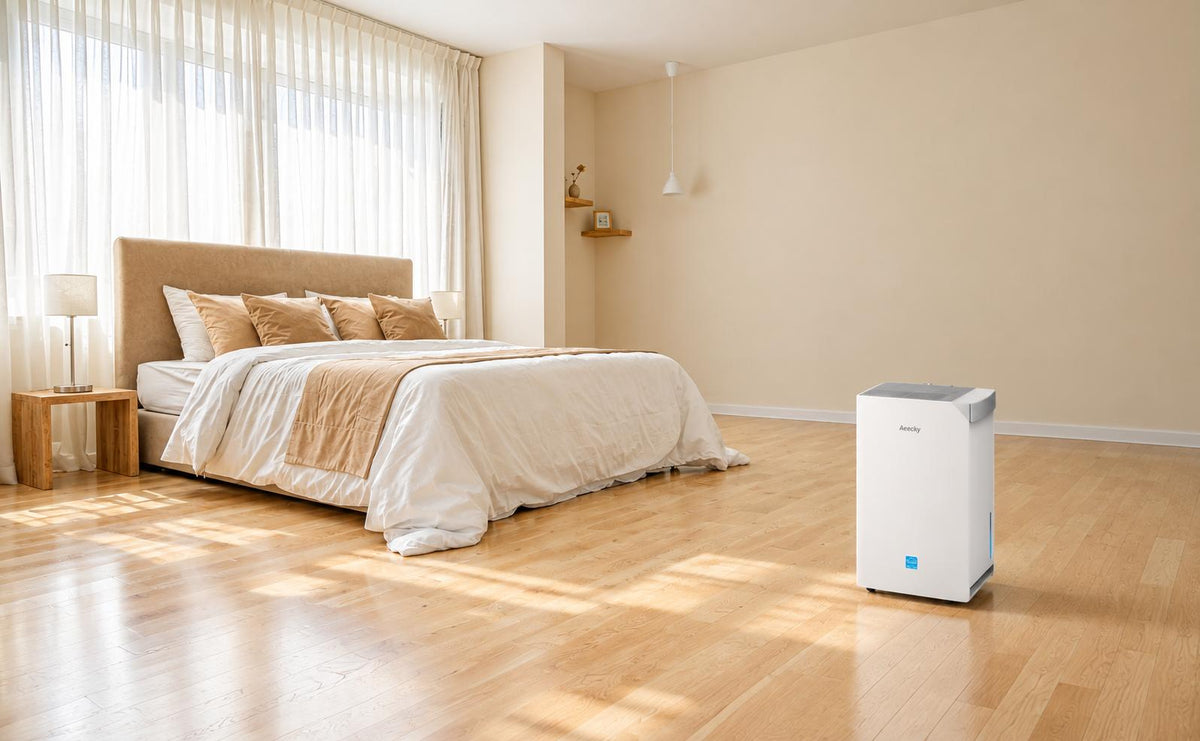
Dehumidifier

Do Dehumidifiers Use a Lot of Electricity?

Do Dehumidifiers Use a Lot of Electricity?
A dehumidifier does use electricity, but that does not automatically mean it will add a large amount to your electric bill. The actual cost depends on the unit’s power draw, how many hours it runs, your local electricity rate, and how much moisture it needs to remove. A dehumidifier may run for several hours a day without consuming power at its full rated wattage the entire time. Understanding these factors makes it easier to estimate your dehumidifier running cost and choose ways to keep electricity use under control.

How Much Electricity Does a Dehumidifier Use?

The easiest way to estimate electricity use is to look at the unit’s wattage and operating time.
The basic calculation is:
Electricity Used (kWh) = Watts ÷ 1,000 × Hours of Operation
For example, a 500-watt dehumidifier that runs for 8 hours would use:
500 ÷ 1,000 × 8 = 4 kWh
That is the theoretical consumption if the unit draws 500 watts for the full 8 hours. Actual consumption can be lower because many compressor dehumidifiers cycle on and off as the humidity changes.

Dehumidifier Wattage Explained

A unit's wattage tells you how much electrical power it draws while operating. It does not tell you how much electricity it will use over an entire day or month.
A larger-capacity dehumidifier may have a higher power draw, but capacity and efficiency are not the same thing. Dehumidifier capacity is measured in pints of water removed per day under specified test conditions, while energy efficiency is measured separately. ENERGY STAR uses the Integrated Energy Factor (IEF), which measures liters of water removed per kilowatt-hour. A higher IEF generally indicates better efficiency.
That means comparing two units by wattage alone can give you an incomplete picture.

How Much Does a Dehumidifier Cost to Run?

Once you know how much electricity the unit uses, you can estimate its running cost.
Daily Cost = Daily kWh × Electricity Rate
For example, if a dehumidifier uses 4 kWh per day and your electricity rate is $0.18 per kWh:
4 × $0.18 = $0.72 per day
For a 30-day month:
$0.72 × 30 = $21.60 per month
This is why there is no single answer to “how much does a dehumidifier cost to run per month?” The same machine can cost different amounts in different homes because electricity rates and operating hours vary.

How Much Does a Dehumidifier Use Per Day?

Your dehumidifier use per day depends largely on indoor humidity and the moisture load of the space.
For illustration, a 500-watt unit would theoretically use:
Operating Time Electricity Used
4 hours/day 2 kWh
8 hours/day 4 kWh
12 hours/day 6 kWh
24 hours/day 12 kWh
These numbers assume the unit draws 500 watts continuously while running. They are useful for estimating maximum operating consumption, but they should not be treated as the exact amount every household will use.

What Affects Dehumidifier Running Cost?

Several factors can change your actual electricity usage.

Room Humidity and Moisture Levels

A damp basement after heavy rain may require much more dehumidification than a relatively dry bedroom. If moisture keeps entering the space through leaks, poor ventilation, open doors, or humid outdoor air, the unit may need to run more often.

Dehumidifier Size and Capacity

Choosing the right size matters. An undersized unit may need to operate for longer periods to control humidity.
At the same time, a larger unit does not automatically mean a higher electric bill. What matters is how efficiently it removes moisture and how long it needs to operate.

Your Electricity Rate

Electricity prices vary by location and utility plan. A household paying $0.15 per kWh and one paying $0.30 per kWh can have very different monthly costs even when they use the same dehumidifier for the same number of hours.

Temperature and Operating Conditions

Temperature, airflow, room size, and moisture levels can all affect dehumidifier performance. This is particularly important in basements, garages, and other spaces with a high moisture load.

Does a Dehumidifier Use Electricity All the Time?

Not necessarily.
One of the most common mistakes is multiplying the rated wattage by 24 hours and assuming that is the actual daily consumption. Compressor-based dehumidifiers can cycle as the humidity level changes. ENERGY STAR's current efficiency methodology also accounts for energy used during operating and non-operating modes rather than treating every hour as identical.
For example, a unit rated at 500 watts does not necessarily consume 12 kWh every day simply because it is switched on for 24 hours. If the compressor cycles off after the target humidity is reached, actual consumption can be lower.
The opposite can happen in a very damp space. If humidity remains high, the compressor may run more frequently or for longer periods.

Are Energy-Efficient Dehumidifiers Worth It?

If a dehumidifier will run regularly, efficiency deserves attention.
ENERGY STAR says certified dehumidifiers use more efficient refrigeration coils, compressors, and fans and can use about 20% less energy than similarly sized conventional units while removing the same amount of moisture.

Look Beyond Wattage

When comparing an energy efficient dehumidifier, look at more than its rated watts.
Useful specifications include:
  • Water removal capacity
  • Integrated Energy Factor (IEF)
  • Annual energy consumption, when available
  • ENERGY STAR certification
  • Intended room or space size
  • Humidity controls and operating modes
IEF is especially useful because it connects energy consumption with the amount of moisture removed. That gives you a better way to think about efficiency than wattage alone.

ENERGY STAR and Dehumidifier Efficiency

ENERGY STAR currently sets efficiency requirements for certified portable and whole-home dehumidifiers based on capacity or product case volume and IEF. For portable models rated at 50 pints/day or more, for example, the current certification criterion is an IEF of at least 3.30 L/kWh.
For homeowners looking for an efficient unit, checking the ENERGY STAR label and comparing efficiency information can be more useful than simply choosing the model with the lowest wattage.

AEOCKY Energy-Efficient Dehumidifier Options

AEOCKY's current dehumidifier range includes several models designed around automatic humidity control and energy efficiency.
For larger spaces, the AEOCKY Rhea Series offers models rated for up to 80, 105, or 140 pints/day, with coverage listed up to 5,500, 6,000, or 8,000 square feet. The current product page lists ENERGY STAR Most Efficient 2025 models and Smart Auto-Humidity control.
The AEOCKY Leo Series is another larger-space option, with a built-in drain pump and models rated up to 80, 105, or 140 pints/day. AEOCKY currently lists the series as ENERGY STAR Most Efficient 2025.
For another option in the same general capacity range, the AEOCKY Leo-Lite Series is currently listed as ENERGY STAR Certified 2025, with Smart Auto-Humidity and models covering up to 5,000–7,000 square feet depending on the version.
For smaller spaces, the AEOCKY Arion is listed with up to 50 pints/day capacity and coverage up to 3,000 square feet, along with automatic humidity control.
You can also see AEOCKY's broader Energy Star Series to compare its current dehumidifier models and their capacity ranges.

How to Reduce Dehumidifier Electricity Usage

You do not necessarily need to run a dehumidifier less to lower electricity use. The goal is to remove moisture efficiently.

Set a Reasonable Humidity Level

Avoid setting the target humidity unnecessarily low. A reasonable setting can reduce unnecessary runtime while still controlling excess moisture.

Choose the Right Size

Match the dehumidifier to the room size and moisture load. A unit that is too small may run for long periods without controlling humidity effectively.

Keep Airflow Unblocked

Clean the filter and keep the intake and exhaust areas clear. Restricted airflow can make the unit work harder and reduce its effectiveness.

Reduce Moisture at the Source

Fix leaks, improve bathroom ventilation, close doors and windows when outdoor air is very humid, and address other sources of moisture. Reducing the amount of moisture entering the room can reduce how often the dehumidifier needs to run.

Use Automatic Humidity Control

A humidistat or auto mode allows the unit to respond to changing humidity instead of operating continuously without regard to indoor conditions.

So, Do Dehumidifiers Use a Lot of Electricity?

A dehumidifier does consume electricity, but its impact on your bill depends on how much power it draws, how long it actually runs, how humid the space is, and what you pay for electricity. A simple wattage calculation can give you a starting point, but actual usage may be lower when the compressor cycles off. For regular use, choosing the right capacity, maintaining good airflow, controlling moisture sources, and looking at efficiency metrics such as IEF can all help manage your dehumidifier running cost. The right approach is not simply to use less power. It is to remove the moisture you need with as little wasted energy as possible.


Reading next

Can a Dehumidifier Kill Mold? What You Need to Know
How Long Do Dehumidifiers Last?

Leave a comment

This site is protected by hCaptcha and the hCaptcha Privacy Policy and Terms of Service apply.

Do Dehumidifiers Use a Lot of Electricity?

A dehumidifier does use electricity, but that does not automatically mean it will add a large amount to your electric bill. The actual cost depends on the unit’s power draw, how many hours it runs, your local electricity rate, and how much moisture it needs to remove. A dehumidifier may run for several hours a day without consuming power at its full rated wattage the entire time. Understanding these factors makes it easier to estimate your dehumidifier running cost and choose ways to keep electricity use under control.

How Much Electricity Does a Dehumidifier Use?

The easiest way to estimate electricity use is to look at the unit’s wattage and operating time.
The basic calculation is:
Electricity Used (kWh) = Watts ÷ 1,000 × Hours of Operation
For example, a 500-watt dehumidifier that runs for 8 hours would use:
500 ÷ 1,000 × 8 = 4 kWh
That is the theoretical consumption if the unit draws 500 watts for the full 8 hours. Actual consumption can be lower because many compressor dehumidifiers cycle on and off as the humidity changes.

Dehumidifier Wattage Explained

A unit's wattage tells you how much electrical power it draws while operating. It does not tell you how much electricity it will use over an entire day or month.
A larger-capacity dehumidifier may have a higher power draw, but capacity and efficiency are not the same thing. Dehumidifier capacity is measured in pints of water removed per day under specified test conditions, while energy efficiency is measured separately. ENERGY STAR uses the Integrated Energy Factor (IEF), which measures liters of water removed per kilowatt-hour. A higher IEF generally indicates better efficiency.
That means comparing two units by wattage alone can give you an incomplete picture.

How Much Does a Dehumidifier Cost to Run?

Once you know how much electricity the unit uses, you can estimate its running cost.
Daily Cost = Daily kWh × Electricity Rate
For example, if a dehumidifier uses 4 kWh per day and your electricity rate is $0.18 per kWh:
4 × $0.18 = $0.72 per day
For a 30-day month:
$0.72 × 30 = $21.60 per month
This is why there is no single answer to “how much does a dehumidifier cost to run per month?” The same machine can cost different amounts in different homes because electricity rates and operating hours vary.

How Much Does a Dehumidifier Use Per Day?

Your dehumidifier use per day depends largely on indoor humidity and the moisture load of the space.
For illustration, a 500-watt unit would theoretically use:
Operating Time Electricity Used
4 hours/day 2 kWh
8 hours/day 4 kWh
12 hours/day 6 kWh
24 hours/day 12 kWh
These numbers assume the unit draws 500 watts continuously while running. They are useful for estimating maximum operating consumption, but they should not be treated as the exact amount every household will use.

What Affects Dehumidifier Running Cost?

Several factors can change your actual electricity usage.

Room Humidity and Moisture Levels

A damp basement after heavy rain may require much more dehumidification than a relatively dry bedroom. If moisture keeps entering the space through leaks, poor ventilation, open doors, or humid outdoor air, the unit may need to run more often.

Dehumidifier Size and Capacity

Choosing the right size matters. An undersized unit may need to operate for longer periods to control humidity.
At the same time, a larger unit does not automatically mean a higher electric bill. What matters is how efficiently it removes moisture and how long it needs to operate.

Your Electricity Rate

Electricity prices vary by location and utility plan. A household paying $0.15 per kWh and one paying $0.30 per kWh can have very different monthly costs even when they use the same dehumidifier for the same number of hours.

Temperature and Operating Conditions

Temperature, airflow, room size, and moisture levels can all affect dehumidifier performance. This is particularly important in basements, garages, and other spaces with a high moisture load.

Does a Dehumidifier Use Electricity All the Time?

Not necessarily.
One of the most common mistakes is multiplying the rated wattage by 24 hours and assuming that is the actual daily consumption. Compressor-based dehumidifiers can cycle as the humidity level changes. ENERGY STAR's current efficiency methodology also accounts for energy used during operating and non-operating modes rather than treating every hour as identical.
For example, a unit rated at 500 watts does not necessarily consume 12 kWh every day simply because it is switched on for 24 hours. If the compressor cycles off after the target humidity is reached, actual consumption can be lower.
The opposite can happen in a very damp space. If humidity remains high, the compressor may run more frequently or for longer periods.

Are Energy-Efficient Dehumidifiers Worth It?

If a dehumidifier will run regularly, efficiency deserves attention.
ENERGY STAR says certified dehumidifiers use more efficient refrigeration coils, compressors, and fans and can use about 20% less energy than similarly sized conventional units while removing the same amount of moisture.

Look Beyond Wattage

When comparing an energy efficient dehumidifier, look at more than its rated watts.
Useful specifications include:
  • Water removal capacity
  • Integrated Energy Factor (IEF)
  • Annual energy consumption, when available
  • ENERGY STAR certification
  • Intended room or space size
  • Humidity controls and operating modes
IEF is especially useful because it connects energy consumption with the amount of moisture removed. That gives you a better way to think about efficiency than wattage alone.

ENERGY STAR and Dehumidifier Efficiency

ENERGY STAR currently sets efficiency requirements for certified portable and whole-home dehumidifiers based on capacity or product case volume and IEF. For portable models rated at 50 pints/day or more, for example, the current certification criterion is an IEF of at least 3.30 L/kWh.
For homeowners looking for an efficient unit, checking the ENERGY STAR label and comparing efficiency information can be more useful than simply choosing the model with the lowest wattage.

AEOCKY Energy-Efficient Dehumidifier Options

AEOCKY's current dehumidifier range includes several models designed around automatic humidity control and energy efficiency.
For larger spaces, the AEOCKY Rhea Series offers models rated for up to 80, 105, or 140 pints/day, with coverage listed up to 5,500, 6,000, or 8,000 square feet. The current product page lists ENERGY STAR Most Efficient 2025 models and Smart Auto-Humidity control.
The AEOCKY Leo Series is another larger-space option, with a built-in drain pump and models rated up to 80, 105, or 140 pints/day. AEOCKY currently lists the series as ENERGY STAR Most Efficient 2025.
For another option in the same general capacity range, the AEOCKY Leo-Lite Series is currently listed as ENERGY STAR Certified 2025, with Smart Auto-Humidity and models covering up to 5,000–7,000 square feet depending on the version.
For smaller spaces, the AEOCKY Arion is listed with up to 50 pints/day capacity and coverage up to 3,000 square feet, along with automatic humidity control.
You can also see AEOCKY's broader Energy Star Series to compare its current dehumidifier models and their capacity ranges.

How to Reduce Dehumidifier Electricity Usage

You do not necessarily need to run a dehumidifier less to lower electricity use. The goal is to remove moisture efficiently.

Set a Reasonable Humidity Level

Avoid setting the target humidity unnecessarily low. A reasonable setting can reduce unnecessary runtime while still controlling excess moisture.

Choose the Right Size

Match the dehumidifier to the room size and moisture load. A unit that is too small may run for long periods without controlling humidity effectively.

Keep Airflow Unblocked

Clean the filter and keep the intake and exhaust areas clear. Restricted airflow can make the unit work harder and reduce its effectiveness.

Reduce Moisture at the Source

Fix leaks, improve bathroom ventilation, close doors and windows when outdoor air is very humid, and address other sources of moisture. Reducing the amount of moisture entering the room can reduce how often the dehumidifier needs to run.

Use Automatic Humidity Control

A humidistat or auto mode allows the unit to respond to changing humidity instead of operating continuously without regard to indoor conditions.

So, Do Dehumidifiers Use a Lot of Electricity?

A dehumidifier does consume electricity, but its impact on your bill depends on how much power it draws, how long it actually runs, how humid the space is, and what you pay for electricity. A simple wattage calculation can give you a starting point, but actual usage may be lower when the compressor cycles off. For regular use, choosing the right capacity, maintaining good airflow, controlling moisture sources, and looking at efficiency metrics such as IEF can all help manage your dehumidifier running cost. The right approach is not simply to use less power. It is to remove the moisture you need with as little wasted energy as possible.


Popular Posts
Best Dehumidifier for a Home Office: Quiet, Compact & Efficient Options
Best Dehumidifier for Crawl Spaces: Size, Drainage & Humidity Control
Best Dehumidifier for RV Storage: How to Protect Your RV When It's Not in Use
Best Dehumidifier for Cars: How to Prevent Moisture, Foggy Windows & Musty Odors
Is It Okay to Sleep With a Dehumidifier On? Bedroom Safety Tips
Should I run my dehumidifier during the day or at night
How to Tell If Your House Needs a Dehumidifier: Signs of High Humidity
Should I Use a Dehumidifier in the Summer?
Dehumidifiers for Pet Owners: Reducing Odors, Dampness & Pet Dander
Can Humidity Damage Your Home? How a Dehumidifier Protects Walls, Wood & Electronics
Best Dehumidifier Setup for Basements: Size, Placement & Drainage Guide
Can a Dehumidifier Help with Allergies and Dust Mites?
Ultimate Guide to Dehumidifier: How It Works and How to Choose the Right One
10 Signs Your Home Is Too Humid and How a Dehumidifier Can Help
What Is the Ideal Indoor Humidity Level? A Complete Guide for Your Home
How Long Do Dehumidifiers Last?
Do Dehumidifiers Use a Lot of Electricity?
Can a Dehumidifier Kill Mold? What You Need to Know
Dehumidifier: What It Does, How It Works, and When You Need One
Does a Dehumidifier Cool a Room? Dehumidifier vs. Air Conditioner
Subscribe Us
Subscribe to our newsletter and receive a selection of cool articles every weeks