

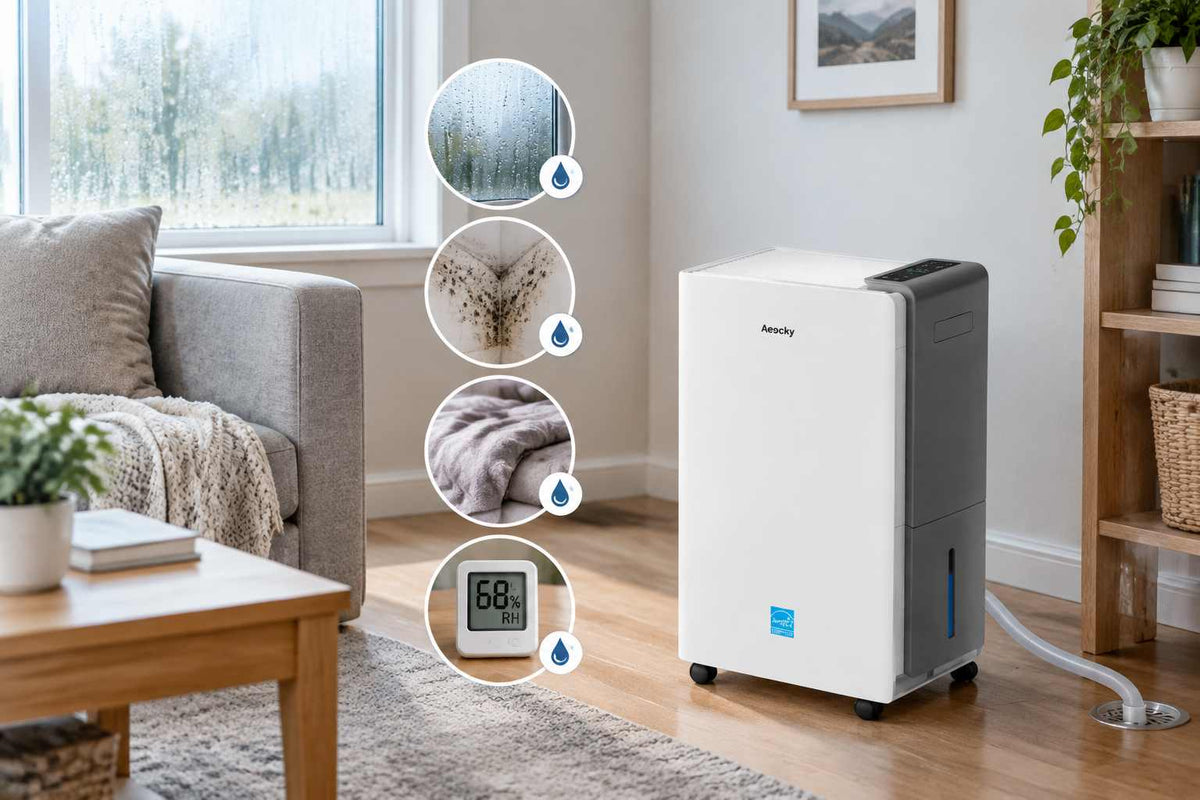
A home does not always need a dehumidifier, but certain warning signs can show that indoor moisture levels are too high. If your rooms feel damp, air feels heavy, or you notice condensation and musty smells, your home may have excess humidity.
Knowing how to tell if your house needs a dehumidifier starts with understanding how moisture affects your living space. A dehumidifier helps remove extra water vapor from the air, making indoor conditions more comfortable and helping control moisture-related problems.
Do I Need a Dehumidifier in My House?
Many homeowners ask, “do I need a dehumidifier in my house?”
The answer depends on your indoor humidity level and the problems you are experiencing.
A home may benefit from a dehumidifier when you notice:
-
Persistent dampness.
-
A musty smell that does not disappear.
-
Water droplets on windows.
-
Mold spots in humid areas.
-
Rooms that feel sticky even with air conditioning.
The easiest way to check is by using a hygrometer to measure humidity. The normal humidity level inside a house is generally around 30%–60%. If humidity stays above this range for long periods, additional moisture control may be needed.
Symptoms of High Humidity Indoors
Understanding the symptoms of high humidity indoors can help identify problems before they become serious.
Musty Odors and Stale Air
A common sign of excess moisture is a damp or musty smell.
Humidity creates a better environment for mold and mildew growth, especially in areas with limited airflow, such as:
-
Basements.
-
Closets.
-
Bathrooms.
-
Storage rooms.
Condensation on Windows and Walls
Water droplets forming on windows are another warning sign.
Condensation happens when warm, moist air meets a cooler surface. If this happens frequently, it may indicate that indoor humidity levels are higher than they should be.
Mold and Mildew Growth
One reason homeowners look for a dehumidifier is to help prevent mold from high humidity.
While humidity control alone does not remove existing mold, maintaining appropriate moisture levels can help create a less favorable environment for mold growth.
Rooms Feel Sticky or Uncomfortable
A humid room often feels warmer than the actual temperature.
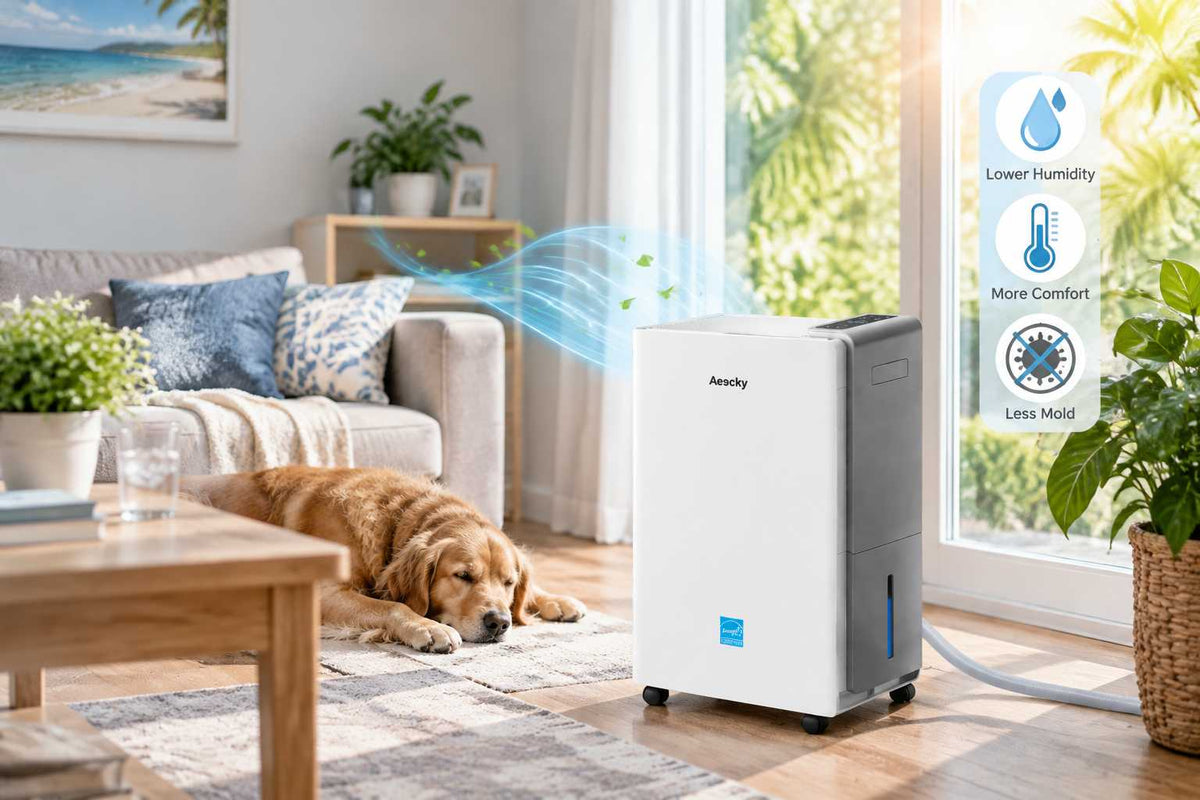
If you are wondering how to make a humid room more comfortable, reducing moisture levels can be an important step. Lower humidity can make indoor air feel less heavy and improve overall comfort.
Common Causes of High Humidity Indoors
Understanding the causes of high humidity indoors helps identify the right solution.
Poor Ventilation
Rooms without enough airflow often trap moisture.
Bathrooms, kitchens, and laundry areas produce significant moisture and may need better ventilation.
Basement and Foundation Moisture
Basements are naturally more vulnerable to humidity because they are surrounded by cooler surfaces and underground moisture.
For larger moisture problems, a whole-home solution such as the AEOKY Rhea Series Energy Efficient Whole House Dehumidifier can help manage humidity across larger areas.
Everyday Household Activities
Normal activities can increase indoor moisture:
-
Cooking.
-
Showering.
-
Drying clothes.
-
Running dishwashers.
In homes where moisture builds up regularly, a dehumidifier can provide additional control.
What Is the Normal Humidity Level Inside a House?
Maintaining the right humidity level is important for comfort and home protection.
A typical recommended indoor humidity range is:
30%–60% relative humidity
When humidity remains too high, homeowners may experience:
-
Damp surfaces.
-
Musty odors.
-
Mold concerns.
-
Uncomfortable indoor air.
A humidity monitor can help you understand whether your home needs additional moisture control.
How Excess Moisture Affects Your Home
High humidity can affect more than comfort.
Excess moisture may contribute to:
-
Mold and mildew growth.
-
Damage to wooden furniture.
-
Peeling paint.
-
Damp walls.
-
Unpleasant odors.
For homeowners trying to prevent mold from high humidity, controlling indoor moisture is an important part of home maintenance.
How to Make a Humid Room More Comfortable
Several steps can help reduce uncomfortable humidity.
Improve Air Circulation
Use fans, open ventilation areas when appropriate, and avoid blocking airflow around furniture.
Use a Dehumidifier
A properly sized dehumidifier can remove excess moisture and help maintain more balanced indoor conditions.
For smaller spaces such as bedrooms or offices, the AEOKY Arion Small Portable Dehumidifier is designed for targeted humidity control.
For homeowners looking for energy-conscious operation, the AEOKY Leo Lite Series Energy Star Dehumidifier provides an option for regular household use.
For basement areas where drainage is important, the AEOKY Leo Series Energy Efficient Dehumidifier with Pump can support continuous moisture management.
Choosing the Right Dehumidifier for Your Home
The right unit depends on your home size and humidity problem.
Small Rooms
Portable models work well for:
-
Bedrooms.
-
Apartments.
-
Home offices.
Larger Homes
Whole-house systems are better suited for:
-
Multiple rooms.
-
Larger living areas.
-
Persistent humidity issues.
Homeowners comparing energy-focused models can explore the AEOKY Energy Star Series Dehumidifiers.
Final Thoughts
Knowing how to tell if your house needs a dehumidifier starts with recognizing the signs of excess moisture. Musty odors, condensation, uncomfortable humidity, and mold concerns are common indicators that your indoor environment may need better moisture control.
Checking your humidity level and understanding the causes of high humidity indoors can help you decide whether a dehumidifier is appropriate for your home. The best solution depends on your space, moisture level, and whether you need portable or whole-home humidity management.


Leave a comment
This site is protected by hCaptcha and the hCaptcha Privacy Policy and Terms of Service apply.