

Choosing a portable vs whole-house dehumidifier depends on where excess moisture occurs and how much of your home needs humidity control. A portable unit is usually the practical choice for one bedroom, laundry room, or basement. A ducted whole-house system is designed for homes where humidity affects multiple rooms. There is one important distinction: some high-capacity portable dehumidifiers advertise coverage for large areas, but they are not the same as systems connected to HVAC ductwork. Before buying, consider coverage, installation, drainage, running costs, and how consistently you need to remove moisture.
Portable vs. Whole-House Dehumidifier: What Is the Difference?
How a Portable Dehumidifier Works
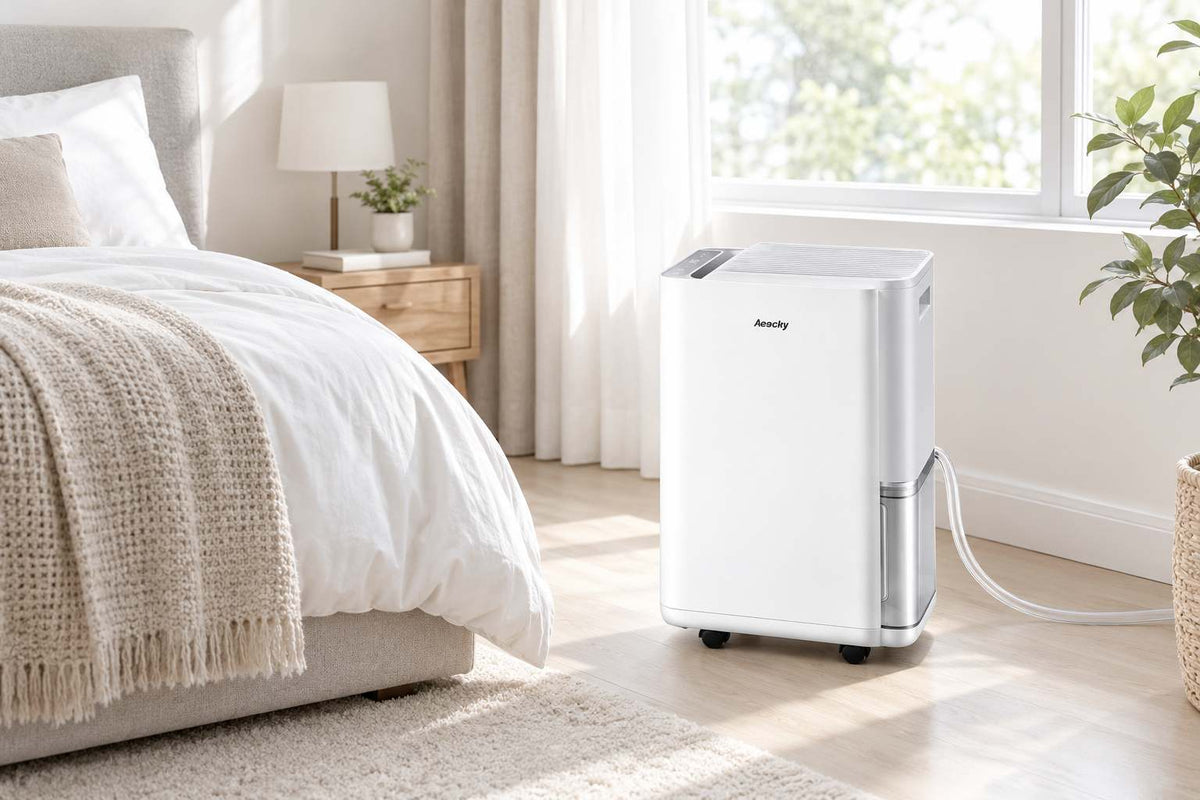
A portable dehumidifier sits in the room that needs attention. A fan draws humid air over a cold coil, where water vapor condenses and collects in a tank or drains through a hose. The appliance then returns drier air to the room. Most models need only a suitable outlet and enough clearance for airflow.
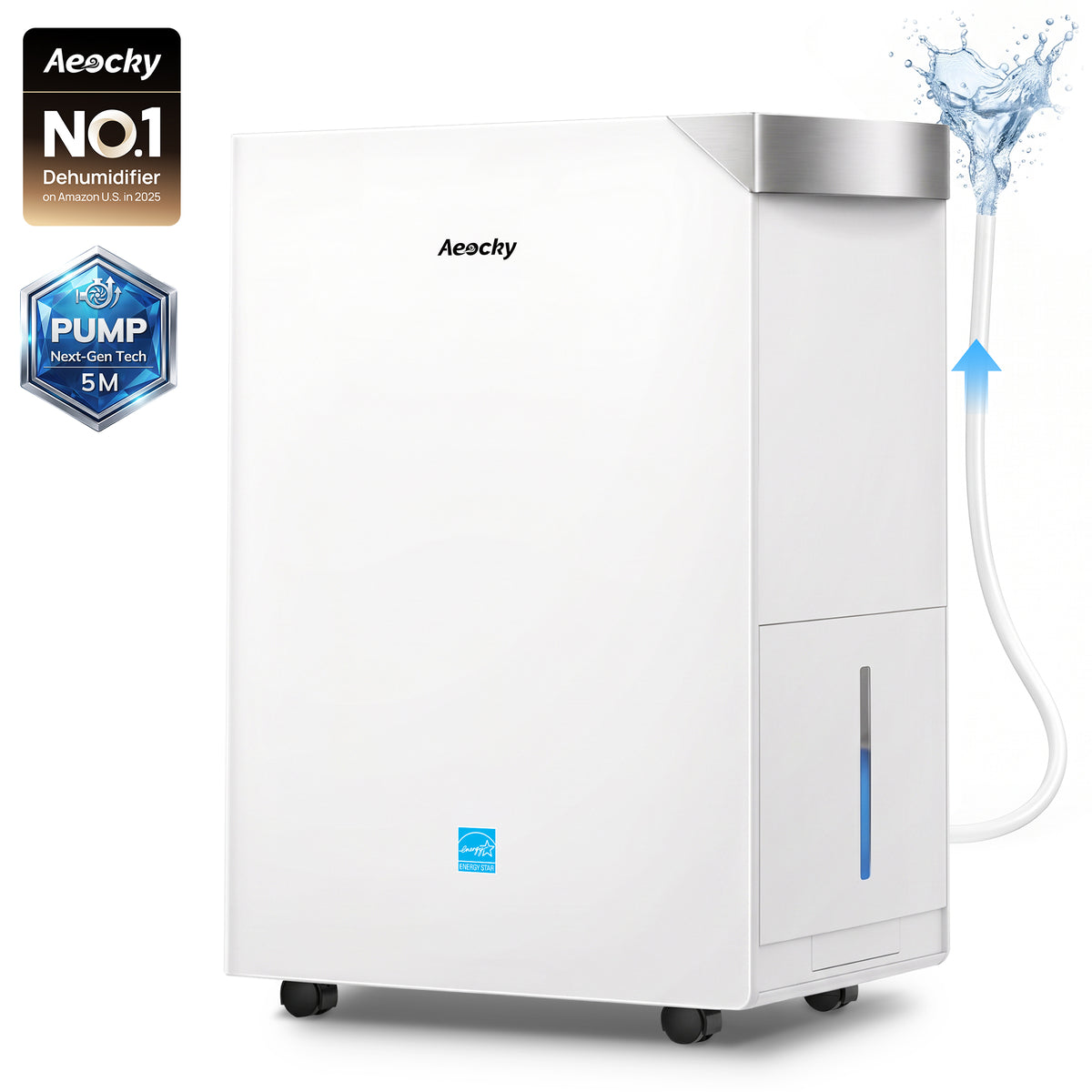
Capacity varies widely. Smaller models suit limited spaces, while larger compressor units can handle bigger rooms or open areas. The AEOCKY Arion portable dehumidifier is one option to consider. Check the selected model’s rated moisture removal, recommended coverage, and drainage requirements before buying.
How a Whole-House Dehumidifier Works
A traditional whole-house dehumidifier is installed alongside an HVAC system or connected to dedicated ductwork. It draws air from multiple areas, removes moisture, and distributes drier air through the home’s air system. Permanent drainage can reduce manual handling, while a humidistat helps maintain a target humidity level.
Installation typically requires suitable space, drainage, electrical service, and duct connections. It costs more upfront but can be convenient when humidity problems are widespread and persistent.
A high-capacity portable model is different from a ducted system, even when its advertised coverage is extensive. The AEOCKY Rhea Series dehumidifier is a self-contained appliance designed for larger spaces. Review the specifications for the exact model; do not assume it distributes air through every room like an installed HVAC system.
Key Differences to Compare
Coverage and Humidity Control
A portable unit is best suited to a particular room or zone. It may help in a connected open-plan area, but closed doors and separate floors can limit its effect elsewhere.
A ducted system is designed to control humidity across the areas served by its ductwork. Consider it if several rooms stay damp or you repeatedly move a portable unit around. For a portable dehumidifier vs whole-house dehumidifier for home comparison, focus on the actual area that needs treatment—not just the total square footage. Layout, airflow, temperature, and the amount of moisture entering the home all affect performance.
Whole-House Dehumidifier vs. Portable Dehumidifier Cost
The whole-house dehumidifier vs portable dehumidifier cost comparison includes installation and ongoing use, not just the purchase price. Portable units generally cost less upfront and do not require professional installation. Running costs include electricity, filter care, and time spent emptying the tank unless a drain hose is used.
A ducted system has a higher initial cost because installation may involve labor, ductwork, electrical connections, and drainage. It can reduce daily handling and provide broader control, but it is not automatically cheaper to run. Compare current installation quotes, energy specifications, maintenance needs, and expected operating hours before making a decision.
Installation, Drainage, and Maintenance
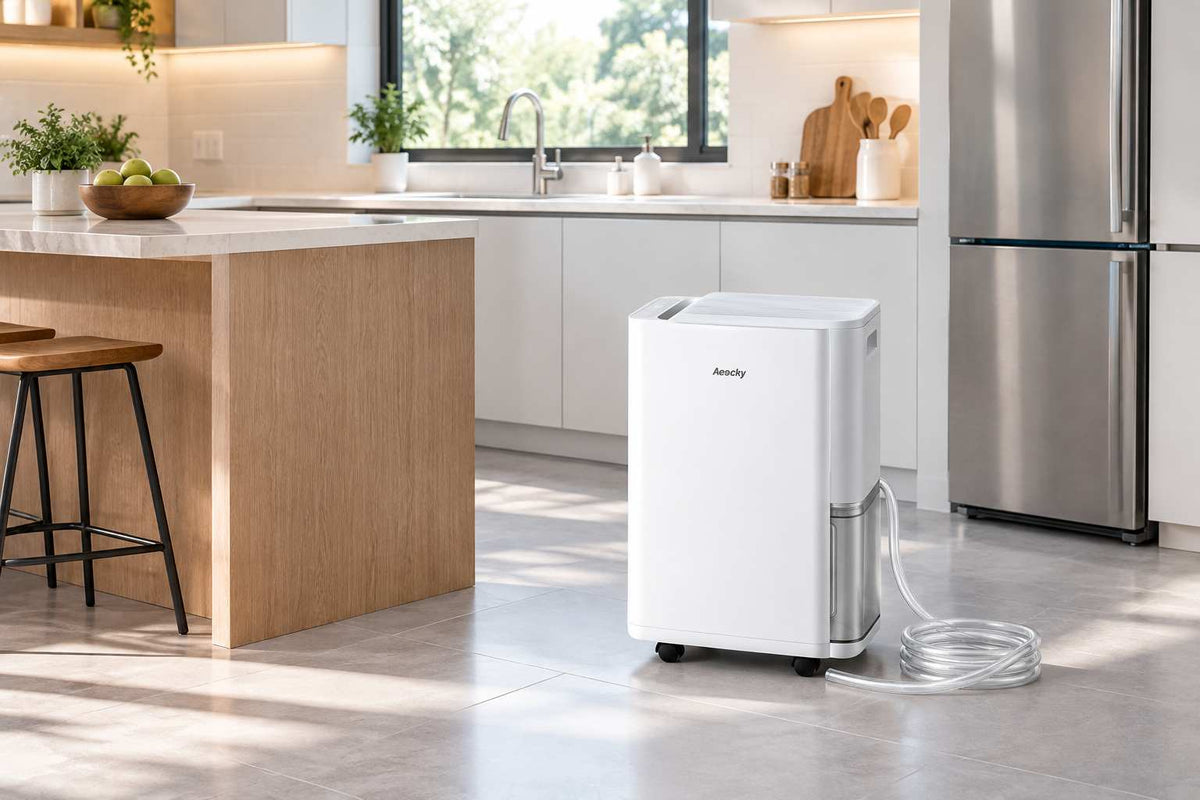
Portable units are usually straightforward to set up. Place one on a level surface, leave enough room around the air intake and outlet, and set the desired humidity. Empty the tank as needed, or use a compatible drain hose if the placement allows it.
A whole-house system needs an appropriate installation location and reliable condensate drainage. Filters and drain lines still require maintenance, and professional servicing may be recommended. Installed equipment is less visible, but it is not maintenance-free.
Energy Use and Everyday Convenience
Energy use depends on capacity, efficiency, humidity conditions, and operating time. An undersized portable unit may run for long periods without keeping up. A larger portable model can serve a broad area, but it still treats air around its location rather than distributing dry air through a duct network.
A ducted system can manage several connected rooms without moving an appliance. Whether it saves energy depends on the home and system design, so compare efficiency specifications instead of assuming one type is always cheaper to operate.
Which Is Better for Your Home?
Choose a Portable Dehumidifier If…
-
The dampness is mainly in one bedroom, bathroom, laundry room, or basement.
-
You rent or want to avoid permanent installation.
-
The moisture problem is seasonal or limited to one area.
-
You prefer a lower upfront cost and can manage drainage.
Consider a Whole-House System If…
-
Humidity affects several rooms regularly.
-
You want centralized control across the areas served by the system.
-
You prefer permanent drainage and less day-to-day handling.
-
You are prepared for professional installation and a higher initial investment.
If you are asking, “should I get a portable or whole-house dehumidifier,” measure relative humidity in several rooms over a few days. Readings that repeatedly exceed about 60% warrant closer attention to ventilation and moisture sources. Repair leaks and water intrusion first; a dehumidifier cannot fix a building defect.
How to Choose the Right Capacity
Compare the extraction rate, recommended coverage, operating temperature range, humidity controls, and drainage options. Maximum capacity is measured under specific conditions, so advertised coverage is not a guarantee of equal performance in every home.
For a large room or basement, read this guide on choosing a dehumidifier for large rooms. You can also review the guide to ideal indoor humidity levels to understand the humidity range to aim for.
Frequently Asked Questions
Portable vs. whole-house dehumidifier: which is better?
Neither is best for every home. A portable unit is usually more practical for one damp room, while a ducted system is better suited to persistent humidity across multiple rooms.
Which is better, a portable or whole-house dehumidifier?
Choose based on the area affected, installation budget, and how often humidity returns. A portable unit is a sensible starting point for a localized problem; a whole-house system is worth assessing when several rooms are affected.
Can a portable dehumidifier control humidity throughout the home?
A high-capacity portable model may help in a large, open area, but it will not distribute dry air through closed rooms like a ducted system. Separate zones may need separate units.
Is a whole-house dehumidifier worth the cost?
It may be worthwhile when humidity is persistent and widespread, particularly if centralized control and permanent drainage matter to you. For one damp room or an occasional seasonal problem, a portable unit is often the more economical option.
Final Thoughts
The right choice in a portable vs whole-house dehumidifier comparison comes down to the scale of the moisture problem. Portable units are flexible, easier to set up, and generally less expensive to buy. A ducted whole-house system costs more initially but can control humidity across multiple rooms with less daily handling. Measure humidity in different areas, check for leaks, and match the equipment to the conditions in your home. If the problem is limited to one room, consider a properly sized portable unit. If several rooms remain damp, get a professional assessment before investing in a whole-home system.


Leave a comment
This site is protected by hCaptcha and the hCaptcha Privacy Policy and Terms of Service apply.