

Dehumidifier

Best Dehumidifier for a Home With Limited Drainage Options

Best Dehumidifier for a Home With Limited Drainage Options
The best dehumidifier for a home with limited drainage options is one that can remove moisture and send the collected water somewhere safe without requiring constant tank emptying. If there is no floor drain, or the nearest outlet sits above the appliance, a dehumidifier with a built-in pump may be the practical choice. If water can flow downhill to a suitable drain, continuous gravity drainage may be enough. Before buying, assess the drain location, hose route, pump lift, room conditions, and moisture-removal capacity. These details matter more than choosing the largest unit. If you are new to humidity control, start with this overview of what a dehumidifier does.

Why Drainage Should Come First

A dehumidifier pulls moisture from indoor air and collects it as water. That water must be emptied from a tank or discharged through a hose. In a damp basement, a tank can fill often, stopping the unit until someone empties it. A reliable drainage plan helps the appliance run with less day-to-day attention.
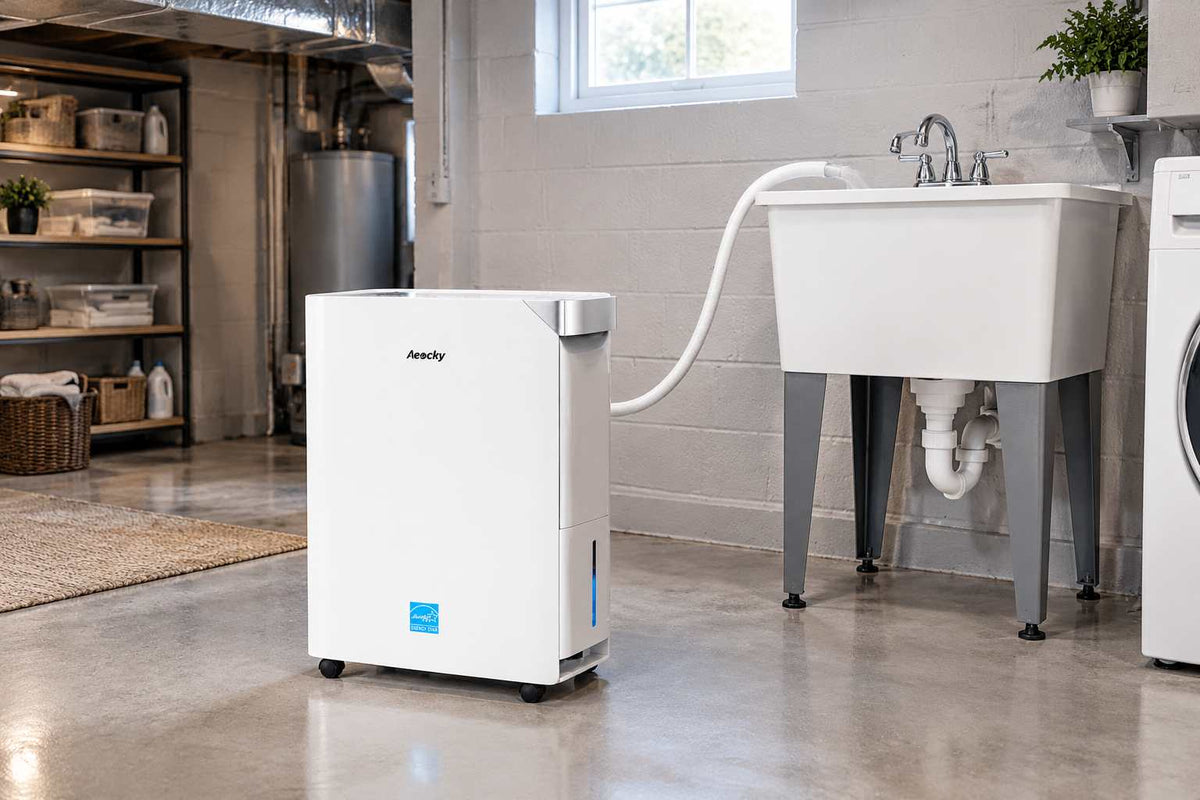
First, identify a suitable discharge point, such as a floor drain or utility sink. Check that the destination is permitted by the appliance instructions and local requirements. Then determine whether the water can flow there naturally or needs to be pumped. If humidity is part of a wider room problem, our guide to 10 ways to dehumidify a room offers additional steps alongside using an appliance.
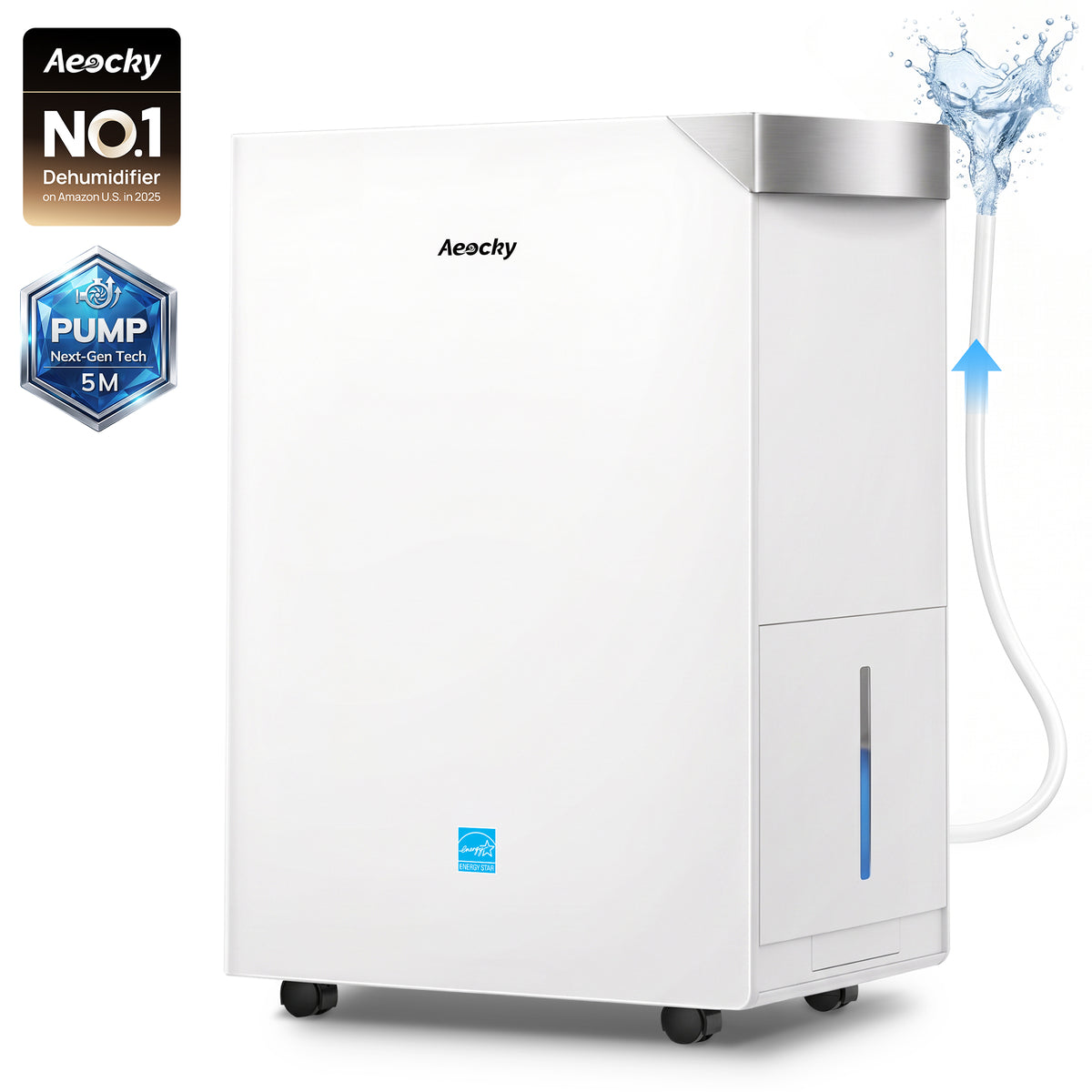
For homes where water must travel upward, the Aeocky Leo Series dehumidifier with a built-in pump is one model to investigate. Verify the exact model’s pump capability, hose requirements, and operating specifications before deciding whether it fits your setup.

Gravity Drain vs. Pump Drain Dehumidifier

When Gravity Drainage Works

A dehumidifier with continuous drainage can send collected water through a hose instead of relying on a tank that needs frequent emptying. With gravity drainage, the hose must slope continuously downward from the outlet to the drain. Water will not travel uphill on its own.
This setup can work well when the unit sits above a floor drain or another suitable outlet. It is usually straightforward, but the hose needs a secure connection and a clear downward path. If the hose rises over a threshold, kinks, or dips where water can collect, drainage may become unreliable.

When a Built-In Pump Is Necessary

A dehumidifier with a built-in pump can move water upward, within the pump’s stated limits. This helps when the nearest practical discharge point is a raised utility sink or another outlet above the appliance.
Check the pump’s maximum lift height. Measure the vertical distance between the dehumidifier’s drain outlet and the point where water enters the destination, then account for the planned hose route. Confirm that the model’s rated lift is sufficient; pump-equipped units do not all move water the same distance.
For a basement, also consider the source of the dampness and the room’s size. Our article on choosing a dehumidifier for large rooms explains why coverage, capacity, and room layout should be considered together.

What to Check Before Buying a Dehumidifier With a Pump

Pump Lift Height and Hose Compatibility

Pump capability only helps if it matches your layout. Check the maximum lift, recommended hose diameter, hose length limits, and whether the hose is included. Avoid sharp bends, kinks, and routes that could pull the hose loose. Secure the discharge end so it cannot slip out and spill water.
The hose connection is not universal. Before ordering an accessory, confirm the connection type and compatibility with the exact model. Aeocky owners can check the compatible drain hose for Rhea and Leo Series models, but should verify fit and included parts for their specific unit.

Capacity and Room Conditions

Once drainage is sorted, choose a unit that suits the moisture load and room size. A mildly humid bedroom has different needs from a large, persistently damp basement. Compare the manufacturer’s moisture-removal rating and stated coverage, remembering that performance varies with temperature and humidity.
A basement dehumidifier should be rated for the temperatures in which it will operate. Cooler conditions can affect the performance of some models. If the space has standing water, a plumbing leak, or water entering through foundation walls, address that source instead of expecting the dehumidifier to solve it. For more on moisture levels at home, see this guide to the ideal indoor humidity level.

How to Set Up a Dehumidifier Drain Hose

Follow the manual for your specific model. These general checks can help you plan the installation:
  1. Choose the discharge point. Make sure it is suitable and the hose can reach without tension.
  2. Check the connection. Attach a compatible hose securely, following the manufacturer’s instructions.
  3. Route it correctly. For gravity drainage, maintain a continuous downward slope. For pump drainage, stay within the specified lift and routing limits.
  4. Prevent kinks and loose sections. Keep the hose clear of walkways and secure it where needed.
  5. Test the setup. Run the unit and check that water reaches the destination without leaking or backing up.
  6. Inspect it regularly. Look for blockages, loose connections, and movement at the discharge point.
Do not route water where it could damage electrical equipment, flooring, or neighboring property. If you are using a dehumidifier in a garage or utility space, this article on protecting tools, cars, and stored items from garage moisture may help you plan the room as well as the drain route.

Which Dehumidifier Type Fits Your Home?

Use your drainage layout to guide the choice:
  • No floor drain, but a raised sink is available: Look for a built-in pump with enough lift for your installation.
  • A drain sits below the unit: A gravity-drain model may be simpler.
  • A small room with occasional humidity: A portable dehumidifier for home use may be enough, but check whether it supports continuous drainage or relies on a tank.
  • A large or persistently damp basement: Prioritize suitable capacity, reliable drainage, and the rated operating temperature.
  • No practical drain destination: A larger tank may reduce how often you empty it, but it will not eliminate manual emptying.
The right choice balances drainage, capacity, operating conditions, and maintenance—not just the product’s headline rating.

Common Drainage Mistakes to Avoid

Do not buy based on the presence of a pump alone. Confirm the lift height and hose compatibility. Do not assume a gravity hose will work if part of its route rises. Avoid loose connections and check the discharge point after installation. Finally, persistent water intrusion needs attention beyond dehumidification. A dehumidifier controls airborne moisture; it does not replace leak repairs or building drainage work.

Final Thoughts

Choosing the best dehumidifier for limited drainage options starts with one practical question: where will the water go? If the destination is lower than the unit, continuous gravity drainage may be sufficient. If water must travel upward, a built-in pump with enough lift is usually more suitable. Then compare room capacity, operating temperature, hose compatibility, noise, and maintenance. Measure the route before buying and verify the exact model’s specifications. With a workable discharge plan, you can reduce humidity without relying on constant bucket emptying or risking avoidable drainage problems.
 

Reading next

What to Check Before Buying an Aeocky Dehumidifier

Leave a comment

This site is protected by hCaptcha and the hCaptcha Privacy Policy and Terms of Service apply.

Best Dehumidifier for a Home With Limited Drainage Options

The best dehumidifier for a home with limited drainage options is one that can remove moisture and send the collected water somewhere safe without requiring constant tank emptying. If there is no floor drain, or the nearest outlet sits above the appliance, a dehumidifier with a built-in pump may be the practical choice. If water can flow downhill to a suitable drain, continuous gravity drainage may be enough. Before buying, assess the drain location, hose route, pump lift, room conditions, and moisture-removal capacity. These details matter more than choosing the largest unit. If you are new to humidity control, start with this overview of what a dehumidifier does.

Why Drainage Should Come First

A dehumidifier pulls moisture from indoor air and collects it as water. That water must be emptied from a tank or discharged through a hose. In a damp basement, a tank can fill often, stopping the unit until someone empties it. A reliable drainage plan helps the appliance run with less day-to-day attention.
First, identify a suitable discharge point, such as a floor drain or utility sink. Check that the destination is permitted by the appliance instructions and local requirements. Then determine whether the water can flow there naturally or needs to be pumped. If humidity is part of a wider room problem, our guide to 10 ways to dehumidify a room offers additional steps alongside using an appliance.
For homes where water must travel upward, the Aeocky Leo Series dehumidifier with a built-in pump is one model to investigate. Verify the exact model’s pump capability, hose requirements, and operating specifications before deciding whether it fits your setup.

Gravity Drain vs. Pump Drain Dehumidifier

When Gravity Drainage Works

A dehumidifier with continuous drainage can send collected water through a hose instead of relying on a tank that needs frequent emptying. With gravity drainage, the hose must slope continuously downward from the outlet to the drain. Water will not travel uphill on its own.
This setup can work well when the unit sits above a floor drain or another suitable outlet. It is usually straightforward, but the hose needs a secure connection and a clear downward path. If the hose rises over a threshold, kinks, or dips where water can collect, drainage may become unreliable.

When a Built-In Pump Is Necessary

A dehumidifier with a built-in pump can move water upward, within the pump’s stated limits. This helps when the nearest practical discharge point is a raised utility sink or another outlet above the appliance.
Check the pump’s maximum lift height. Measure the vertical distance between the dehumidifier’s drain outlet and the point where water enters the destination, then account for the planned hose route. Confirm that the model’s rated lift is sufficient; pump-equipped units do not all move water the same distance.
For a basement, also consider the source of the dampness and the room’s size. Our article on choosing a dehumidifier for large rooms explains why coverage, capacity, and room layout should be considered together.

What to Check Before Buying a Dehumidifier With a Pump

Pump Lift Height and Hose Compatibility

Pump capability only helps if it matches your layout. Check the maximum lift, recommended hose diameter, hose length limits, and whether the hose is included. Avoid sharp bends, kinks, and routes that could pull the hose loose. Secure the discharge end so it cannot slip out and spill water.
The hose connection is not universal. Before ordering an accessory, confirm the connection type and compatibility with the exact model. Aeocky owners can check the compatible drain hose for Rhea and Leo Series models, but should verify fit and included parts for their specific unit.

Capacity and Room Conditions

Once drainage is sorted, choose a unit that suits the moisture load and room size. A mildly humid bedroom has different needs from a large, persistently damp basement. Compare the manufacturer’s moisture-removal rating and stated coverage, remembering that performance varies with temperature and humidity.
A basement dehumidifier should be rated for the temperatures in which it will operate. Cooler conditions can affect the performance of some models. If the space has standing water, a plumbing leak, or water entering through foundation walls, address that source instead of expecting the dehumidifier to solve it. For more on moisture levels at home, see this guide to the ideal indoor humidity level.

How to Set Up a Dehumidifier Drain Hose

Follow the manual for your specific model. These general checks can help you plan the installation:
  1. Choose the discharge point. Make sure it is suitable and the hose can reach without tension.
  2. Check the connection. Attach a compatible hose securely, following the manufacturer’s instructions.
  3. Route it correctly. For gravity drainage, maintain a continuous downward slope. For pump drainage, stay within the specified lift and routing limits.
  4. Prevent kinks and loose sections. Keep the hose clear of walkways and secure it where needed.
  5. Test the setup. Run the unit and check that water reaches the destination without leaking or backing up.
  6. Inspect it regularly. Look for blockages, loose connections, and movement at the discharge point.
Do not route water where it could damage electrical equipment, flooring, or neighboring property. If you are using a dehumidifier in a garage or utility space, this article on protecting tools, cars, and stored items from garage moisture may help you plan the room as well as the drain route.

Which Dehumidifier Type Fits Your Home?

Use your drainage layout to guide the choice:
  • No floor drain, but a raised sink is available: Look for a built-in pump with enough lift for your installation.
  • A drain sits below the unit: A gravity-drain model may be simpler.
  • A small room with occasional humidity: A portable dehumidifier for home use may be enough, but check whether it supports continuous drainage or relies on a tank.
  • A large or persistently damp basement: Prioritize suitable capacity, reliable drainage, and the rated operating temperature.
  • No practical drain destination: A larger tank may reduce how often you empty it, but it will not eliminate manual emptying.
The right choice balances drainage, capacity, operating conditions, and maintenance—not just the product’s headline rating.

Common Drainage Mistakes to Avoid

Do not buy based on the presence of a pump alone. Confirm the lift height and hose compatibility. Do not assume a gravity hose will work if part of its route rises. Avoid loose connections and check the discharge point after installation. Finally, persistent water intrusion needs attention beyond dehumidification. A dehumidifier controls airborne moisture; it does not replace leak repairs or building drainage work.

Final Thoughts

Choosing the best dehumidifier for limited drainage options starts with one practical question: where will the water go? If the destination is lower than the unit, continuous gravity drainage may be sufficient. If water must travel upward, a built-in pump with enough lift is usually more suitable. Then compare room capacity, operating temperature, hose compatibility, noise, and maintenance. Measure the route before buying and verify the exact model’s specifications. With a workable discharge plan, you can reduce humidity without relying on constant bucket emptying or risking avoidable drainage problems.


Popular Posts
Best Dehumidifier for a Home With Limited Drainage Options
What to Check Before Buying an Aeocky Dehumidifier
Aeocky Energy Star Dehumidifiers Compared: Which Model Fits Your Needs?
Best Dehumidifier for Apartments: How to Choose the Right Model for Your Space
Dehumidifier Noise Levels Explained: How to Choose a Quieter Model
Portable vs. Whole-House Dehumidifier: Which Is Right for Your Home?
Best Dehumidifier for Kitchens: How to Manage Cooking Moisture and Humidity
Dehumidifier Replacement Filters: How to Choose the Right Filter for Your Model
Aeocky Leo Lite vs. Rhea Dehumidifier: Which Model Should You Buy?
Best Dehumidifier with Pump for Basement: What to Look For Before Buying
Aeocky Dehumidifier Buying Guide: How to Choose the Right Model for Your Home
Energy Star Dehumidifier for Home: How to Choose an Efficient Model
Best Dehumidifiers for Home in 2026: How to Choose the Right Model
Best Dehumidifier for Laundry Rooms: How to Prevent Moisture, Odors & Dry Clothes Faster
Best Dehumidifier for RVs: How to Choose the Right Size, Power & Features for Travel Use
Best Dehumidifier for Garages: How to Protect Tools, Cars & Storage Items from Moisture
Best Dehumidifier for Grow Rooms: How to Control Humidity for Indoor Plants
How to Choose the Best Dehumidifier for Large Rooms
How to Choose the Best Dehumidifier for Your Bathroom
What Is the Most Efficient Type of Dehumidifier?
Subscribe Us
Subscribe to our newsletter and receive a selection of cool articles every weeks