

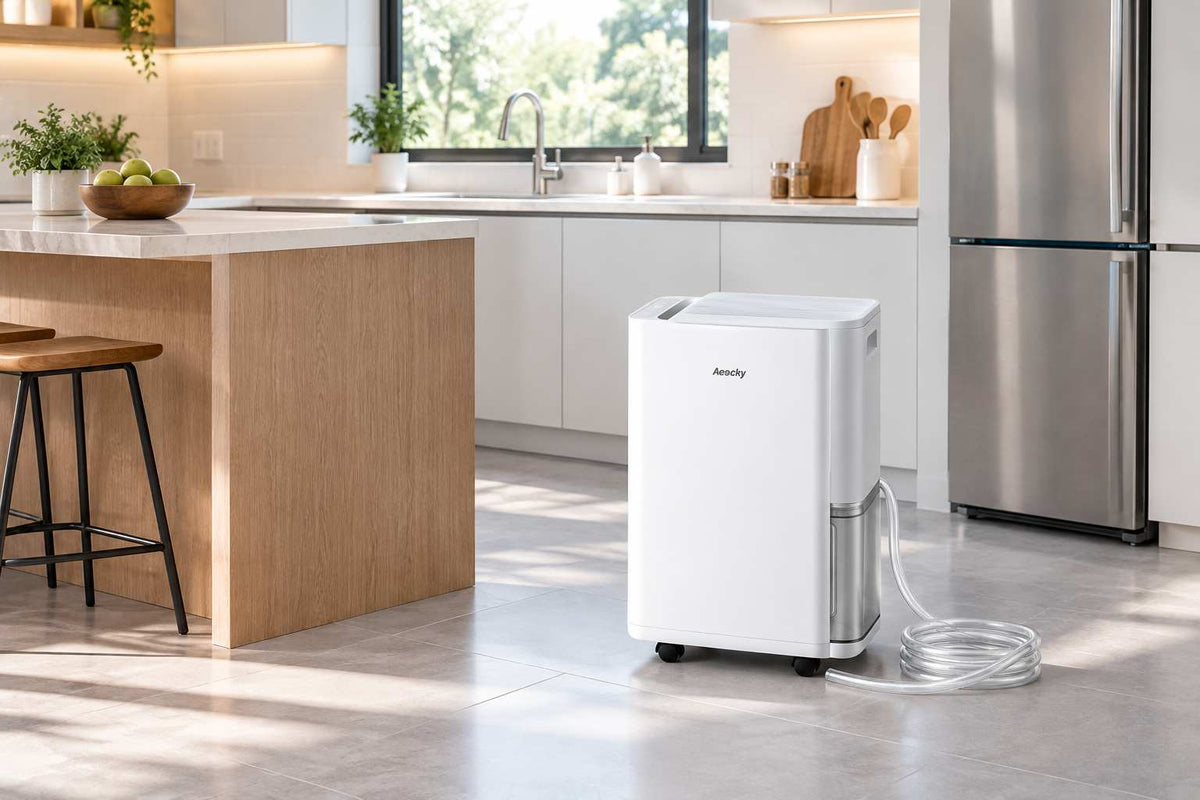
A kitchen can become humid quickly when you boil water, simmer soup, wash dishes, or run a dishwasher. If the moisture lingers, windows may fog up, cabinets can feel damp, and musty odors may develop. The best dehumidifier for kitchens depends on the size of the space, how much moisture it accumulates, and whether ventilation is already doing its job. For many homes, the best approach combines an effective range hood with a properly sized dehumidifier. Understanding when to use each one makes it easier to control humidity without wasting energy or choosing an appliance that is too small for the room.
Why Kitchens Get So Humid
Cooking releases water vapor into the air. Boiling pasta, steaming vegetables, simmering sauces, and washing dishes all contribute to indoor moisture. The problem becomes more noticeable in kitchens with limited ventilation, particularly when cooking several meals a day.
Moisture can also spread beyond the kitchen into a connected dining room or living area. When humid air meets a cold window, wall, or cabinet surface, condensation may form. Persistent dampness can eventually encourage mold growth, especially when surfaces remain wet.
Signs that your kitchen needs better humidity control include recurring condensation, damp cabinet interiors, a persistent musty smell, and indoor humidity that stays elevated after cooking.
What Is the Best Dehumidifier for a Kitchen?
The best dehumidifier for a kitchen is one that can manage the moisture load in the space without obstructing food preparation or creating additional maintenance problems. Before choosing a model, consider the room layout, moisture-removal capacity, drainage options, and ease of cleaning.
Compact Dehumidifiers for Small Kitchens
A compact unit may suit a small, enclosed kitchen with occasional humidity problems. It takes up less floor space and can be easier to move between suitable rooms. However, compact thermoelectric models generally remove less moisture than compressor-based units, so check the rated extraction capacity rather than relying on size alone.
For shoppers comparing a smaller option, the Aeocky Arion portable dehumidifier is one product to review. Check its stated capacity, intended operating conditions, and placement requirements before deciding whether it suits your kitchen.
Higher-Capacity Models for Open-Plan Kitchens
An open kitchen connected to a dining or living room has a larger air volume to manage. In this situation, a higher-capacity portable dehumidifier may be more suitable, particularly if humidity remains elevated well after cooking.
The Aeocky Rhea Series dehumidifier is another option to evaluate when considering moisture control across a larger home area. Confirm the model's specifications and recommended installation conditions rather than assuming that its whole-home positioning automatically makes it the right choice for every kitchen.
Features Worth Comparing
When comparing a dehumidifier for kitchen humidity, focus on features that affect everyday use:
-
Moisture-removal capacity: Check the rated amount of water the unit can extract per day under its specified test conditions.
-
Humidity controls: An adjustable humidistat helps maintain a target relative humidity instead of running continuously without a clear goal.
-
Drainage: A suitable continuous-drain connection can reduce the need to empty a collection tank.
-
Noise: Consider the operating sound if the kitchen opens into a dining or living area.
-
Energy efficiency: Compare efficiency information and operating costs, especially if the appliance will run for extended periods.
-
Filter access: A filter that is easy to inspect and clean is useful in a room where airborne cooking residue may accumulate.
How to Reduce Humidity in the Kitchen
Choosing an appliance is only part of the solution. If you want to know how to reduce humidity in the kitchen, start by controlling moisture where it enters the air.
Use a Range Hood and Improve Ventilation
Turn on an appropriately sized range hood when cooking, and keep it running for a short period afterward to clear lingering moisture. Whenever possible, choose a hood that exhausts air outdoors. A recirculating hood may filter grease and odors, but it does not remove water vapor from the home in the same way.
If the kitchen has a window, opening it when outdoor conditions are suitable can help exchange humid indoor air for drier air. The benefit depends on the weather and outdoor humidity.
Run a Dehumidifier at the Right Time
A dehumidifier can help remove residual moisture after ventilation has reduced the immediate steam load. If humidity regularly remains high after cooking, run the unit according to its instructions and use the built-in humidistat when available.
This is a practical way to control humidity while cooking, but a dehumidifier should not be expected to capture a concentrated plume of hot steam above a boiling pot. Use ventilation at the source first, then dehumidification to manage lingering moisture.
Monitor Humidity and Prevent Condensation
A simple digital hygrometer helps you understand whether the problem is temporary or persistent. A commonly recommended indoor relative humidity range is around 30%–50%, although suitable levels vary with climate, temperature, and building conditions.
To learn more about appropriate indoor targets, see Aeocky's guide to ideal indoor humidity levels. If condensation appears regularly, check ventilation, cold surfaces, leaks, and other sources of moisture rather than relying on a dehumidifier alone.
Can You Use a Dehumidifier in the Kitchen Safely?
Yes, you can use a dehumidifier in the kitchen if the specific appliance is suitable for the environment and is installed according to its instructions. The key is to keep it away from direct splashes, excessive heat, grease buildup, and areas where cooking activities could interfere with airflow.
Place the unit on a stable, level surface with the required clearance around its air intake and outlet. Keep power cords away from sinks, wet floors, and walkways. Do not position the appliance directly beside a stove or where hot steam can enter its intake.
Drainage also deserves attention. Empty the tank as instructed, or use a compatible continuous-drain arrangement where permitted. Inspect and clean the filter according to the manufacturer's schedule, particularly if the intake is exposed to cooking residue.
If your kitchen has a persistent leak, visible mold, or moisture inside walls or cabinets, address the underlying cause. A dehumidifier can reduce airborne moisture, but it cannot repair plumbing problems or replace professional remediation when needed.
How to Choose the Right Kitchen Dehumidifier
Start by measuring the area you need to control. Then consider how quickly humidity rises, how long it takes to return to normal, and whether the kitchen shares air with other rooms. Compare the appliance's rated capacity with the manufacturer's recommended room conditions.
Next, assess placement and drainage. A model that is powerful enough but difficult to position safely may not be a good fit. For a larger connected area, you can also consult this guide on choosing a dehumidifier for large rooms.
Finally, consider whether better ventilation would solve most of the problem. A dehumidifier is most useful when excess humidity persists after practical moisture-control measures are in place.
Frequently Asked Questions
What is the best dehumidifier for cooking moisture?
The right model depends on the room's size and how much moisture remains after cooking. Choose a unit with sufficient rated capacity, useful humidity controls, and convenient drainage. Use a range hood to capture steam at its source.
How do I remove excess moisture from a kitchen?
Use an externally vented range hood, improve air exchange when outdoor conditions allow, cover boiling pots where appropriate, and monitor indoor humidity. A correctly sized dehumidifier can help when moisture continues to linger.
Can a dehumidifier replace a kitchen exhaust fan?
No. An exhaust fan or externally vented range hood removes humid air and cooking pollutants from the source area. A dehumidifier extracts water from indoor air but does not provide equivalent source ventilation.
What humidity level should a kitchen maintain?
An indoor relative humidity level of roughly 30%–50% is a useful general target for many homes. Actual conditions vary, so monitor humidity and watch for persistent condensation or damp surfaces.
Final Thoughts
The best dehumidifier for kitchens is not necessarily the smallest or the most powerful model. It is the one that matches the room's moisture load, offers practical drainage and humidity controls, and can be positioned safely. Start with source ventilation, then use a dehumidifier to manage excess moisture that remains in the air. Check humidity readings over time before deciding whether you need a compact unit or a higher-capacity option. With the right combination of ventilation, monitoring, and suitable equipment, you can reduce lingering dampness and make kitchen humidity easier to manage.



Leave a comment
This site is protected by hCaptcha and the hCaptcha Privacy Policy and Terms of Service apply.