

Energy Star dehumidifier

What to Check Before Buying an Aeocky Dehumidifier

What to Check Before Buying an Aeocky Dehumidifier
Before choosing an Aeocky dehumidifier, check how much moisture your space produces, the area the unit is expected to cover, its drainage setup, energy use, noise, and maintenance needs. A model with a high pint rating is not automatically the best fit: performance depends on room conditions, while everyday convenience depends on where the unit will sit and how collected water will be removed. This Aeocky dehumidifier buying guide walks through the details worth checking before you compare prices or choose a model. When comparing Aeocky dehumidifiers, focus on the specifications of the exact model and variant.
  1. Match Dehumidifier Capacity to the Space

How much dehumidifier capacity do I need?

Dehumidifier capacity usually describes how much moisture a unit can remove in a day under specified test conditions. It is not the same as the floor area it can cover. When estimating the dehumidifier capacity you need, consider the room’s square footage alongside how damp it is, the climate, ceiling height, and whether moisture enters from a crawl space, laundry area, or foundation.
A mildly humid bedroom may need less capacity than a similarly sized basement with persistent dampness. If windows regularly collect condensation, stored items feel clammy, or the room smells musty, investigate the moisture source as well as the appliance size. A dehumidifier can manage indoor humidity, but it will not repair leaks or solve water intrusion.

Check the stated dehumidifier coverage area

Compare the manufacturer’s coverage estimate with your actual space, but treat it as a guide rather than a guarantee. Open floor plans, closed doors, stairways, and room layout can affect how well dry air circulates. For connected spaces or large basements, capacity and air movement matter more than a headline square-foot figure alone.
If you are comparing models for a larger area, the Aeocky Rhea Series dehumidifier lists different capacity options for home and basement use. Check the specifications for the exact variant you plan to buy, since pint-per-day ratings and coverage differ by model.
  1. Compare Energy Efficiency and Certification

An energy-efficient dehumidifier can be useful when the unit needs to run for many hours a day. Compare the energy-efficiency information for the specific model, not just the product family. Operating costs also depend on your electricity rate, humidity level, thermostat setting, and how often the compressor runs.
If a listing describes a unit as an ENERGY STAR certified dehumidifier, verify the exact model in the official ENERGY STAR Product Finder. Certification status can change, and similar model names do not necessarily share the same rating. Also check whether the product page identifies the model year and the precise certification category.
Avoid choosing solely on a claim that a unit is “efficient.” Look for verifiable certification information and compare the available performance figures. A model that is appropriately sized and has useful humidity controls may also avoid unnecessary runtime.
  1. Choose a Drainage Method That Fits Your Room

Drainage affects how much attention a dehumidifier needs. A collection tank is straightforward, but it must be emptied when full. In a damp basement, that may mean frequent trips, especially during the first days of operation.
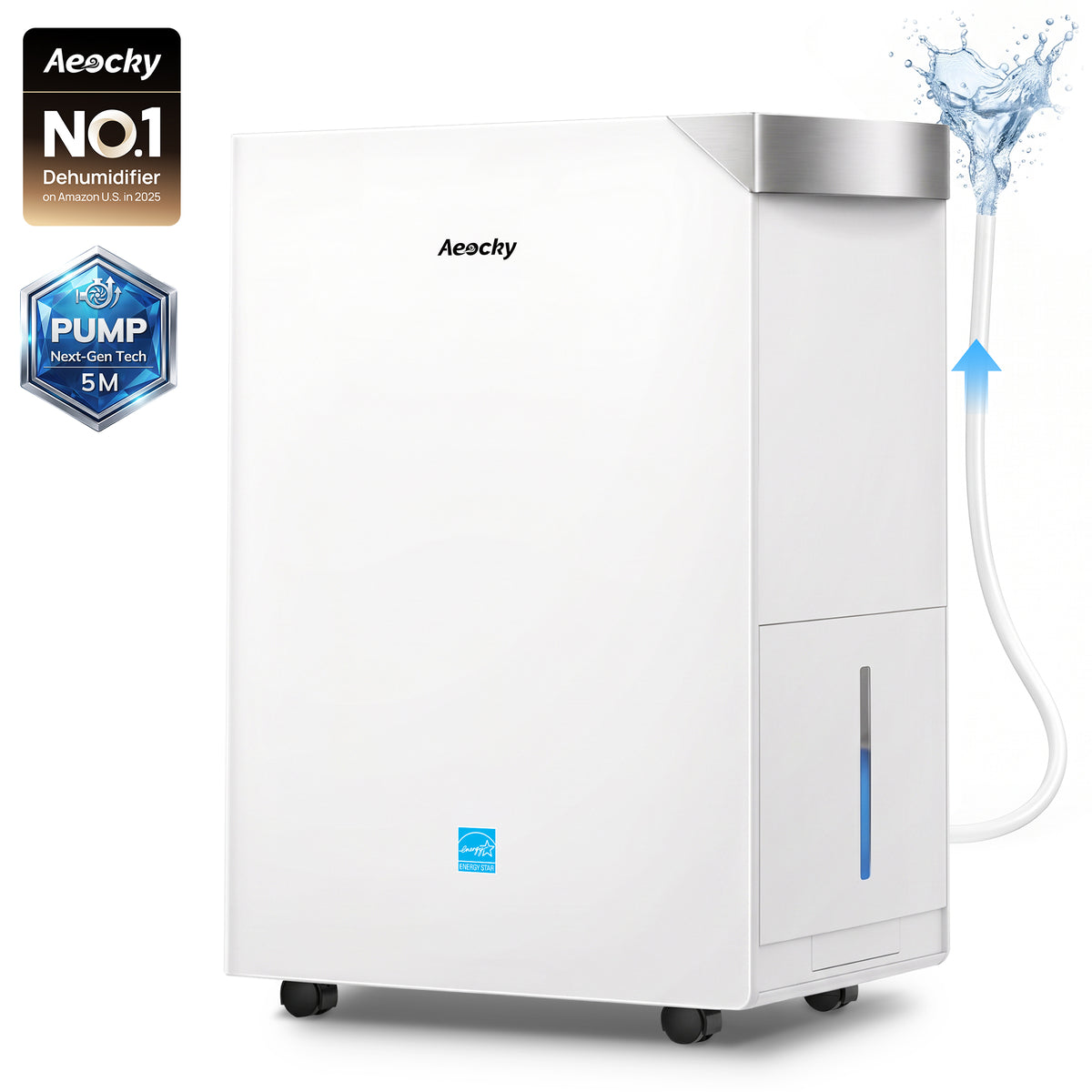
A continuous gravity drain can reduce manual emptying if the unit can sit near a suitable floor drain or sink and the hose can slope downward along its full path. A built-in pump is worth considering when water must be moved upward or to a drain that is not lower than the unit. Before buying, confirm the drain-hose connection, required hose size, pump lift limits, and whether the necessary hose is included.
For example, the Aeocky Leo Series with a built-in pump may suit spaces where gravity drainage is impractical. Check the specifications for the exact model and make sure the planned discharge route is feasible.
  1. Consider Noise, Controls, and Placement

Dehumidifier noise level matters most when the unit operates near a bedroom, home office, or living area. Check published decibel ratings when available, but remember that sound can vary by fan speed, floor surface, and room acoustics. If possible, place the appliance away from sleeping areas and allow the manufacturer-recommended clearance around air inlets and outlets.
Useful controls include an adjustable humidity target, automatic shutoff, restart behavior after a power interruption, and a full-tank indicator. A built-in humidistat can help maintain a chosen setting instead of requiring constant manual adjustment. Consider whether the display and buttons are easy to use in the room where the unit will operate.
  1. Review Dehumidifier Maintenance Requirements

Before buying, find out how to clean the air filter, access the water tank, inspect the drain hose, and maintain any pump. A washable or replaceable filter still needs regular attention; a clogged filter can restrict airflow and affect performance. Follow the manual’s cleaning schedule rather than assuming maintenance is unnecessary.
Check the warranty, customer support process, and availability of replacement parts. Filters, tanks, and hoses are practical details to confirm before purchase because they can affect long-term ownership. Also make sure the unit can be moved and positioned safely, particularly if you expect to use it in more than one room.
  1. Use This Dehumidifier Buying Checklist

Before placing an order, work through this dehumidifier buying checklist:
  • Room and moisture: Measure the space and identify whether the problem is mild humidity, persistent dampness, or a likely leak.
  • Capacity: Compare daily moisture-removal ratings under the stated test conditions.
  • Coverage: Check the rated dehumidifier coverage area and consider doors, walls, and air circulation.
  • Energy use: Review model-specific efficiency details and verify any ENERGY STAR claim.
  • Drainage: Decide whether a tank, gravity hose, or pump works best for your layout.
  • Noise and controls: Check operating noise, humidity settings, and automatic shutoff features.
  • Upkeep: Confirm filter cleaning, tank access, warranty terms, and replacement-part availability.
  1. What to Know Before Buying a Basement Dehumidifier

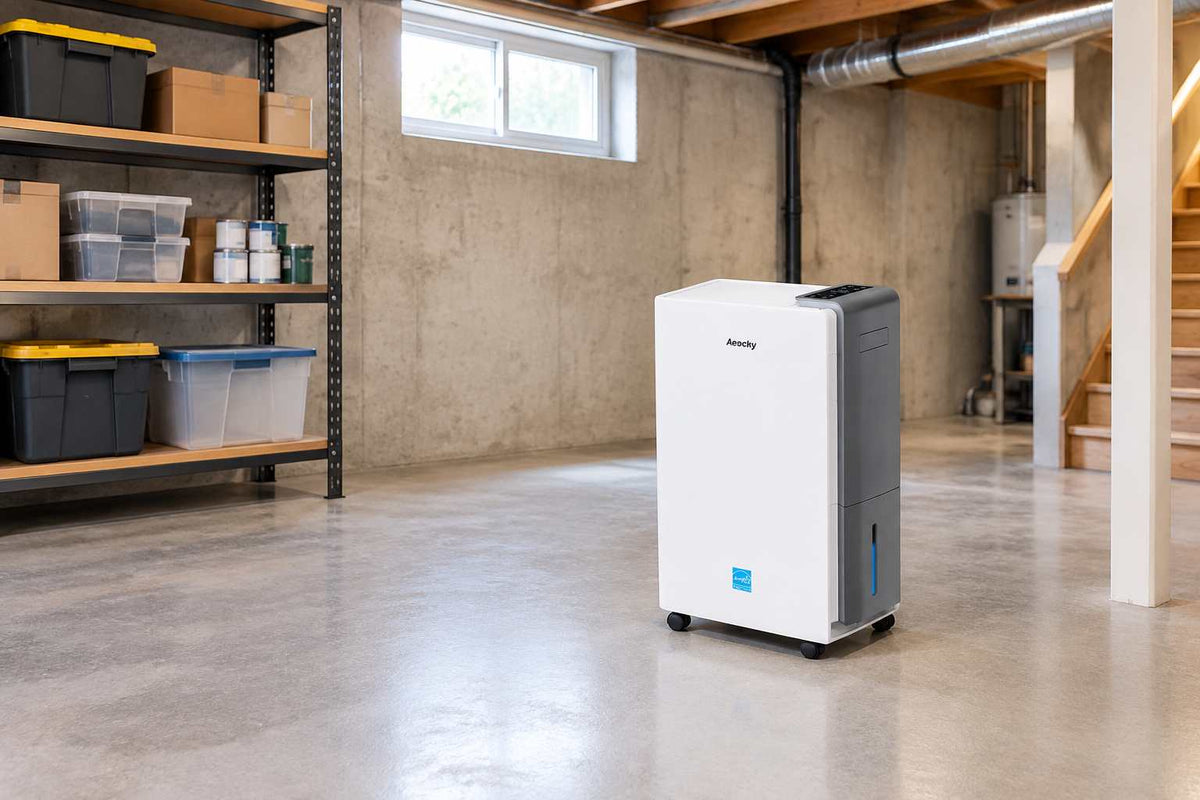
If you are deciding what to know before buying a basement dehumidifier, pay particular attention to drainage, low-temperature operating limits, and the source of moisture. Basements may be larger, cooler, and more persistently damp than living rooms. Check the model’s stated operating temperature range and make sure it is suitable for the conditions in your basement.
Persistent water on the floor, active leaks, or water entering through foundation walls need to be addressed separately. Use a dehumidifier as part of moisture management, not as a substitute for repairs or proper ventilation.

Final Thoughts

The right purchase comes down to fit, not just the largest capacity number or the most features. Use this Aeocky dehumidifier buying guide to assess your room, compare model-specific capacity and coverage, verify energy claims, and choose a drainage setup that you can live with. Then check noise, controls, warranty, and routine care before ordering. If you are still deciding how to choose the right Aeocky dehumidifier, start with the room’s moisture conditions and drainage access; these two factors will narrow the options more reliably than price alone.
 

Reading next

Aeocky Energy Star Dehumidifiers Compared: Which Model Fits Your Needs?
Best Dehumidifier for a Home With Limited Drainage Options

Leave a comment

This site is protected by hCaptcha and the hCaptcha Privacy Policy and Terms of Service apply.

What to Check Before Buying an Aeocky Dehumidifier

Before choosing an Aeocky dehumidifier, check how much moisture your space produces, the area the unit is expected to cover, its drainage setup, energy use, noise, and maintenance needs. A model with a high pint rating is not automatically the best fit: performance depends on room conditions, while everyday convenience depends on where the unit will sit and how collected water will be removed. This Aeocky dehumidifier buying guide walks through the details worth checking before you compare prices or choose a model. When comparing Aeocky dehumidifiers, focus on the specifications of the exact model and variant.
  1. Match Dehumidifier Capacity to the Space

How much dehumidifier capacity do I need?

Dehumidifier capacity usually describes how much moisture a unit can remove in a day under specified test conditions. It is not the same as the floor area it can cover. When estimating the dehumidifier capacity you need, consider the room’s square footage alongside how damp it is, the climate, ceiling height, and whether moisture enters from a crawl space, laundry area, or foundation.
A mildly humid bedroom may need less capacity than a similarly sized basement with persistent dampness. If windows regularly collect condensation, stored items feel clammy, or the room smells musty, investigate the moisture source as well as the appliance size. A dehumidifier can manage indoor humidity, but it will not repair leaks or solve water intrusion.

Check the stated dehumidifier coverage area

Compare the manufacturer’s coverage estimate with your actual space, but treat it as a guide rather than a guarantee. Open floor plans, closed doors, stairways, and room layout can affect how well dry air circulates. For connected spaces or large basements, capacity and air movement matter more than a headline square-foot figure alone.
If you are comparing models for a larger area, the Aeocky Rhea Series dehumidifier lists different capacity options for home and basement use. Check the specifications for the exact variant you plan to buy, since pint-per-day ratings and coverage differ by model.
  1. Compare Energy Efficiency and Certification

An energy-efficient dehumidifier can be useful when the unit needs to run for many hours a day. Compare the energy-efficiency information for the specific model, not just the product family. Operating costs also depend on your electricity rate, humidity level, thermostat setting, and how often the compressor runs.
If a listing describes a unit as an ENERGY STAR certified dehumidifier, verify the exact model in the official ENERGY STAR Product Finder. Certification status can change, and similar model names do not necessarily share the same rating. Also check whether the product page identifies the model year and the precise certification category.
Avoid choosing solely on a claim that a unit is “efficient.” Look for verifiable certification information and compare the available performance figures. A model that is appropriately sized and has useful humidity controls may also avoid unnecessary runtime.
  1. Choose a Drainage Method That Fits Your Room

Drainage affects how much attention a dehumidifier needs. A collection tank is straightforward, but it must be emptied when full. In a damp basement, that may mean frequent trips, especially during the first days of operation.
A continuous gravity drain can reduce manual emptying if the unit can sit near a suitable floor drain or sink and the hose can slope downward along its full path. A built-in pump is worth considering when water must be moved upward or to a drain that is not lower than the unit. Before buying, confirm the drain-hose connection, required hose size, pump lift limits, and whether the necessary hose is included.
For example, the Aeocky Leo Series with a built-in pump may suit spaces where gravity drainage is impractical. Check the specifications for the exact model and make sure the planned discharge route is feasible.
  1. Consider Noise, Controls, and Placement

Dehumidifier noise level matters most when the unit operates near a bedroom, home office, or living area. Check published decibel ratings when available, but remember that sound can vary by fan speed, floor surface, and room acoustics. If possible, place the appliance away from sleeping areas and allow the manufacturer-recommended clearance around air inlets and outlets.
Useful controls include an adjustable humidity target, automatic shutoff, restart behavior after a power interruption, and a full-tank indicator. A built-in humidistat can help maintain a chosen setting instead of requiring constant manual adjustment. Consider whether the display and buttons are easy to use in the room where the unit will operate.
  1. Review Dehumidifier Maintenance Requirements

Before buying, find out how to clean the air filter, access the water tank, inspect the drain hose, and maintain any pump. A washable or replaceable filter still needs regular attention; a clogged filter can restrict airflow and affect performance. Follow the manual’s cleaning schedule rather than assuming maintenance is unnecessary.
Check the warranty, customer support process, and availability of replacement parts. Filters, tanks, and hoses are practical details to confirm before purchase because they can affect long-term ownership. Also make sure the unit can be moved and positioned safely, particularly if you expect to use it in more than one room.
  1. Use This Dehumidifier Buying Checklist

Before placing an order, work through this dehumidifier buying checklist:
  • Room and moisture: Measure the space and identify whether the problem is mild humidity, persistent dampness, or a likely leak.
  • Capacity: Compare daily moisture-removal ratings under the stated test conditions.
  • Coverage: Check the rated dehumidifier coverage area and consider doors, walls, and air circulation.
  • Energy use: Review model-specific efficiency details and verify any ENERGY STAR claim.
  • Drainage: Decide whether a tank, gravity hose, or pump works best for your layout.
  • Noise and controls: Check operating noise, humidity settings, and automatic shutoff features.
  • Upkeep: Confirm filter cleaning, tank access, warranty terms, and replacement-part availability.
  1. What to Know Before Buying a Basement Dehumidifier

If you are deciding what to know before buying a basement dehumidifier, pay particular attention to drainage, low-temperature operating limits, and the source of moisture. Basements may be larger, cooler, and more persistently damp than living rooms. Check the model’s stated operating temperature range and make sure it is suitable for the conditions in your basement.
Persistent water on the floor, active leaks, or water entering through foundation walls need to be addressed separately. Use a dehumidifier as part of moisture management, not as a substitute for repairs or proper ventilation.

Final Thoughts

The right purchase comes down to fit, not just the largest capacity number or the most features. Use this Aeocky dehumidifier buying guide to assess your room, compare model-specific capacity and coverage, verify energy claims, and choose a drainage setup that you can live with. Then check noise, controls, warranty, and routine care before ordering. If you are still deciding how to choose the right Aeocky dehumidifier, start with the room’s moisture conditions and drainage access; these two factors will narrow the options more reliably than price alone.


Popular Posts
Best Dehumidifier for a Home With Limited Drainage Options
What to Check Before Buying an Aeocky Dehumidifier
Aeocky Energy Star Dehumidifiers Compared: Which Model Fits Your Needs?
Best Dehumidifier for Apartments: How to Choose the Right Model for Your Space
Dehumidifier Noise Levels Explained: How to Choose a Quieter Model
Portable vs. Whole-House Dehumidifier: Which Is Right for Your Home?
Best Dehumidifier for Kitchens: How to Manage Cooking Moisture and Humidity
Dehumidifier Replacement Filters: How to Choose the Right Filter for Your Model
Aeocky Leo Lite vs. Rhea Dehumidifier: Which Model Should You Buy?
Best Dehumidifier with Pump for Basement: What to Look For Before Buying
Aeocky Dehumidifier Buying Guide: How to Choose the Right Model for Your Home
Energy Star Dehumidifier for Home: How to Choose an Efficient Model
Best Dehumidifiers for Home in 2026: How to Choose the Right Model
Best Dehumidifier for Laundry Rooms: How to Prevent Moisture, Odors & Dry Clothes Faster
Best Dehumidifier for RVs: How to Choose the Right Size, Power & Features for Travel Use
Best Dehumidifier for Garages: How to Protect Tools, Cars & Storage Items from Moisture
Best Dehumidifier for Grow Rooms: How to Control Humidity for Indoor Plants
How to Choose the Best Dehumidifier for Large Rooms
How to Choose the Best Dehumidifier for Your Bathroom
What Is the Most Efficient Type of Dehumidifier?
Subscribe Us
Subscribe to our newsletter and receive a selection of cool articles every weeks