

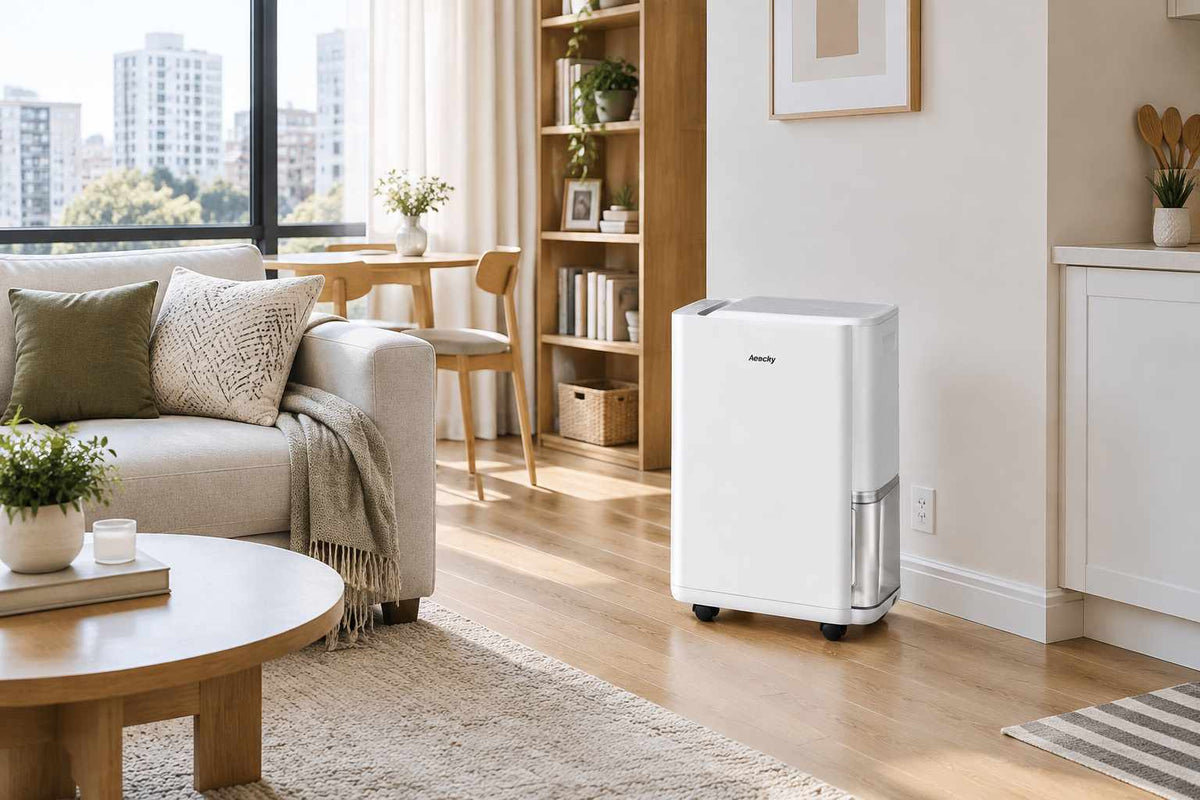
The best dehumidifier for apartments is one that matches the moisture problem without taking over your living space. Before choosing a model, consider the room’s size, how damp it gets, where the unit will sit, and whether you can empty a tank regularly or use a drain hose. Noise matters too, especially if the dehumidifier will run near a bed or work area. A compact design can be convenient, but the smallest unit is not always the right choice. The goal is to find enough moisture-removal capacity for your space, with practical features you will actually use.
What Makes a Dehumidifier Suitable for an Apartment?
Apartment living often means limited floor space, shared walls, and few convenient places to drain water. Choose a model that fits the room and is easy to manage.
Compact Design and Portability
Measure the available spot and leave clearance around the air inlet and outlet. Wheels or handles help if you plan to move the unit between rooms. Also consider storage and whether the machine blocks a walkway.
The Aeocky Arion is one option to compare if you want a portable unit with humidity controls and a continuous-drain option. Check the exact model’s capacity, dimensions, operating range, and drainage instructions on the Aeocky Arion product page. Product coverage figures are estimates under specified conditions, so they should not replace an assessment of your own apartment.
Noise, Drainage, and Daily Maintenance
For bedroom use, check the published sound level and whether the unit has a low fan setting or sleep mode. Noise varies by model and speed, so verify the specifications.
Drainage is another apartment-specific concern. A removable tank is useful when there is no floor drain, but a small tank may need frequent emptying in a damp room. A continuous hose works only when the model supports it and the hose can run to a suitable drain with the required slope. Never route a hose where it creates a trip hazard or violates building rules. Automatic shutoff when the tank is full is a useful safeguard.
How to Choose a Dehumidifier for an Apartment
Estimate Room Size and Humidity
Identify where the problem occurs. Window condensation, musty smells, damp laundry, and persistently high humidity can indicate different moisture loads. Use a hygrometer rather than guessing; many homes aim for 30% to 50% relative humidity.
If only one room is damp, a unit designed for that area may be enough. If several rooms are affected, one small appliance may not circulate air effectively throughout the apartment. Fix leaks and ventilation problems rather than relying on a dehumidifier alone. See our guide to the ideal indoor humidity level.
Compare Capacity and Energy Efficiency
Capacity is usually listed in pints of water removed per 24 hours under specified test conditions. A higher number can be useful for a wetter space, but capacity ratings should be compared using the same testing standard. Energy efficiency matters if the machine will run frequently; look for current efficiency information and consider how often the unit is likely to operate.
Best Apartment Dehumidifier for Small Spaces
The best apartment dehumidifier for small spaces depends on the room and the severity of the humidity problem. For shoppers seeking the best dehumidifier for a small apartment, the right choice is not always the smallest available model. Very compact units can suit a closet, small bathroom, or localized moisture issue, but some have limited extraction capacity. They may struggle when humidity affects a whole apartment or when moisture keeps entering the space.
Bedroom and Living Room Use
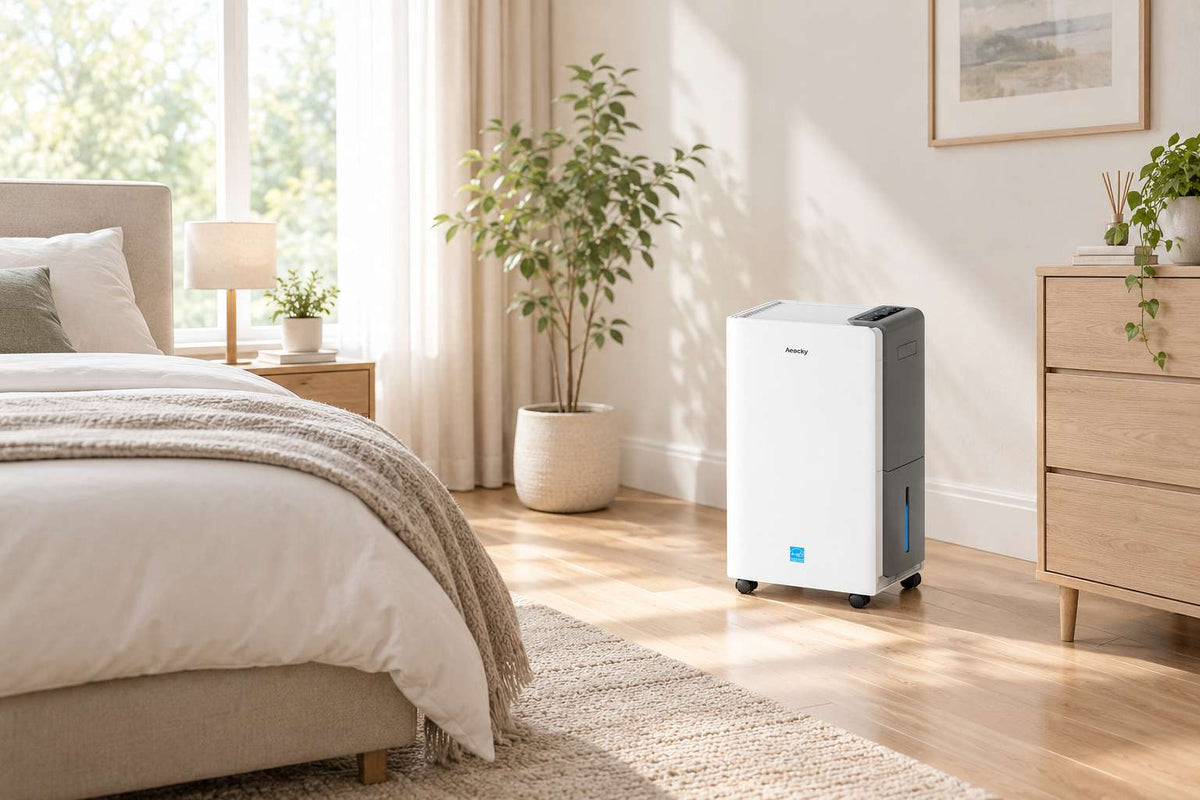
For a bedroom or living room, prioritize a manageable footprint, suitable capacity, a humidistat or adjustable humidity control, and noise information. An automatic shutoff can prevent overflow if the tank fills while you are away. If you plan to move the machine around, check its weight and whether it has handles or wheels.
Bathrooms, Closets, and Damp Areas
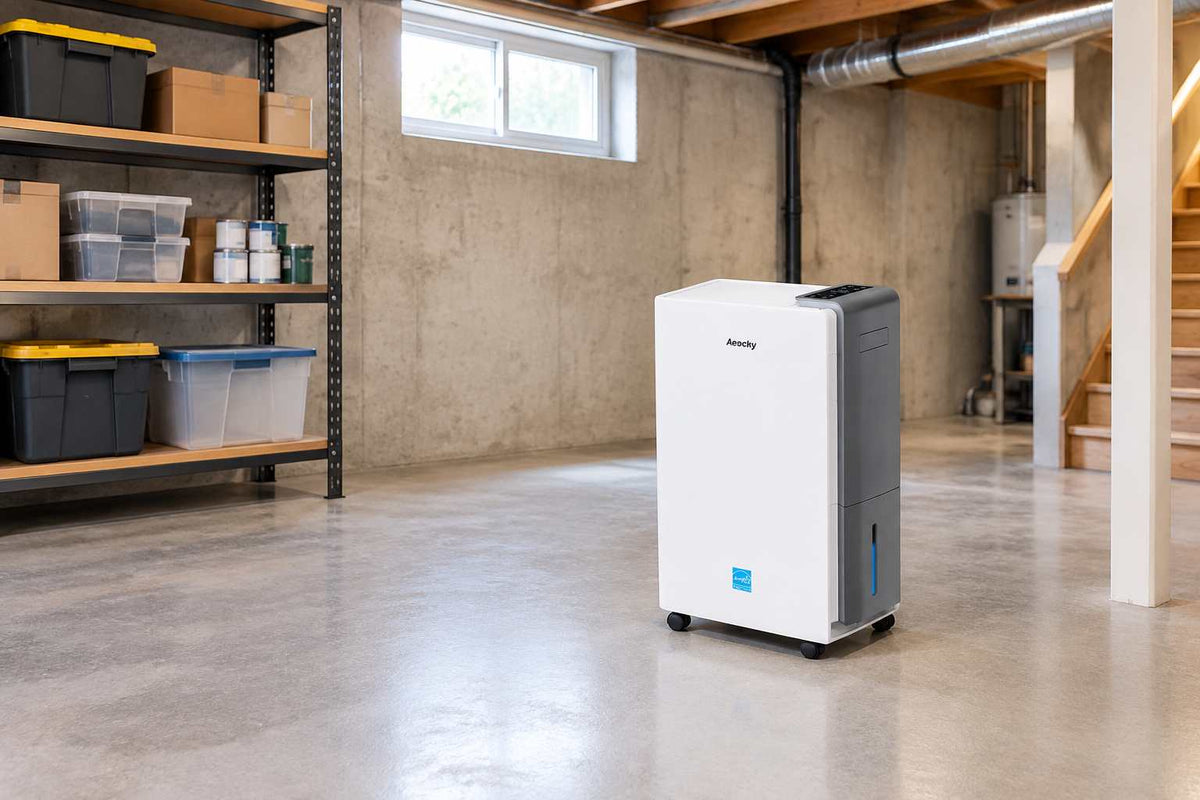
A small unit may help with localized humidity, but it is not a substitute for bathroom ventilation or fixing leaks. Keep electrical appliances away from splashes and follow the manufacturer’s placement instructions. For a consistently damp basement-style apartment or a large open-plan space, a higher-capacity model may be more appropriate than a mini unit, provided there is room for it and a practical way to handle drainage.
What Size Dehumidifier Do I Need for an Apartment?
No single capacity fits every apartment. A mildly damp room differs from a large space with condensation, indoor laundry drying, or moisture entering from outside. Use the manufacturer’s guidance, then account for the severity of dampness. ENERGY STAR also separates capacity recommendations by moisture conditions, not floor area alone.
If unsure, measure the room and monitor humidity for several days. Check rated capacity and operating temperature range; advertised square-foot coverage is not a guarantee for every layout or climate.
Features Worth Checking Before You Buy
-
Humidity control: An adjustable humidistat can help the unit stop when the target is reached.
-
Tank and drainage: Match tank size to how often you can empty it; confirm that any hose connection suits your setup.
-
Energy use: Compare efficiency ratings and expected operating hours, not just the purchase price.
-
Filter access: A filter that is easy to inspect and clean makes routine maintenance simpler.
-
Safety and placement: Leave airflow clearance, keep the unit level, and follow instructions for electrical safety and drainage.
Frequently Asked Questions
Is a small dehumidifier enough for an apartment?
It can be enough for a small room or a mild, localized problem. If multiple rooms remain damp or humidity stays high, you may need a higher-capacity model or a solution that addresses the source of moisture.
Should I choose a portable or full-size dehumidifier?
Choose based on the moisture load, not appearance alone. A portable model is easier to reposition, while a full-size compressor unit may remove more water per day. Check the dimensions, capacity, sound information, and drainage requirements for the specific model.
Where should I place a dehumidifier in an apartment?
Place it on a level surface with the clearances stated in the manual. Keep it away from walls or furniture that block airflow, and avoid locations where the cord or drain hose could create a trip hazard.
Final Thoughts
Choosing the best dehumidifier for a small apartment means balancing capacity with daily convenience. Measure the space, check humidity, and compare noise, tank size, drainage, and efficiency alongside advertised coverage. A compact model may suit one damp room, while several affected rooms may need greater capacity. Verify the exact model’s specifications and address leaks or ventilation problems. The right choice fits both your space and the moisture load.


Leave a comment
This site is protected by hCaptcha and the hCaptcha Privacy Policy and Terms of Service apply.