

Arion

AC Dry Mode vs. Dehumidifier: Which Is Better for Humidity Control?

AC Dry Mode vs. Dehumidifier: Which Is Better for Humidity Control?
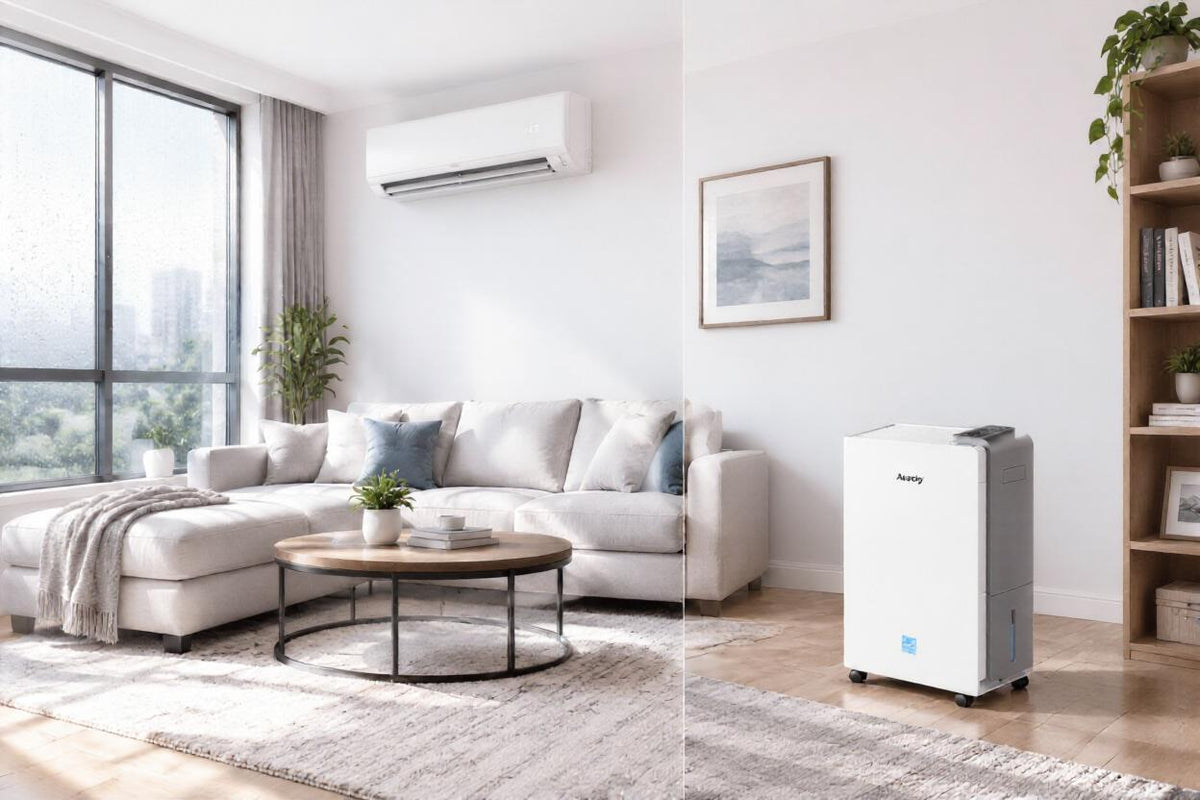
When comparing AC dry mode vs dehumidifier, the better choice depends on whether your room needs cooling as well as moisture removal. Dry Mode uses an air conditioner’s cooling system to condense water from the air, so it can reduce humidity while often lowering the room temperature. A standalone dehumidifier is designed mainly to control moisture and is useful when a room feels damp but does not need much cooling. Neither option is always more efficient: results depend on indoor conditions, equipment design, settings, and how long the device runs.

What Does Dry Mode on an AC Do?

How AC Dry Mode removes moisture

In Dry Mode, an air conditioner moves room air across a cold evaporator coil. Water vapor condenses on the coil and drains away, while the system returns drier air to the room. The compressor and fan may operate differently than they do in Cool Mode, depending on the model.
So, does AC dry mode remove humidity? Yes. It is intended to reduce moisture in the air, although the amount removed varies with the unit and conditions.

Does Dry Mode cool a room?

Usually, at least to some degree. Moisture condenses when air contacts the cold coil, and that process also removes sensible heat. If the room is already cool, prolonged operation may leave it uncomfortably cold.

AC Dry Mode vs. Dehumidifier: Key Differences

The central difference in an air conditioner dry mode vs dehumidifier comparison is the main job each appliance is designed to do. An AC manages temperature and can also remove moisture. A standalone dehumidifier focuses on lowering relative humidity, without relying on the room’s air conditioner.
Factor AC Dry Mode Standalone dehumidifier
Main purpose Reduce humidity while operating the AC system Reduce indoor moisture
Temperature effect Usually cools the room to some extent Usually releases some heat into the room
Best fit Warm, humid rooms that also need cooling Damp rooms that do not need additional cooling
Moisture collection Condensate drains through the AC system Water collects in a tank or exits through a drain hose
Placement Depends on the installed AC Portable units can be moved between suitable rooms
Performance Depends on AC design, controls, and room conditions Depends on capacity, humidity, temperature, and airflow
A dedicated unit may be useful if you need consistent humidity control in a bedroom, laundry area, or basement. For example, a compact portable dehumidifier for bedrooms and motorhomes may suit a smaller space, while a larger room may require a unit with greater extraction capacity.

Energy use and operating conditions

People often ask, “does dry mode on AC use less electricity?” It can use less energy than Cool Mode under some conditions, because some systems reduce compressor activity or fan speed. But this is not guaranteed. Control strategies vary, and a unit may continue running for a long time if humidity remains high.
The same caution applies to dehumidifier vs air conditioner energy consumption. A standalone dehumidifier adds electrical load, but it may allow you to avoid running the AC solely to remove moisture. Because a dehumidifier releases heat into the room, your AC may need to remove some of that heat if cooling is also required. Compare actual power ratings and operating patterns rather than assuming one option is always cheaper.

Is Dry Mode on AC Better Than a Dehumidifier?

There is no universal winner when asking, “which is better for humidity control AC or dehumidifier?” The related question “is dry mode on AC better than a dehumidifier” has the same answer: it depends on room temperature, moisture levels, and how the space is used. A dehumidifier vs air conditioner for humidity control comparison should start with whether cooling is also needed.

When AC Dry Mode makes more sense

Use Dry Mode when the weather is warm and humid, the room also needs cooling, and the air conditioner can maintain comfortable conditions. It may be convenient during muggy weather because the same appliance can provide cooling and moisture removal.

When a standalone dehumidifier is the better choice

A dehumidifier is often more practical when the room is damp but already cool, or when humidity remains high after the AC has stopped running. It can also help in spaces that are not regularly cooled, provided the unit is suitable for the room’s temperature and moisture load.
For larger areas, consider a whole-room or whole-house option such as the Rhea Series energy-efficient dehumidifier.

How to Choose the Right Option for Your Home

Bedrooms and apartments

For an apartment, start by asking whether the room needs cooling. If it is hot and humid, AC Dry Mode may address both problems. If the bedroom is cool but clammy, a properly sized dehumidifier may be more comfortable. When comparing the best dehumidifier for apartments, consider floor space, noise, tank capacity, and drainage.

Basements and persistently damp rooms

Basements can remain humid even when the rest of the home feels comfortable. A standalone dehumidifier may provide more direct moisture control than running the AC, especially if the basement has no dedicated cooling. If dampness is caused by leaks, groundwater, or poor exterior drainage, correct that source as well; a dehumidifier alone will not solve structural moisture problems.

Can You Use AC Dry Mode and a Dehumidifier Together?

Yes, but it is not always necessary. Running both may be useful during periods of high humidity if the AC cannot keep moisture within a comfortable range. However, the combination can increase electricity use and may overcool the room or make it feel warmer if the dehumidifier releases heat. Use a hygrometer to monitor relative humidity; many homes aim for roughly 30% to 50%. Avoid condensation and investigate persistent dampness instead of relying only on appliances.

Frequently Asked Questions

Does AC Dry Mode remove humidity?

Yes. It cools air across the evaporator coil so moisture condenses and drains away.

Does Dry Mode use less electricity?

Sometimes, but not always. Controls, weather, humidity, and runtime all affect energy use.

Can a dehumidifier replace an air conditioner?

No. A dehumidifier reduces moisture but does not provide the same cooling function as an air conditioner. It generally releases heat into the room, so it is not a replacement when temperature reduction is needed.

Final Thoughts

AC Dry Mode is a reasonable option when a room is both warm and humid. A standalone dehumidifier is often a better fit when excess moisture is the main problem, especially in cool bedrooms, basements, or spaces that are not regularly air-conditioned. If you are unsure, measure relative humidity over several days and observe whether the room also needs cooling. Choose the appliance that addresses the actual problem, and fix leaks or other moisture sources rather than expecting either device to solve them alone.

 

Reading next

Dehumidifier Pints per Day Explained: What Does the Rating Really Mean?
Dehumidifier Capacity Loss Over Time: What Affects Long-Term Performance?

Leave a comment

This site is protected by hCaptcha and the hCaptcha Privacy Policy and Terms of Service apply.

AC Dry Mode vs. Dehumidifier: Which Is Better for Humidity Control?

When comparing AC dry mode vs dehumidifier, the better choice depends on whether your room needs cooling as well as moisture removal. Dry Mode uses an air conditioner’s cooling system to condense water from the air, so it can reduce humidity while often lowering the room temperature. A standalone dehumidifier is designed mainly to control moisture and is useful when a room feels damp but does not need much cooling. Neither option is always more efficient: results depend on indoor conditions, equipment design, settings, and how long the device runs.

What Does Dry Mode on an AC Do?

How AC Dry Mode removes moisture

In Dry Mode, an air conditioner moves room air across a cold evaporator coil. Water vapor condenses on the coil and drains away, while the system returns drier air to the room. The compressor and fan may operate differently than they do in Cool Mode, depending on the model.
So, does AC dry mode remove humidity? Yes. It is intended to reduce moisture in the air, although the amount removed varies with the unit and conditions.

Does Dry Mode cool a room?

Usually, at least to some degree. Moisture condenses when air contacts the cold coil, and that process also removes sensible heat. If the room is already cool, prolonged operation may leave it uncomfortably cold.

AC Dry Mode vs. Dehumidifier: Key Differences

The central difference in an air conditioner dry mode vs dehumidifier comparison is the main job each appliance is designed to do. An AC manages temperature and can also remove moisture. A standalone dehumidifier focuses on lowering relative humidity, without relying on the room’s air conditioner.
Factor AC Dry Mode Standalone dehumidifier
Main purpose Reduce humidity while operating the AC system Reduce indoor moisture
Temperature effect Usually cools the room to some extent Usually releases some heat into the room
Best fit Warm, humid rooms that also need cooling Damp rooms that do not need additional cooling
Moisture collection Condensate drains through the AC system Water collects in a tank or exits through a drain hose
Placement Depends on the installed AC Portable units can be moved between suitable rooms
Performance Depends on AC design, controls, and room conditions Depends on capacity, humidity, temperature, and airflow
A dedicated unit may be useful if you need consistent humidity control in a bedroom, laundry area, or basement. For example, a compact portable dehumidifier for bedrooms and motorhomes may suit a smaller space, while a larger room may require a unit with greater extraction capacity.

Energy use and operating conditions

People often ask, “does dry mode on AC use less electricity?” It can use less energy than Cool Mode under some conditions, because some systems reduce compressor activity or fan speed. But this is not guaranteed. Control strategies vary, and a unit may continue running for a long time if humidity remains high.
The same caution applies to dehumidifier vs air conditioner energy consumption. A standalone dehumidifier adds electrical load, but it may allow you to avoid running the AC solely to remove moisture. Because a dehumidifier releases heat into the room, your AC may need to remove some of that heat if cooling is also required. Compare actual power ratings and operating patterns rather than assuming one option is always cheaper.

Is Dry Mode on AC Better Than a Dehumidifier?

There is no universal winner when asking, “which is better for humidity control AC or dehumidifier?” The related question “is dry mode on AC better than a dehumidifier” has the same answer: it depends on room temperature, moisture levels, and how the space is used. A dehumidifier vs air conditioner for humidity control comparison should start with whether cooling is also needed.

When AC Dry Mode makes more sense

Use Dry Mode when the weather is warm and humid, the room also needs cooling, and the air conditioner can maintain comfortable conditions. It may be convenient during muggy weather because the same appliance can provide cooling and moisture removal.

When a standalone dehumidifier is the better choice

A dehumidifier is often more practical when the room is damp but already cool, or when humidity remains high after the AC has stopped running. It can also help in spaces that are not regularly cooled, provided the unit is suitable for the room’s temperature and moisture load.
For larger areas, consider a whole-room or whole-house option such as the Rhea Series energy-efficient dehumidifier.

How to Choose the Right Option for Your Home

Bedrooms and apartments

For an apartment, start by asking whether the room needs cooling. If it is hot and humid, AC Dry Mode may address both problems. If the bedroom is cool but clammy, a properly sized dehumidifier may be more comfortable. When comparing the best dehumidifier for apartments, consider floor space, noise, tank capacity, and drainage.

Basements and persistently damp rooms

Basements can remain humid even when the rest of the home feels comfortable. A standalone dehumidifier may provide more direct moisture control than running the AC, especially if the basement has no dedicated cooling. If dampness is caused by leaks, groundwater, or poor exterior drainage, correct that source as well; a dehumidifier alone will not solve structural moisture problems.

Can You Use AC Dry Mode and a Dehumidifier Together?

Yes, but it is not always necessary. Running both may be useful during periods of high humidity if the AC cannot keep moisture within a comfortable range. However, the combination can increase electricity use and may overcool the room or make it feel warmer if the dehumidifier releases heat. Use a hygrometer to monitor relative humidity; many homes aim for roughly 30% to 50%. Avoid condensation and investigate persistent dampness instead of relying only on appliances.

Frequently Asked Questions

Does AC Dry Mode remove humidity?

Yes. It cools air across the evaporator coil so moisture condenses and drains away.

Does Dry Mode use less electricity?

Sometimes, but not always. Controls, weather, humidity, and runtime all affect energy use.

Can a dehumidifier replace an air conditioner?

No. A dehumidifier reduces moisture but does not provide the same cooling function as an air conditioner. It generally releases heat into the room, so it is not a replacement when temperature reduction is needed.

Final Thoughts

AC Dry Mode is a reasonable option when a room is both warm and humid. A standalone dehumidifier is often a better fit when excess moisture is the main problem, especially in cool bedrooms, basements, or spaces that are not regularly air-conditioned. If you are unsure, measure relative humidity over several days and observe whether the room also needs cooling. Choose the appliance that addresses the actual problem, and fix leaks or other moisture sources rather than expecting either device to solve them alone.


Popular Posts
Dehumidifier Water Tank Capacity: How Often Will You Need to Empty It?
How to Protect Cardboard Boxes and Stored Belongings from Humidity
Can a Dehumidifier Help Clothes Dry Faster Indoors?
Dehumidifier Capacity Loss Over Time: What Affects Long-Term Performance?
AC Dry Mode vs. Dehumidifier: Which Is Better for Humidity Control?
Dehumidifier Pints per Day Explained: What Does the Rating Really Mean?
Dehumidifier vs. Air Purifier: Which One Does Your Home Need?
Dehumidifier vs. Moisture Absorber: Which Is Better for Your Home?
Dehumidifier with a Humidistat: Is It Worth
Can You Use a Dehumidifier in an Unheated Room? Temperature Limits Explained
Aeocky Dehumidifier Warranty, Returns & Replacement: What Buyers Should Know
Best Dehumidifier for a Home Office: Quiet, Compact & Efficient Options
Best Dehumidifier for Crawl Spaces: Size, Drainage & Humidity Control
Best Dehumidifier for RV Storage: How to Protect Your RV When It's Not in Use
Best Dehumidifier for Cars: How to Prevent Moisture, Foggy Windows & Musty Odors
Is It Okay to Sleep With a Dehumidifier On? Bedroom Safety Tips
Should I run my dehumidifier during the day or at night
How to Tell If Your House Needs a Dehumidifier: Signs of High Humidity
Should I Use a Dehumidifier in the Summer?
Dehumidifiers for Pet Owners: Reducing Odors, Dampness & Pet Dander
Subscribe Us
Subscribe to our newsletter and receive a selection of cool articles every weeks