

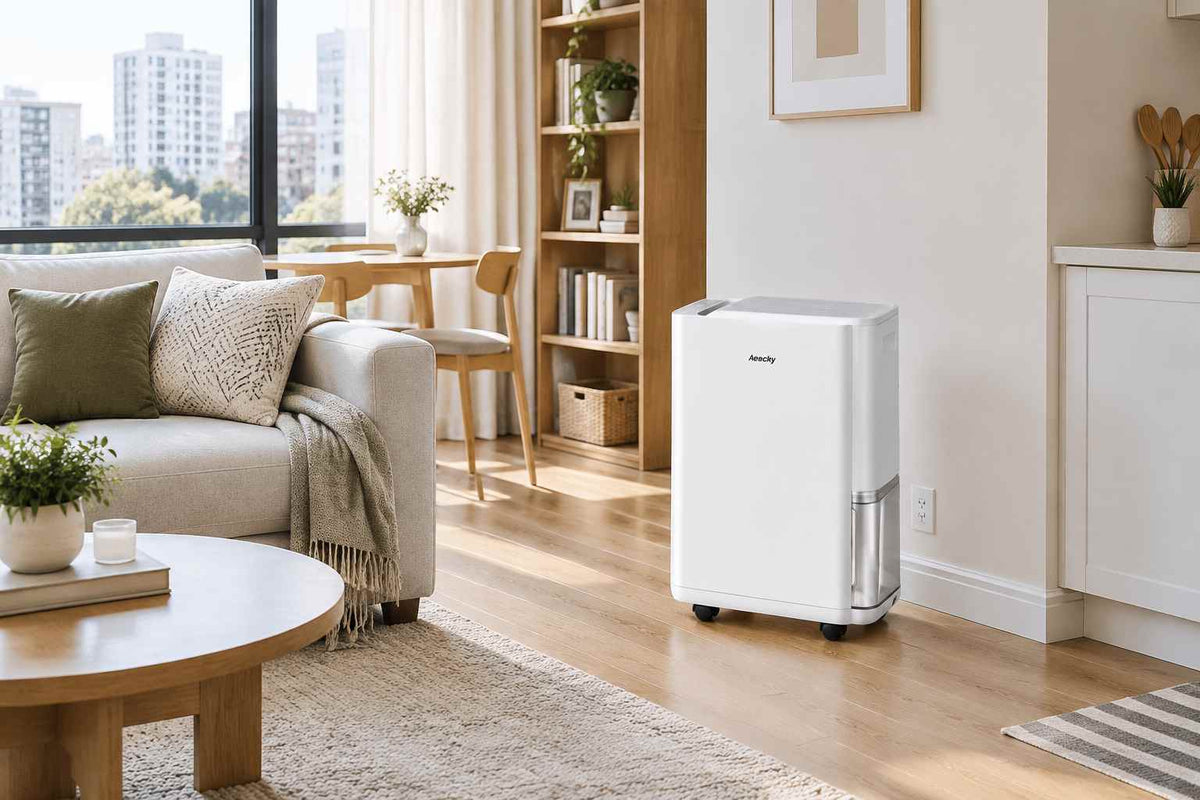
A dehumidifier that collects less water than it used to is not necessarily losing capacity. Changes in indoor humidity, room temperature, and moisture sources can all affect how much water it removes each day. However, dirty filters, restricted airflow, drainage issues, and worn components can also reduce performance. Understanding dehumidifier capacity loss over time means identifying whether the change is normal or points to a maintenance problem. Before replacing an older unit, check its operating conditions, clean accessible components, and compare its performance under similar conditions. These steps can help you identify the cause and decide what to do next.
Does a Dehumidifier Lose Efficiency With Age?
Capacity loss vs. lower water collection
A dehumidifier’s rated capacity indicates how much moisture it can remove under specified test conditions. Actual collection depends on the temperature and relative humidity of the room, airflow, and how long the unit runs.
For example, a dehumidifier may collect less water after it has reduced indoor humidity. That can be a sign that the appliance is doing its job, not that it is failing. Cooler conditions can also reduce moisture removal in many compressor-based models.
So, does a dehumidifier lose efficiency with age? It can. Dust buildup, component wear, and mechanical faults may affect an older appliance. But age alone does not establish that its moisture-removal capacity has declined.
Signs of declining performance
Pay attention to changes that persist under comparable conditions. Warning signs include a room that stays humid despite extended operation, reduced airflow, repeated shutdowns, unusual mechanical noises, or difficulty reaching the selected humidity setting.
What Causes Dehumidifier Capacity Loss Over Time?
Several factors that affect dehumidifier performance relate to maintenance and operating conditions rather than permanent damage.
Dirty filters and restricted airflow
A clogged filter reduces airflow through the unit. When less air passes over the heat-exchange components, moisture removal may suffer. Dust around the air intake or outlet can cause similar problems.
Turn the appliance off and unplug it before cleaning. Follow the manufacturer's instructions for washing or replacing the filter, and allow a washable filter to dry completely before reinstalling it. If a replacement is needed, choose one designed for the exact model, such as the Arion dehumidifier air filter.
Temperature and humidity changes
Room conditions can make a noticeable difference. When indoor humidity falls, there is less moisture available for the dehumidifier to collect. When outdoor weather changes, windows are opened, or moisture-producing activities decrease, water collection may change as well.
Temperature matters, too. Many compressor-based dehumidifiers remove less moisture in cooler environments, and some models enter defrost mode or stop operating outside their recommended temperature range. Check the owner's manual for the unit's operating limits.
Coil buildup and component wear
Dust and deposits on internal coils can interfere with airflow and heat transfer. Some internal cleaning tasks require professional service, particularly if components are difficult to access.
Fans, sensors, electrical parts, and compressor systems can also develop faults over time. A refrigerant leak or compressor problem may reduce moisture removal, but low water collection alone cannot confirm either issue. Avoid opening sealed refrigeration components yourself.
Incorrect settings and drainage problems
A high humidity target may cause the unit to stop before the room reaches the level you expect. Timer settings, a full tank, or a bucket that is not seated correctly can also interrupt operation.
For continuous drainage, inspect the hose for kinks or blockages and make sure it is installed as instructed. A drainage problem may trigger a shutdown or create the impression that the appliance is collecting less water.
Why Is My Dehumidifier Not Collecting as Much Water?
If you are wondering, why is my dehumidifier not collecting as much water, use this troubleshooting sequence.
-
Measure indoor humidity. Use a separate hygrometer to see whether the room is already drier than before.
-
Check temperature and moisture sources. Consider weather changes, open windows, ventilation, showers, cooking, and indoor laundry.
-
Clean the filter. Follow the manual and check whether the intake and outlet are unobstructed.
-
Review the settings. Confirm the target humidity, operating mode, fan setting, and timer.
-
Inspect the water system. Make sure the tank is correctly positioned or the drain hose is clear.
-
Compare performance again. Observe the room humidity and water collection under similar conditions rather than comparing days with very different weather.
If the room remains humid and these checks do not improve performance, a sensor, fan, compressor, or refrigeration-system fault may be involved. Consult the manufacturer’s troubleshooting guidance or arrange qualified service.
How to Maintain Dehumidifier Performance
Regular care can help prevent avoidable performance problems. To maintain dehumidifier efficiency over time:
-
Clean the filter regularly. Follow the manufacturer's schedule and inspect it more frequently in dusty rooms.
-
Keep air passages clear. Leave the recommended space around the appliance so air can circulate.
-
Clean accessible surfaces. Remove dust from the exterior and other areas identified in the manual.
-
Inspect the tank and drain. Clean the water container as directed and check hoses for obstructions.
-
Use suitable settings. Choose a humidity target appropriate for the space instead of running the unit unnecessarily.
-
Track performance. Record room humidity, approximate runtime, and water collection. Comparisons are more useful when temperature and humidity are similar.
When choosing a replacement for a smaller living space, the Arion portable dehumidifier is one option to evaluate against your room size, noise needs, operating conditions, and drainage preferences. Choose capacity based on the actual moisture load rather than relying on coverage claims alone.
When Should You Repair or Replace a Dehumidifier?
Consider professional service if performance remains poor after basic maintenance, the unit repeatedly shuts down, unusual mechanical noises develop, or electrical damage is visible. A qualified technician can determine whether a component is repairable and whether the cost is reasonable for the appliance's age and condition.
Replacement may make more sense if a major component has failed, parts are unavailable, or repair costs approach the price of a suitable new unit. Compare repair costs, warranty coverage, energy use, and the capacity you need. Lower water collection during drier weather is not, by itself, a reason to replace a working dehumidifier.
Frequently Asked Questions
What causes a dehumidifier to lose efficiency?
Common causes include restricted airflow, dirty coils, unsuitable temperatures, sensor problems, and mechanical wear. Lower indoor humidity can also reduce water collection without indicating a fault.
Does a dehumidifier use more electricity as it ages?
Not necessarily. Electricity use depends on the unit's condition, runtime, and environment. A malfunctioning appliance may run longer without controlling humidity effectively, but age alone does not determine energy consumption.
How long does a dehumidifier maintain its efficiency?
There is no universal timeline. Performance and service life depend on build quality, usage, maintenance, and operating conditions. Regular care can help, but it cannot prevent every component failure.
Final Thoughts
Dehumidifier performance should be judged by more than the amount of water in the tank. Lower collection may reflect reduced indoor humidity or cooler weather rather than actual capacity loss. Start by checking the filter, airflow, settings, temperature, and drainage before assuming the unit is failing. If humidity remains high despite suitable operating conditions and basic maintenance, a mechanical problem may need professional attention. Routine care, consistent monitoring, and timely repairs can help a dehumidifier operate effectively for longer. If replacement becomes necessary, choose a model suited to the room and its real moisture load.


Leave a comment
This site is protected by hCaptcha and the hCaptcha Privacy Policy and Terms of Service apply.