

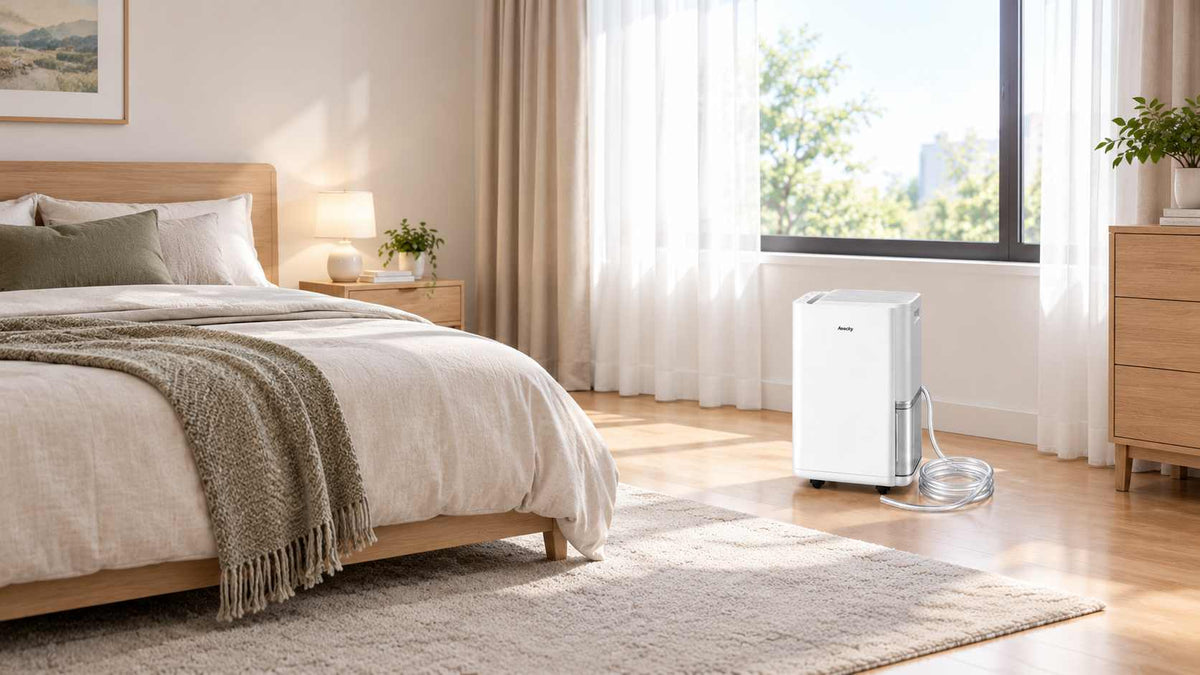
A dehumidifier’s tank may need emptying once a day, several times a day, or only occasionally. It depends on the amount of moisture removed, tank volume, and room humidity. Distinguish dehumidifier water tank capacity from the unit’s moisture-removal rating: the tank holds water, while dehumidifier capacity describes how many pints the machine can remove in 24 hours under specified test conditions. Compare both numbers and consider continuous drainage if you want fewer trips to the sink.
How Often Will You Need to Empty a Dehumidifier?
There is no fixed schedule for every home. A tank may fill quickly in a damp basement or laundry room, then collect less water as indoor humidity drops. During the first few days, check it at least daily—and more often in a very damp room. Once you see how quickly it fills, set a realistic routine.
Use the full-tank light or automatic shutoff as your main signal. Many portable models stop collecting water when the reservoir reaches its limit, then resume only after you empty and reinstall it. If you are wondering how often to empty a dehumidifier water tank, follow the indicator rather than a rigid daily schedule. The answer to how long does a dehumidifier tank last depends on the tank volume and the water being collected. Check your owner’s manual for the exact indicator and procedure. For a broader explanation of the process, read what a dehumidifier does.
Water Tank Capacity vs. Dehumidifier Capacity
These two specifications sound similar, but they measure different things. A dehumidifier tank size describes storage volume, while the daily rating describes moisture removal.
-
Water tank capacity: The volume of water the reservoir can hold before it needs emptying.
-
Dehumidifier capacity: The amount of moisture the appliance is rated to remove over a set period, commonly 24 hours.
A machine with a high daily removal rating and a small tank can stop frequently because the reservoir fills before the appliance has finished running. A larger tank usually means fewer emptying trips, but it does not necessarily mean the unit removes moisture faster. ENERGY STAR also notes that required dehumidifier capacity depends on both the size of the space and how damp it is. Source: ENERGY STAR.
A Simple Way to Estimate Emptying Frequency
For a rough estimate, divide the usable tank volume by the amount of water the machine actually collects per hour. For example, if a tank holds 1 gallon and the appliance collects about 0.25 gallon per hour, it could fill in around four hours. This is only an illustration, not a prediction for every model: real collection rates change with temperature, relative humidity, airflow, and the humidity setting.
Do not calculate emptying frequency from the headline pint rating alone. Manufacturers test removal capacity under specific conditions, and your room may be less humid than the test environment. Actual dehumidifier water collection often slows as the room approaches its target humidity.
What Affects How Quickly the Tank Fills?
Indoor Humidity and Moisture Sources
A damp basement, recent water leak, wet laundry, frequent showers, or humid outdoor air entering the home can increase the amount of moisture available to remove. A room that starts out very humid may fill the tank quickly at first. As the space dries, collection may decrease.
Room Size and Appliance Sizing
A unit that is too small for the area or moisture load may run for long periods without reaching the target humidity. A suitably sized model can manage the room more effectively, although the tank may still need frequent emptying if it collects a lot of water. For larger spaces, see our guide to choosing a dehumidifier for large rooms.
Temperature, Airflow, and Settings
Performance varies by model and temperature. Keep air inlets and outlets clear, clean the filter as directed, and leave space around the appliance. A very low humidity setting can keep a unit running longer. A relative humidity target around 30%–50% is a useful general reference for many homes, but follow product guidance.
What Size Dehumidifier Water Tank Do I Need?
When deciding what size dehumidifier water tank do I need, consider how often you can realistically empty it. A compact tank may be manageable in a bedroom where moisture levels are modest. In a damp basement or laundry area, a larger reservoir can reduce interruptions—but only if you are comfortable lifting and carrying it when full.
A portable dehumidifier should also match the room and the moisture load. Do not choose by tank volume alone: check the daily removal rating, coverage guidance, operating temperature range, noise, and drainage options. If you are comparing units for different spaces, Aeocky’s Arion portable dehumidifier is one option to review for smaller spaces; verify the current specifications and drainage features before buying.
How to Empty the Tank Less Often
If you are tired of carrying a full reservoir, there are two main alternatives.
Use a Dehumidifier With Continuous Drainage
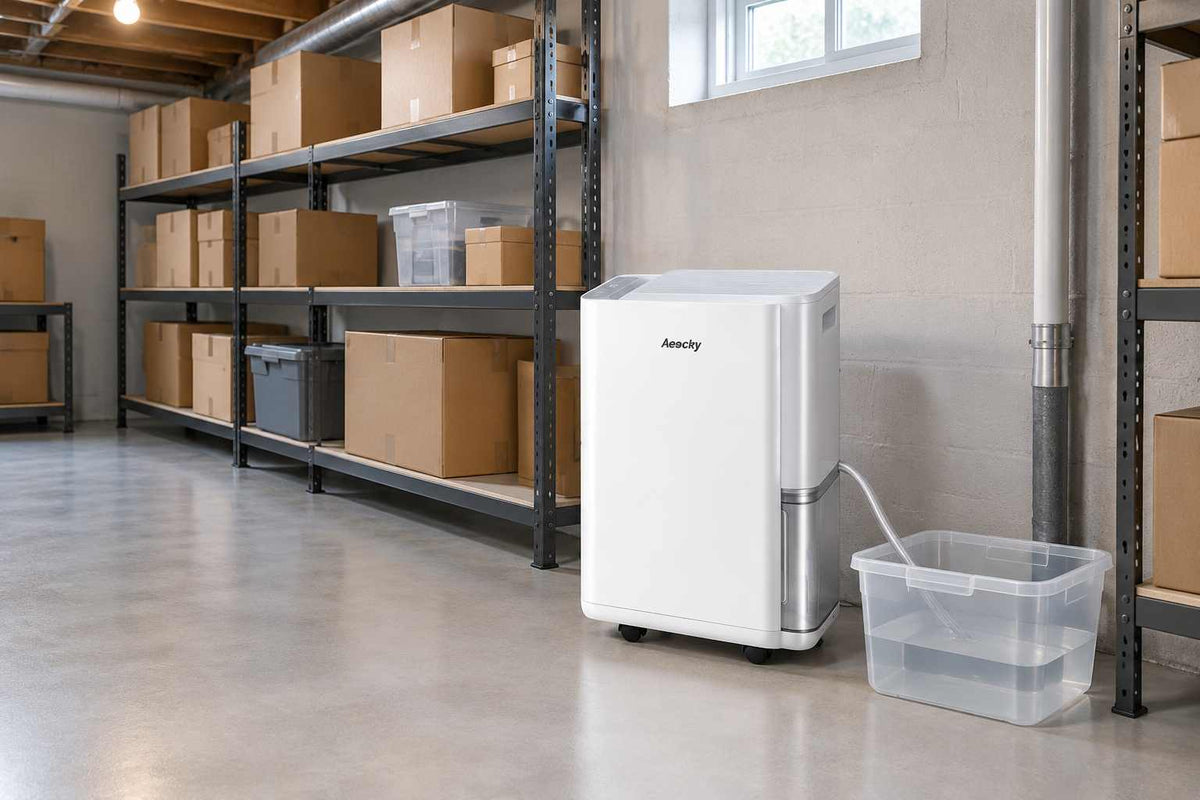
A dehumidifier with continuous drainage sends collected water through a hose to a suitable drain, so you do not have to empty the tank each time it fills. Gravity drainage requires the hose to slope continuously downward. Follow the manual, secure the hose, and check for kinks or leaks before leaving the appliance running.
Choose a Dehumidifier With a Built-In Pump
A dehumidifier with a built-in pump can move water to a discharge point that sits higher than the unit, within the pump’s rated lift. This can help when a floor drain is unavailable and a suitable sink or outlet is elevated. Check the specified lift height, hose compatibility, and maintenance requirements; a pump does not remove the need to confirm that water is being discharged safely.
Continuous drainage is not suitable for every setup. Use an appropriate drain, and keep the hose away from walkways, electrical equipment, and vulnerable flooring.
Signs the Tank or Drainage Setup Needs Attention
Empty the reservoir when the full indicator activates, and seat it correctly afterward. If it fills unusually quickly, check room humidity and operation. If it collects no water despite high humidity, check settings, the filter, room temperature, and troubleshooting guidance.
For hose drainage, inspect the connection and route regularly. A kinked or loose hose can interrupt flow and allow water to collect in the wrong place. Clean the tank according to the manufacturer’s instructions to prevent residue and odors.
Final Thoughts
How often you empty a dehumidifier depends on the relationship between tank size, actual moisture removal, and room conditions. A larger reservoir can reduce trips to the sink, but it cannot keep the appliance running once it fills. Check both tank volume and daily removal capacity before buying, and think about where the collected water will go. If you expect high moisture loads or want the unit to run with less supervision, continuous drainage or a pump-equipped model may be more practical than relying on a tank alone.


Leave a comment
This site is protected by hCaptcha and the hCaptcha Privacy Policy and Terms of Service apply.