

control moisture

Can You Use a Dehumidifier in an Unheated Room? Temperature Limits Explained

Can You Use a Dehumidifier in an Unheated Room? Temperature Limits Explained
Yes, you can use a dehumidifier in an unheated room, but whether it works well depends on the room temperature and the type of unit. Conventional compressor dehumidifiers generally become less effective as temperatures fall, and some models may struggle with frost buildup on their cooling coils. Desiccant dehumidifiers can be a better option for certain cold environments, although their operating limits and energy use still matter. Before running a dehumidifier in an unheated basement, garage, or storage room, check its minimum operating temperature and consider how cold the space gets overnight. The right choice depends on the conditions, not simply whether the room has heating.

What Temperature Is Too Cold for a Dehumidifier?

There is no single temperature that is too cold for every dehumidifier. Many conventional compressor models are designed primarily for moderate indoor temperatures, while some models include controls to help manage frost in cooler conditions.
A unit's operating range is the most reliable starting point. Check the owner's manual or manufacturer's specifications before using it in a cold space.

Why Compressor Dehumidifiers Struggle in Cold Conditions

A compressor dehumidifier draws in moist air and passes it over a cold evaporator coil. When the coil is colder than the air's dew point, water vapor condenses and collects in the tank or drains away.
As room temperature drops, the coil can become cold enough for frost to form. Ice buildup reduces the coil's ability to transfer heat and collect moisture. Some units respond with an automatic defrost cycle, temporarily pausing normal moisture removal while the ice melts.
This means a compressor dehumidifier may still run in a cold room without removing much water. Its actual performance depends on the temperature, humidity, airflow, and defrost system.

What Happens Near Freezing?

When a room approaches freezing, the risk of frost and reduced moisture removal becomes more important. If the temperature falls below the manufacturer's permitted range, the unit may operate inefficiently or experience problems that its controls are not designed to prevent.
Do not assume that a dehumidifier with an automatic defrost function can safely operate at any low temperature. Defrost protection has limits, and it does not necessarily mean the appliance is suitable for freezing conditions.

Can You Use a Dehumidifier in an Unheated Room?

Yes, provided the room stays within the unit's specified operating range. The next step is to consider the type of space and how its temperature changes throughout the day.

Unheated Basements and Garages

An unheated basement may remain relatively mild because the surrounding ground moderates temperature changes. A garage, however, can become much colder overnight, especially during winter.
Measure the temperature where the dehumidifier will operate rather than relying on the outdoor forecast or the temperature elsewhere in the house. A thermometer with a minimum-temperature reading can help you identify overnight lows.
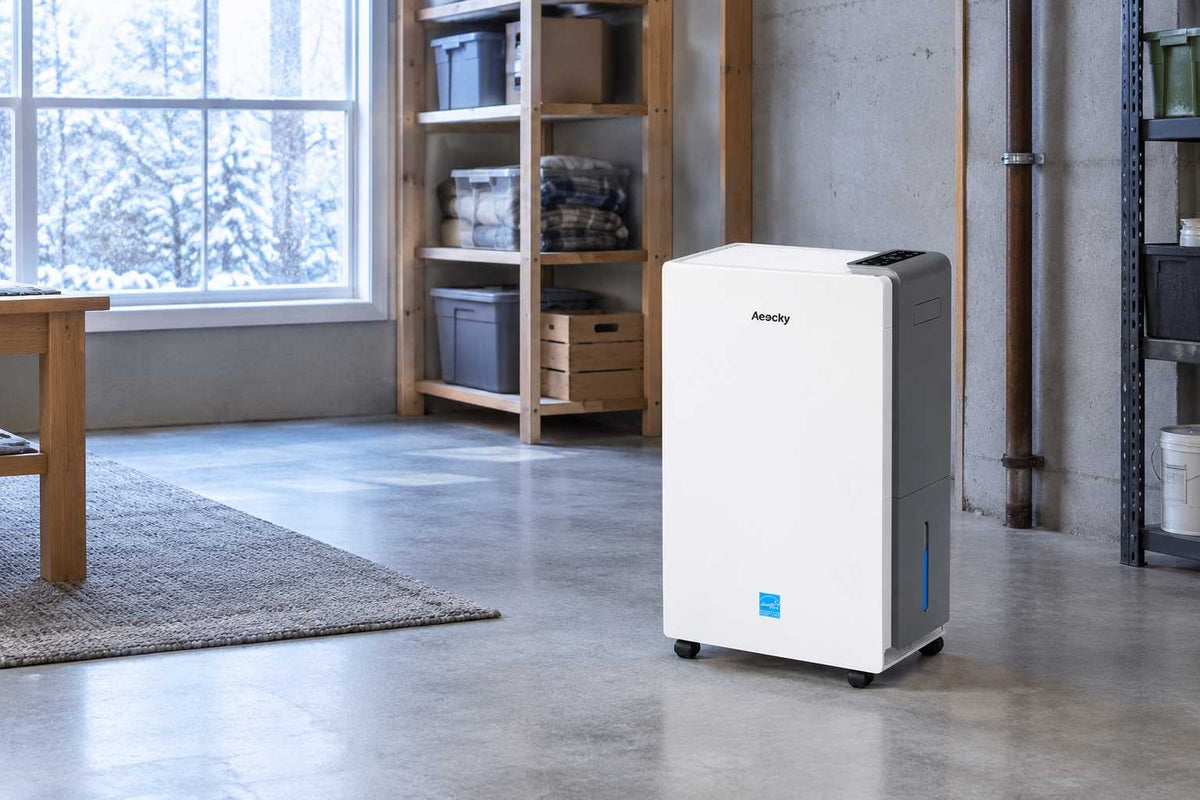
If the space stays within the model's operating range, a compressor dehumidifier may be suitable. For model selection, Aeocky's Rhea series dehumidifiers are designed for home and basement moisture control. However, the product's advertised coverage and moisture-removal capacity should not be taken as proof of suitability for low temperatures. Confirm the operating range in the documentation for the exact model.
For more specific advice on moisture control in garages, see this guide to choosing a dehumidifier for garages.

Sheds, Storage Rooms, and Seasonal Spaces

Sheds and detached storage rooms can experience larger temperature swings than indoor basements. Before installing a dehumidifier, consider whether the space remains above freezing, whether moisture enters through leaks or ventilation, and whether the unit can drain safely.
If temperatures regularly fall below the operating range, running a conventional compressor model may not solve the problem. You may need a different dehumidification technology or a way to keep the space within a suitable temperature range.
Also check the water collection and drainage arrangement. A drain hose or water container exposed to freezing temperatures may freeze even if the appliance itself continues to operate.

Compressor vs. Desiccant Dehumidifiers in Cold Rooms

The two main technologies behave differently in cool environments.
Compressor dehumidifiers remove moisture by cooling air below its dew point. They are commonly used in homes and basements, but their moisture-removal performance generally declines as the air gets colder. Some models use automatic defrost systems to manage frost.
Desiccant dehumidifiers use a moisture-absorbing material to capture water vapor from the air. They do not rely on a refrigerated evaporator coil in the same way, so they can be useful in colder spaces where a conventional compressor unit struggles. However, they often use more electricity for a comparable amount of moisture removal, and their permitted operating temperatures still depend on the design.
If you are comparing options, Aeocky's dehumidifier collection includes different technologies, including a compact desiccant model. Review the specifications carefully rather than assuming every model in the collection is intended for cold or freezing environments.
The best choice depends on the temperature range, humidity level, room size, expected operating hours, and electricity costs.

How to Find the Minimum Operating Temperature for a Dehumidifier

To find the minimum operating temperature for a dehumidifier, follow these steps:
  1. Identify the exact model. Record the model number from the appliance label.
  2. Find the official manual. Use the manufacturer's website or product documentation. Aeocky's manual download and video guide provides model-specific manuals for its product range.
  3. Look for the operating temperature range. Check the technical specifications and any warnings about low-temperature operation.
  4. Check for defrost protection. Find out whether the unit has an automatic defrost function and understand its limitations.
  5. Compare the rating with real conditions. Consider the coldest temperature the room reaches, not just its daytime average.
If the documentation does not specify a clear operating range, contact the manufacturer rather than guessing.

How to Improve Dehumidifier Performance in Low Temperatures

If your model is rated for the conditions, a few practical measures can help.
  • Monitor room temperature. Check overnight lows as well as daytime readings.
  • Keep air inlets and outlets clear. Leave the space around the unit recommended by the manufacturer.
  • Address moisture sources. Repair leaks and manage water intrusion instead of relying on the dehumidifier alone.
  • Check the filter. A dirty filter can restrict airflow and reduce performance.
  • Use the correct drainage method. Make sure the tank or hose is protected from freezing where necessary.
  • Follow defrost instructions. Do not chip ice off coils or dismantle the appliance to remove frost.
If moisture persists despite proper operation, investigate other causes such as condensation on cold surfaces, leaks, or inadequate ventilation.

Frequently Asked Questions

Can you run a dehumidifier in winter?

Yes, if the indoor temperature remains within the manufacturer's specified operating range. In colder conditions, a compressor model may collect less water or require more frequent defrosting.

What temperature is too cold for a dehumidifier?

The answer depends on the model. Check the manufacturer's minimum operating temperature rather than applying one limit to all dehumidifiers.

Can a dehumidifier work in a cold room?

Yes. Some compressor models can work in cool rooms, while desiccant models may be better suited to certain low-temperature conditions. Neither type should be assumed safe or effective outside its rated range.

Does a desiccant dehumidifier work below freezing?

Some desiccant designs may operate in very cold environments, but the permitted range varies by model. Check the manual for the specific unit and follow any restrictions on freezing conditions.

Final Thoughts

You can use a dehumidifier in an unheated room, but temperature is one of the most important factors in choosing the right model. Compressor units generally lose moisture-removal efficiency as conditions get colder, while desiccant units may offer an alternative for some low-temperature applications. Neither technology is suitable for every environment, so check the manufacturer's operating range before running the appliance. Measure the room's coldest temperatures, consider how water will be collected or drained, and address leaks or condensation where possible. A model matched to the actual conditions is more useful than one selected on capacity alone.

 

Reading next

Aeocky Dehumidifier Warranty, Returns & Replacement: What Buyers Should Know
Dehumidifier with a Humidistat: Is It Worth

Leave a comment

This site is protected by hCaptcha and the hCaptcha Privacy Policy and Terms of Service apply.

Can You Use a Dehumidifier in an Unheated Room? Temperature Limits Explained

Yes, you can use a dehumidifier in an unheated room, but whether it works well depends on the room temperature and the type of unit. Conventional compressor dehumidifiers generally become less effective as temperatures fall, and some models may struggle with frost buildup on their cooling coils. Desiccant dehumidifiers can be a better option for certain cold environments, although their operating limits and energy use still matter. Before running a dehumidifier in an unheated basement, garage, or storage room, check its minimum operating temperature and consider how cold the space gets overnight. The right choice depends on the conditions, not simply whether the room has heating.

What Temperature Is Too Cold for a Dehumidifier?

There is no single temperature that is too cold for every dehumidifier. Many conventional compressor models are designed primarily for moderate indoor temperatures, while some models include controls to help manage frost in cooler conditions.
A unit's operating range is the most reliable starting point. Check the owner's manual or manufacturer's specifications before using it in a cold space.

Why Compressor Dehumidifiers Struggle in Cold Conditions

A compressor dehumidifier draws in moist air and passes it over a cold evaporator coil. When the coil is colder than the air's dew point, water vapor condenses and collects in the tank or drains away.
As room temperature drops, the coil can become cold enough for frost to form. Ice buildup reduces the coil's ability to transfer heat and collect moisture. Some units respond with an automatic defrost cycle, temporarily pausing normal moisture removal while the ice melts.
This means a compressor dehumidifier may still run in a cold room without removing much water. Its actual performance depends on the temperature, humidity, airflow, and defrost system.

What Happens Near Freezing?

When a room approaches freezing, the risk of frost and reduced moisture removal becomes more important. If the temperature falls below the manufacturer's permitted range, the unit may operate inefficiently or experience problems that its controls are not designed to prevent.
Do not assume that a dehumidifier with an automatic defrost function can safely operate at any low temperature. Defrost protection has limits, and it does not necessarily mean the appliance is suitable for freezing conditions.

Can You Use a Dehumidifier in an Unheated Room?

Yes, provided the room stays within the unit's specified operating range. The next step is to consider the type of space and how its temperature changes throughout the day.

Unheated Basements and Garages

An unheated basement may remain relatively mild because the surrounding ground moderates temperature changes. A garage, however, can become much colder overnight, especially during winter.
Measure the temperature where the dehumidifier will operate rather than relying on the outdoor forecast or the temperature elsewhere in the house. A thermometer with a minimum-temperature reading can help you identify overnight lows.
If the space stays within the model's operating range, a compressor dehumidifier may be suitable. For model selection, Aeocky's Rhea series dehumidifiers are designed for home and basement moisture control. However, the product's advertised coverage and moisture-removal capacity should not be taken as proof of suitability for low temperatures. Confirm the operating range in the documentation for the exact model.
For more specific advice on moisture control in garages, see this guide to choosing a dehumidifier for garages.

Sheds, Storage Rooms, and Seasonal Spaces

Sheds and detached storage rooms can experience larger temperature swings than indoor basements. Before installing a dehumidifier, consider whether the space remains above freezing, whether moisture enters through leaks or ventilation, and whether the unit can drain safely.
If temperatures regularly fall below the operating range, running a conventional compressor model may not solve the problem. You may need a different dehumidification technology or a way to keep the space within a suitable temperature range.
Also check the water collection and drainage arrangement. A drain hose or water container exposed to freezing temperatures may freeze even if the appliance itself continues to operate.

Compressor vs. Desiccant Dehumidifiers in Cold Rooms

The two main technologies behave differently in cool environments.
Compressor dehumidifiers remove moisture by cooling air below its dew point. They are commonly used in homes and basements, but their moisture-removal performance generally declines as the air gets colder. Some models use automatic defrost systems to manage frost.
Desiccant dehumidifiers use a moisture-absorbing material to capture water vapor from the air. They do not rely on a refrigerated evaporator coil in the same way, so they can be useful in colder spaces where a conventional compressor unit struggles. However, they often use more electricity for a comparable amount of moisture removal, and their permitted operating temperatures still depend on the design.
If you are comparing options, Aeocky's dehumidifier collection includes different technologies, including a compact desiccant model. Review the specifications carefully rather than assuming every model in the collection is intended for cold or freezing environments.
The best choice depends on the temperature range, humidity level, room size, expected operating hours, and electricity costs.

How to Find the Minimum Operating Temperature for a Dehumidifier

To find the minimum operating temperature for a dehumidifier, follow these steps:
  1. Identify the exact model. Record the model number from the appliance label.
  2. Find the official manual. Use the manufacturer's website or product documentation. Aeocky's manual download and video guide provides model-specific manuals for its product range.
  3. Look for the operating temperature range. Check the technical specifications and any warnings about low-temperature operation.
  4. Check for defrost protection. Find out whether the unit has an automatic defrost function and understand its limitations.
  5. Compare the rating with real conditions. Consider the coldest temperature the room reaches, not just its daytime average.
If the documentation does not specify a clear operating range, contact the manufacturer rather than guessing.

How to Improve Dehumidifier Performance in Low Temperatures

If your model is rated for the conditions, a few practical measures can help.
  • Monitor room temperature. Check overnight lows as well as daytime readings.
  • Keep air inlets and outlets clear. Leave the space around the unit recommended by the manufacturer.
  • Address moisture sources. Repair leaks and manage water intrusion instead of relying on the dehumidifier alone.
  • Check the filter. A dirty filter can restrict airflow and reduce performance.
  • Use the correct drainage method. Make sure the tank or hose is protected from freezing where necessary.
  • Follow defrost instructions. Do not chip ice off coils or dismantle the appliance to remove frost.
If moisture persists despite proper operation, investigate other causes such as condensation on cold surfaces, leaks, or inadequate ventilation.

Frequently Asked Questions

Can you run a dehumidifier in winter?

Yes, if the indoor temperature remains within the manufacturer's specified operating range. In colder conditions, a compressor model may collect less water or require more frequent defrosting.

What temperature is too cold for a dehumidifier?

The answer depends on the model. Check the manufacturer's minimum operating temperature rather than applying one limit to all dehumidifiers.

Can a dehumidifier work in a cold room?

Yes. Some compressor models can work in cool rooms, while desiccant models may be better suited to certain low-temperature conditions. Neither type should be assumed safe or effective outside its rated range.

Does a desiccant dehumidifier work below freezing?

Some desiccant designs may operate in very cold environments, but the permitted range varies by model. Check the manual for the specific unit and follow any restrictions on freezing conditions.

Final Thoughts

You can use a dehumidifier in an unheated room, but temperature is one of the most important factors in choosing the right model. Compressor units generally lose moisture-removal efficiency as conditions get colder, while desiccant units may offer an alternative for some low-temperature applications. Neither technology is suitable for every environment, so check the manufacturer's operating range before running the appliance. Measure the room's coldest temperatures, consider how water will be collected or drained, and address leaks or condensation where possible. A model matched to the actual conditions is more useful than one selected on capacity alone.


Popular Posts
Dehumidifier Water Tank Capacity: How Often Will You Need to Empty It?
How to Protect Cardboard Boxes and Stored Belongings from Humidity
Can a Dehumidifier Help Clothes Dry Faster Indoors?
Dehumidifier Capacity Loss Over Time: What Affects Long-Term Performance?
AC Dry Mode vs. Dehumidifier: Which Is Better for Humidity Control?
Dehumidifier Pints per Day Explained: What Does the Rating Really Mean?
Dehumidifier vs. Air Purifier: Which One Does Your Home Need?
Dehumidifier vs. Moisture Absorber: Which Is Better for Your Home?
Dehumidifier with a Humidistat: Is It Worth
Can You Use a Dehumidifier in an Unheated Room? Temperature Limits Explained
Aeocky Dehumidifier Warranty, Returns & Replacement: What Buyers Should Know
Best Dehumidifier for a Home Office: Quiet, Compact & Efficient Options
Best Dehumidifier for Crawl Spaces: Size, Drainage & Humidity Control
Best Dehumidifier for RV Storage: How to Protect Your RV When It's Not in Use
Best Dehumidifier for Cars: How to Prevent Moisture, Foggy Windows & Musty Odors
Is It Okay to Sleep With a Dehumidifier On? Bedroom Safety Tips
Should I run my dehumidifier during the day or at night
How to Tell If Your House Needs a Dehumidifier: Signs of High Humidity
Should I Use a Dehumidifier in the Summer?
Dehumidifiers for Pet Owners: Reducing Odors, Dampness & Pet Dander
Subscribe Us
Subscribe to our newsletter and receive a selection of cool articles every weeks