

Arion

Can a Dehumidifier Help Clothes Dry Faster Indoors?

Can a Dehumidifier Help Clothes Dry Faster Indoors?
Yes. A dehumidifier can help clothes dry faster indoors by removing water vapor from the air around wet laundry. As clothes dry, moisture evaporates from the fabric and raises the room’s humidity. When the air becomes damp, evaporation slows. A dehumidifier lowers that moisture level, helping the air take up more water from the clothes. It does not work like a tumble dryer and does not directly heat the fabric, so results depend on room temperature, airflow, the amount of water left in the laundry, and the unit’s capacity. Used with a well-spaced drying rack, it can make indoor laundry more manageable—especially during wet or cold weather.

Does a Dehumidifier Help Clothes Dry Faster?

In many homes, yes. The answer to “does a dehumidifier make clothes dry faster?” depends on the conditions. It is most useful when indoor air is humid or when several loads of laundry are drying in a small room with limited ventilation.

How Lower Humidity Helps Laundry Dry

Water leaves wet fabric through evaporation. Drying becomes slower as the surrounding air accumulates water vapor. A dehumidifier draws in room air, removes some of its moisture, and returns drier air to the space. This helps maintain conditions that support evaporation.
A dehumidifier does not pull water directly out of a shirt or towel, and it cannot guarantee a particular drying time. Thick cotton, towels, denim, and tightly folded items generally take longer than lightweight fabrics. A strong washing-machine spin cycle can also make a noticeable difference because it removes water before clothes reach the rack.

When the Difference Is Most Noticeable

A dehumidifier is particularly useful when outdoor drying is not practical, windows stay closed, or indoor laundry causes condensation and musty odors. It may make less difference in a dry, well-ventilated room where clothes already dry quickly.

How to Dry Clothes Indoors Faster With a Dehumidifier

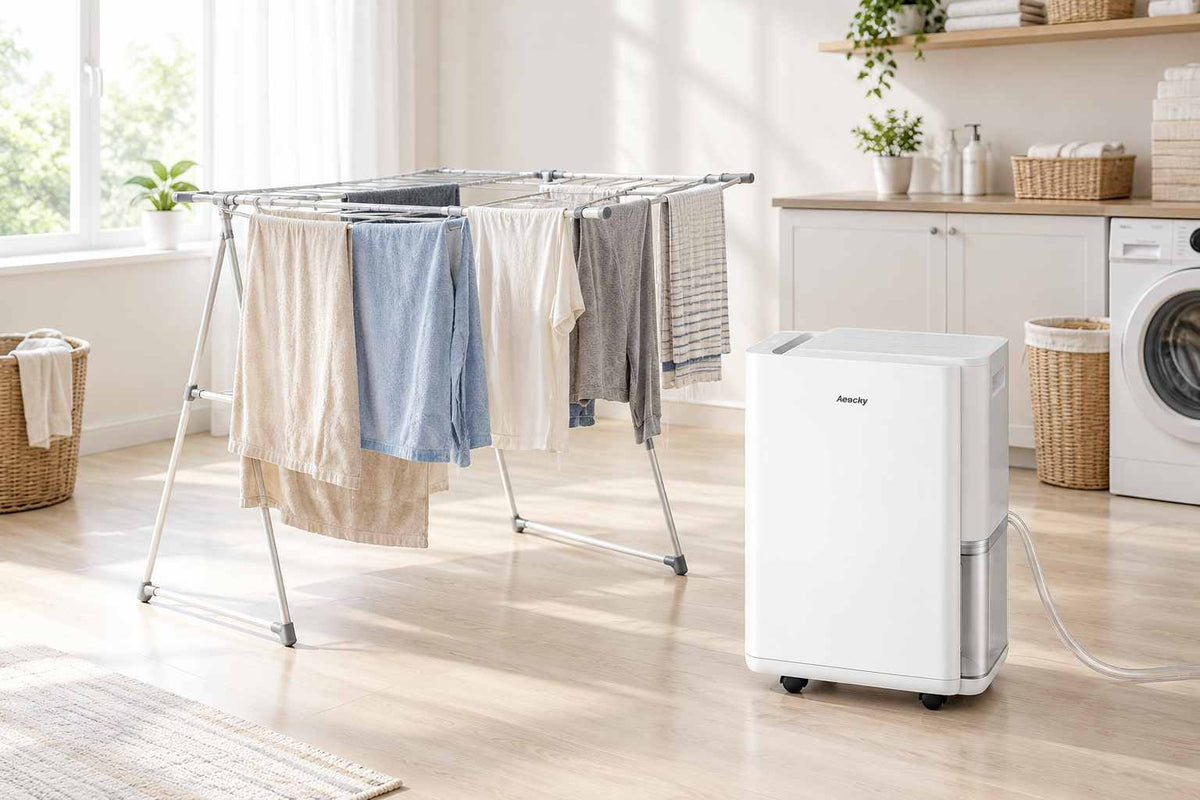
If you want to know how to dry clothes indoors faster with a dehumidifier, combine moisture control with good airflow. The setup matters as much as the appliance.
  1. Remove as Much Water as Possible First

Use an appropriate spin cycle for the fabric before hanging clothes. Avoid overloading the washing machine, since crowded laundry may not spin as effectively. Check care labels for delicate items that need a gentler cycle.
  1. Space Clothes Out on the Rack

Leave gaps between garments so air can move around both sides of the fabric. Avoid hanging shirts directly against one another or folding thick items over several bars. Turn heavier pieces occasionally if one side remains damp.
  1. Position the Dehumidifier Nearby

Place the unit in the same room as the drying rack, following the manufacturer’s clearance instructions. Keep its air intake and outlet unobstructed. Do not place it where dripping clothes could wet the appliance, and never cover it with laundry.
For a small laundry corner or compact room, a portable option such as the Aeocky Arion small portable dehumidifier may be worth comparing with other models. Choose based on the room’s size, humidity, and the manufacturer’s stated capacity rather than assuming a compact unit will suit every laundry load.
  1. Keep Air Moving

A fan can help move air between garments, while the dehumidifier removes moisture from the room. Aim for gentle circulation rather than directing a strong stream at just one item. Make sure neither the fan nor the dehumidifier creates a trip hazard around the rack.
  1. Set a Sensible Humidity Target

Use the dehumidifier’s humidistat if it has one, and follow the instructions for your model. A relative humidity level around 40–50% is a practical general target for many homes, although the ideal setting can vary with comfort, climate, and the conditions in the room. Lower is not always better: avoid running equipment unnecessarily once the room reaches the chosen setting.
For larger laundry areas or spaces connected to a damp basement, the Aeocky Rhea Series whole-house dehumidifier may be relevant to compare if broader moisture control is needed. Check its specifications and installation requirements to determine whether it suits your space.

How to Use a Dehumidifier to Dry Clothes Indoors Safely

Choose a stable, level location and keep the appliance away from dripping water, sinks, and wet floors. Follow the manual’s clearance and electrical safety instructions, and plug it in as directed by the manufacturer. Do not use extension leads unless the manual specifically permits them.
Keep doors and windows closed when practical so the unit can control the humidity in the drying area, but do not ignore a source of moisture that needs ventilation or repair. If the room has a gas appliance or other special ventilation requirements, follow the relevant safety guidance rather than sealing the room.
Check the water tank during use. If it fills and the unit shuts off, moisture removal stops until the tank is emptied. Continuous drainage can be convenient for longer sessions, provided the hose is installed correctly and drains safely. Clean the filter as recommended, since restricted airflow can reduce performance.

What Affects Indoor Laundry Drying Time?

Several factors influence how quickly clothes dry:
  • Fabric thickness: Towels, jeans, and heavy cotton hold more water than thin synthetic fabrics.
  • Spin-cycle performance: Less water left in the clothes means less moisture must evaporate.
  • Room temperature: Cool conditions can slow evaporation, especially for some compressor dehumidifiers.
  • Air circulation: Clothes dry more evenly when air can move around them.
  • Room humidity and unit capacity: A small unit may struggle in a large or very damp space.
  • Rack spacing: Overcrowding traps humid air between garments and slows drying.
If clothes remain damp for an unusually long time, check that the dehumidifier is running, the filter is clean, airflow is clear, and the room is not receiving constant moisture from another source.

Is a Dehumidifier Better Than a Fan for Drying Clothes?

A fan and a dehumidifier do different jobs. A fan moves air across the fabric, helping moisture evaporate from its surface. A dehumidifier removes water vapor from the room air, helping prevent humidity from building up. In a humid room, using both can be more effective than relying on either alone.
In a dry room with good airflow, a fan may be enough. In a closed room where laundry raises humidity, a dehumidifier may provide more benefit. Neither appliance is a direct replacement for a clothes dryer when fast drying is essential.

Frequently Asked Questions

Does a Dehumidifier Make Clothes Dry Faster in Winter?

It can, especially when outdoor drying is impractical and indoor humidity rises. However, cold room temperatures can slow evaporation, and some dehumidifiers work less effectively in low temperatures. Check the unit’s operating temperature range.

How Long Does It Take to Dry Clothes With a Dehumidifier?

There is no single reliable time. Fabric, spin speed, room temperature, humidity, airflow, and dehumidifier capacity all matter. Check thick seams, waistbands, pockets, and towel edges before putting clothes away.

Should I Close the Door When Drying Clothes Indoors?

If it is safe and practical, closing the door can help the dehumidifier control humidity in a defined space. Keep the appliance’s air paths clear and follow any ventilation requirements that apply to the room.

Final Thoughts

A dehumidifier can help clothes dry faster indoors by removing the moisture that wet laundry releases into the air. It works best when paired with a strong spin cycle, a well-spaced drying rack, and steady air circulation. Place the unit safely nearby, keep its intake and outlet clear, and choose a model suited to the room rather than relying on size alone. Drying time will still vary by fabric and conditions, so check thicker areas before storing clothes. If indoor laundry regularly leaves the room damp or musty, controlling humidity can make drying easier while helping reduce excess moisture buildup.
 

Reading next

Dehumidifier Capacity Loss Over Time: What Affects Long-Term Performance?
How to Protect Cardboard Boxes and Stored Belongings from Humidity

Leave a comment

This site is protected by hCaptcha and the hCaptcha Privacy Policy and Terms of Service apply.

Can a Dehumidifier Help Clothes Dry Faster Indoors?

Yes. A dehumidifier can help clothes dry faster indoors by removing water vapor from the air around wet laundry. As clothes dry, moisture evaporates from the fabric and raises the room’s humidity. When the air becomes damp, evaporation slows. A dehumidifier lowers that moisture level, helping the air take up more water from the clothes. It does not work like a tumble dryer and does not directly heat the fabric, so results depend on room temperature, airflow, the amount of water left in the laundry, and the unit’s capacity. Used with a well-spaced drying rack, it can make indoor laundry more manageable—especially during wet or cold weather.

Does a Dehumidifier Help Clothes Dry Faster?

In many homes, yes. The answer to “does a dehumidifier make clothes dry faster?” depends on the conditions. It is most useful when indoor air is humid or when several loads of laundry are drying in a small room with limited ventilation.

How Lower Humidity Helps Laundry Dry

Water leaves wet fabric through evaporation. Drying becomes slower as the surrounding air accumulates water vapor. A dehumidifier draws in room air, removes some of its moisture, and returns drier air to the space. This helps maintain conditions that support evaporation.
A dehumidifier does not pull water directly out of a shirt or towel, and it cannot guarantee a particular drying time. Thick cotton, towels, denim, and tightly folded items generally take longer than lightweight fabrics. A strong washing-machine spin cycle can also make a noticeable difference because it removes water before clothes reach the rack.

When the Difference Is Most Noticeable

A dehumidifier is particularly useful when outdoor drying is not practical, windows stay closed, or indoor laundry causes condensation and musty odors. It may make less difference in a dry, well-ventilated room where clothes already dry quickly.

How to Dry Clothes Indoors Faster With a Dehumidifier

If you want to know how to dry clothes indoors faster with a dehumidifier, combine moisture control with good airflow. The setup matters as much as the appliance.
  1. Remove as Much Water as Possible First

Use an appropriate spin cycle for the fabric before hanging clothes. Avoid overloading the washing machine, since crowded laundry may not spin as effectively. Check care labels for delicate items that need a gentler cycle.
  1. Space Clothes Out on the Rack

Leave gaps between garments so air can move around both sides of the fabric. Avoid hanging shirts directly against one another or folding thick items over several bars. Turn heavier pieces occasionally if one side remains damp.
  1. Position the Dehumidifier Nearby

Place the unit in the same room as the drying rack, following the manufacturer’s clearance instructions. Keep its air intake and outlet unobstructed. Do not place it where dripping clothes could wet the appliance, and never cover it with laundry.
For a small laundry corner or compact room, a portable option such as the Aeocky Arion small portable dehumidifier may be worth comparing with other models. Choose based on the room’s size, humidity, and the manufacturer’s stated capacity rather than assuming a compact unit will suit every laundry load.
  1. Keep Air Moving

A fan can help move air between garments, while the dehumidifier removes moisture from the room. Aim for gentle circulation rather than directing a strong stream at just one item. Make sure neither the fan nor the dehumidifier creates a trip hazard around the rack.
  1. Set a Sensible Humidity Target

Use the dehumidifier’s humidistat if it has one, and follow the instructions for your model. A relative humidity level around 40–50% is a practical general target for many homes, although the ideal setting can vary with comfort, climate, and the conditions in the room. Lower is not always better: avoid running equipment unnecessarily once the room reaches the chosen setting.
For larger laundry areas or spaces connected to a damp basement, the Aeocky Rhea Series whole-house dehumidifier may be relevant to compare if broader moisture control is needed. Check its specifications and installation requirements to determine whether it suits your space.

How to Use a Dehumidifier to Dry Clothes Indoors Safely

Choose a stable, level location and keep the appliance away from dripping water, sinks, and wet floors. Follow the manual’s clearance and electrical safety instructions, and plug it in as directed by the manufacturer. Do not use extension leads unless the manual specifically permits them.
Keep doors and windows closed when practical so the unit can control the humidity in the drying area, but do not ignore a source of moisture that needs ventilation or repair. If the room has a gas appliance or other special ventilation requirements, follow the relevant safety guidance rather than sealing the room.
Check the water tank during use. If it fills and the unit shuts off, moisture removal stops until the tank is emptied. Continuous drainage can be convenient for longer sessions, provided the hose is installed correctly and drains safely. Clean the filter as recommended, since restricted airflow can reduce performance.

What Affects Indoor Laundry Drying Time?

Several factors influence how quickly clothes dry:
  • Fabric thickness: Towels, jeans, and heavy cotton hold more water than thin synthetic fabrics.
  • Spin-cycle performance: Less water left in the clothes means less moisture must evaporate.
  • Room temperature: Cool conditions can slow evaporation, especially for some compressor dehumidifiers.
  • Air circulation: Clothes dry more evenly when air can move around them.
  • Room humidity and unit capacity: A small unit may struggle in a large or very damp space.
  • Rack spacing: Overcrowding traps humid air between garments and slows drying.
If clothes remain damp for an unusually long time, check that the dehumidifier is running, the filter is clean, airflow is clear, and the room is not receiving constant moisture from another source.

Is a Dehumidifier Better Than a Fan for Drying Clothes?

A fan and a dehumidifier do different jobs. A fan moves air across the fabric, helping moisture evaporate from its surface. A dehumidifier removes water vapor from the room air, helping prevent humidity from building up. In a humid room, using both can be more effective than relying on either alone.
In a dry room with good airflow, a fan may be enough. In a closed room where laundry raises humidity, a dehumidifier may provide more benefit. Neither appliance is a direct replacement for a clothes dryer when fast drying is essential.

Frequently Asked Questions

Does a Dehumidifier Make Clothes Dry Faster in Winter?

It can, especially when outdoor drying is impractical and indoor humidity rises. However, cold room temperatures can slow evaporation, and some dehumidifiers work less effectively in low temperatures. Check the unit’s operating temperature range.

How Long Does It Take to Dry Clothes With a Dehumidifier?

There is no single reliable time. Fabric, spin speed, room temperature, humidity, airflow, and dehumidifier capacity all matter. Check thick seams, waistbands, pockets, and towel edges before putting clothes away.

Should I Close the Door When Drying Clothes Indoors?

If it is safe and practical, closing the door can help the dehumidifier control humidity in a defined space. Keep the appliance’s air paths clear and follow any ventilation requirements that apply to the room.

Final Thoughts

A dehumidifier can help clothes dry faster indoors by removing the moisture that wet laundry releases into the air. It works best when paired with a strong spin cycle, a well-spaced drying rack, and steady air circulation. Place the unit safely nearby, keep its intake and outlet clear, and choose a model suited to the room rather than relying on size alone. Drying time will still vary by fabric and conditions, so check thicker areas before storing clothes. If indoor laundry regularly leaves the room damp or musty, controlling humidity can make drying easier while helping reduce excess moisture buildup.


Popular Posts
Dehumidifier Water Tank Capacity: How Often Will You Need to Empty It?
How to Protect Cardboard Boxes and Stored Belongings from Humidity
Can a Dehumidifier Help Clothes Dry Faster Indoors?
Dehumidifier Capacity Loss Over Time: What Affects Long-Term Performance?
AC Dry Mode vs. Dehumidifier: Which Is Better for Humidity Control?
Dehumidifier Pints per Day Explained: What Does the Rating Really Mean?
Dehumidifier vs. Air Purifier: Which One Does Your Home Need?
Dehumidifier vs. Moisture Absorber: Which Is Better for Your Home?
Dehumidifier with a Humidistat: Is It Worth
Can You Use a Dehumidifier in an Unheated Room? Temperature Limits Explained
Aeocky Dehumidifier Warranty, Returns & Replacement: What Buyers Should Know
Best Dehumidifier for a Home Office: Quiet, Compact & Efficient Options
Best Dehumidifier for Crawl Spaces: Size, Drainage & Humidity Control
Best Dehumidifier for RV Storage: How to Protect Your RV When It's Not in Use
Best Dehumidifier for Cars: How to Prevent Moisture, Foggy Windows & Musty Odors
Is It Okay to Sleep With a Dehumidifier On? Bedroom Safety Tips
Should I run my dehumidifier during the day or at night
How to Tell If Your House Needs a Dehumidifier: Signs of High Humidity
Should I Use a Dehumidifier in the Summer?
Dehumidifiers for Pet Owners: Reducing Odors, Dampness & Pet Dander
Subscribe Us
Subscribe to our newsletter and receive a selection of cool articles every weeks