

Air purifier

Dehumidifier vs. Air Purifier: Which One Does Your Home Need?

Dehumidifier vs. Air Purifier: Which One Does Your Home Need?
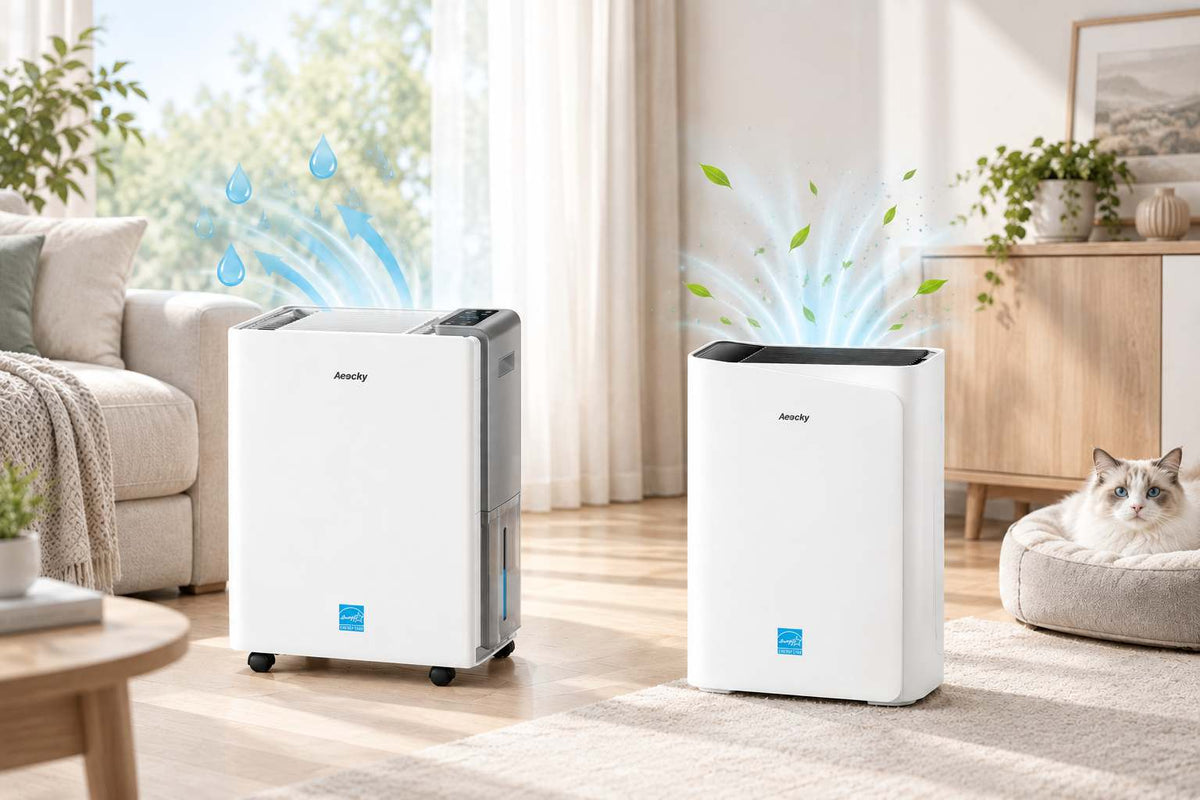
Choosing between a dehumidifier and an air purifier depends on the problem you want to solve. A dehumidifier removes excess moisture from indoor air, helping control dampness, condensation, and conditions that encourage mold growth. An air purifier filters airborne particles, such as dust, pollen, pet dander, and some smoke particles. These appliances serve different purposes, so neither is a complete substitute for the other. If your home feels damp or smells musty, start by checking humidity. If airborne allergens or pet-related particles are your main concern, an air purifier may be the better choice. Some homes benefit from using both.

What Is the Difference Between a Dehumidifier and an Air Purifier?

The main difference in the dehumidifier vs air purifier comparison is what each device removes from the air: moisture or airborne contaminants.

What a Dehumidifier Does

A dehumidifier draws in humid air, removes some of its water vapor, and returns drier air to the room. It is useful in damp basements, bathrooms, laundry rooms, and bedrooms where humidity stays high.
Common signs that you may need one include condensation on windows, a persistent musty smell, damp-feeling rooms, and indoor humidity that regularly exceeds 60%. For many homes, a relative humidity level around 30%–50% is a reasonable target, depending on the season and comfort needs.
For a single room or smaller space, a portable AEOCKY dehumidifier may suit localized moisture problems. For broader humidity control, consider a whole-home dehumidifier option, checking its capacity and intended coverage against your actual space.
A dehumidifier does not fix plumbing leaks, repair water damage, or remove existing mold. Those problems need to be addressed at the source.

What an Air Purifier Does

An air purifier pulls room air through filters designed to capture particular airborne pollutants. Depending on the filter system, it may help reduce dust, pollen, pet dander, smoke particles, and some odor-causing compounds.
It can be useful for households with pets, seasonal allergies, or concerns about airborne particles. For example, the AEOCKY Cybertron pet air purifier is designed around pet-related air concerns, including animal hair and odors. Check the product specifications, room coverage, and filter requirements before choosing a model.
An air purifier does not meaningfully reduce indoor humidity. It also cannot remove every pollutant, and its effectiveness depends on the filter type, airflow, room size, and how consistently it runs.

Dehumidifier vs. Air Purifier: Key Differences

Feature Dehumidifier Air Purifier
Main purpose Reduces excess moisture Filters airborne pollutants
Best suited to Damp rooms and high humidity Dust, pollen, pet dander, and some smoke particles
Helps control Condensation and moisture conditions that support mold growth Certain airborne particles and, with suitable filters, some odors
Changes humidity Yes No, not under normal operation
Removes airborne particles Usually only limited particles caught by its basic filter Yes, depending on its filtration system
Key buying factor Moisture-removal capacity and room conditions Clean air delivery rate (CADR), room size, and filter type
Neither device solves every indoor air problem. An air purifier can capture some airborne mold spores, but it does not fix the damp conditions that allow mold to grow. A dehumidifier can make a room less favorable to mold growth, but it does not replace proper mold cleanup.

Which Device Should You Choose for Your Home?

Choose a Dehumidifier for Moisture Problems

If you are asking, “do I need a dehumidifier or air purifier?” begin with a humidity check. A basic hygrometer can show whether your indoor relative humidity stays high.
A dehumidifier is generally the more relevant choice if you notice:
  • Frequent window condensation or damp surfaces.
  • A musty smell in a basement, bathroom, or laundry room.
  • Laundry that takes a long time to dry indoors.
  • Humidity readings that repeatedly rise above 60%.
Look for a model with suitable moisture-removal capacity, a humidity control setting, and a drainage arrangement that fits your space. If you are comparing the dehumidifier vs air purifier for home use, remember that reducing moisture addresses a different issue from filtering dust or allergens.

Choose an Air Purifier for Dust, Allergens, and Pet Dander

An air purifier is usually the better starting point when humidity is already at a comfortable level but you want to reduce airborne particles.
Consider one if your main concerns include:
  • Pet dander and airborne particles from pets.
  • Pollen and other seasonal allergens.
  • Dust or smoke particles.
  • Some lingering odors, provided the unit has suitable odor-control media.
Check the clean air delivery rate (CADR) and the recommended room size. A purifier that is too small for the space may not clean the air quickly enough. Filter maintenance matters, too: a clogged or overdue filter can reduce performance.

Consider Both for Different Indoor Air Problems

Which is better for your home, a dehumidifier or air purifier? If the main issue is excess moisture, choose a dehumidifier. If it is airborne particles, choose an air purifier. If your home has both high humidity and persistent airborne allergens, using both may make sense.
For example, a damp basement with a musty smell may need moisture control first, while a living room with pets may benefit from particle filtration. If you have visible mold, fix the moisture source and clean up the affected area appropriately. Neither appliance alone resolves an established mold problem.

Can You Use a Dehumidifier and an Air Purifier Together?

Yes. The devices perform different jobs and can complement one another. A dehumidifier manages moisture, while an air purifier filters particles from the air that passes through it.
Place each unit where it can draw and circulate room air freely. Avoid blocking air inlets or outlets, follow each manufacturer's spacing guidance, and maintain filters and drainage systems as recommended. You can run both when conditions call for them, but monitor humidity rather than assuming that more operation is always better.

How to Decide Which Device to Buy

Before deciding, identify the main issue instead of choosing based on a general desire for “cleaner air.”
  1. Measure humidity. Use a hygrometer to check whether the room is consistently too damp.
  2. Identify the likely pollutant. Dust, pollen, pet dander, and smoke particles call for filtration suited to those contaminants.
  3. Match the device to the room. Check the dehumidifier's moisture-removal capacity or the air purifier's CADR and recommended coverage.
  4. Review maintenance and running costs. Consider electricity use, filter replacements, water drainage, and noise.
  5. Address the source. Repair leaks, improve ventilation where appropriate, reduce pollutant sources, and clean affected surfaces. Appliances work best as part of a broader indoor air plan.
If you are still wondering, “should I buy a dehumidifier or an air purifier?” choose the one that directly addresses your most pressing problem. Add the other only if you have a separate need for it.

Frequently Asked Questions

Does a dehumidifier clean the air?

Not in the same way as a dedicated air purifier. A dehumidifier removes moisture and may catch some larger particles in its intake filter, but that filter is not a substitute for a purpose-built air filtration system.

Does an air purifier remove humidity?

No. A standard air purifier filters airborne pollutants but does not meaningfully lower relative humidity. Use a dehumidifier if excess moisture is the issue.

Which is better for allergies?

An air purifier with appropriate filtration may help reduce airborne allergens such as pollen and pet dander. If excess humidity is contributing to a moisture or mold problem, humidity control is also important. Persistent allergy symptoms may have causes that neither device can resolve on its own.

Final Thoughts

The choice between a dehumidifier and an air purifier comes down to moisture versus airborne particles. Choose a dehumidifier when humidity, condensation, or dampness is the main concern. Choose an air purifier when dust, pollen, pet dander, or other airborne pollutants are the priority. If both problems exist, the devices can work together, but neither replaces source control, proper cleaning, or repairs. Start by checking your home's humidity and identifying the specific air-quality issue. That simple step will help you spend money on the appliance that fits your needs.
 

Reading next

Dehumidifier vs. Moisture Absorber: Which Is Better for Your Home?
Dehumidifier Pints per Day Explained: What Does the Rating Really Mean?

Leave a comment

This site is protected by hCaptcha and the hCaptcha Privacy Policy and Terms of Service apply.

Dehumidifier vs. Air Purifier: Which One Does Your Home Need?

Choosing between a dehumidifier and an air purifier depends on the problem you want to solve. A dehumidifier removes excess moisture from indoor air, helping control dampness, condensation, and conditions that encourage mold growth. An air purifier filters airborne particles, such as dust, pollen, pet dander, and some smoke particles. These appliances serve different purposes, so neither is a complete substitute for the other. If your home feels damp or smells musty, start by checking humidity. If airborne allergens or pet-related particles are your main concern, an air purifier may be the better choice. Some homes benefit from using both.

What Is the Difference Between a Dehumidifier and an Air Purifier?

The main difference in the dehumidifier vs air purifier comparison is what each device removes from the air: moisture or airborne contaminants.

What a Dehumidifier Does

A dehumidifier draws in humid air, removes some of its water vapor, and returns drier air to the room. It is useful in damp basements, bathrooms, laundry rooms, and bedrooms where humidity stays high.
Common signs that you may need one include condensation on windows, a persistent musty smell, damp-feeling rooms, and indoor humidity that regularly exceeds 60%. For many homes, a relative humidity level around 30%–50% is a reasonable target, depending on the season and comfort needs.
For a single room or smaller space, a portable AEOCKY dehumidifier may suit localized moisture problems. For broader humidity control, consider a whole-home dehumidifier option, checking its capacity and intended coverage against your actual space.
A dehumidifier does not fix plumbing leaks, repair water damage, or remove existing mold. Those problems need to be addressed at the source.

What an Air Purifier Does

An air purifier pulls room air through filters designed to capture particular airborne pollutants. Depending on the filter system, it may help reduce dust, pollen, pet dander, smoke particles, and some odor-causing compounds.
It can be useful for households with pets, seasonal allergies, or concerns about airborne particles. For example, the AEOCKY Cybertron pet air purifier is designed around pet-related air concerns, including animal hair and odors. Check the product specifications, room coverage, and filter requirements before choosing a model.
An air purifier does not meaningfully reduce indoor humidity. It also cannot remove every pollutant, and its effectiveness depends on the filter type, airflow, room size, and how consistently it runs.

Dehumidifier vs. Air Purifier: Key Differences

Feature Dehumidifier Air Purifier
Main purpose Reduces excess moisture Filters airborne pollutants
Best suited to Damp rooms and high humidity Dust, pollen, pet dander, and some smoke particles
Helps control Condensation and moisture conditions that support mold growth Certain airborne particles and, with suitable filters, some odors
Changes humidity Yes No, not under normal operation
Removes airborne particles Usually only limited particles caught by its basic filter Yes, depending on its filtration system
Key buying factor Moisture-removal capacity and room conditions Clean air delivery rate (CADR), room size, and filter type
Neither device solves every indoor air problem. An air purifier can capture some airborne mold spores, but it does not fix the damp conditions that allow mold to grow. A dehumidifier can make a room less favorable to mold growth, but it does not replace proper mold cleanup.

Which Device Should You Choose for Your Home?

Choose a Dehumidifier for Moisture Problems

If you are asking, “do I need a dehumidifier or air purifier?” begin with a humidity check. A basic hygrometer can show whether your indoor relative humidity stays high.
A dehumidifier is generally the more relevant choice if you notice:
  • Frequent window condensation or damp surfaces.
  • A musty smell in a basement, bathroom, or laundry room.
  • Laundry that takes a long time to dry indoors.
  • Humidity readings that repeatedly rise above 60%.
Look for a model with suitable moisture-removal capacity, a humidity control setting, and a drainage arrangement that fits your space. If you are comparing the dehumidifier vs air purifier for home use, remember that reducing moisture addresses a different issue from filtering dust or allergens.

Choose an Air Purifier for Dust, Allergens, and Pet Dander

An air purifier is usually the better starting point when humidity is already at a comfortable level but you want to reduce airborne particles.
Consider one if your main concerns include:
  • Pet dander and airborne particles from pets.
  • Pollen and other seasonal allergens.
  • Dust or smoke particles.
  • Some lingering odors, provided the unit has suitable odor-control media.
Check the clean air delivery rate (CADR) and the recommended room size. A purifier that is too small for the space may not clean the air quickly enough. Filter maintenance matters, too: a clogged or overdue filter can reduce performance.

Consider Both for Different Indoor Air Problems

Which is better for your home, a dehumidifier or air purifier? If the main issue is excess moisture, choose a dehumidifier. If it is airborne particles, choose an air purifier. If your home has both high humidity and persistent airborne allergens, using both may make sense.
For example, a damp basement with a musty smell may need moisture control first, while a living room with pets may benefit from particle filtration. If you have visible mold, fix the moisture source and clean up the affected area appropriately. Neither appliance alone resolves an established mold problem.

Can You Use a Dehumidifier and an Air Purifier Together?

Yes. The devices perform different jobs and can complement one another. A dehumidifier manages moisture, while an air purifier filters particles from the air that passes through it.
Place each unit where it can draw and circulate room air freely. Avoid blocking air inlets or outlets, follow each manufacturer's spacing guidance, and maintain filters and drainage systems as recommended. You can run both when conditions call for them, but monitor humidity rather than assuming that more operation is always better.

How to Decide Which Device to Buy

Before deciding, identify the main issue instead of choosing based on a general desire for “cleaner air.”
  1. Measure humidity. Use a hygrometer to check whether the room is consistently too damp.
  2. Identify the likely pollutant. Dust, pollen, pet dander, and smoke particles call for filtration suited to those contaminants.
  3. Match the device to the room. Check the dehumidifier's moisture-removal capacity or the air purifier's CADR and recommended coverage.
  4. Review maintenance and running costs. Consider electricity use, filter replacements, water drainage, and noise.
  5. Address the source. Repair leaks, improve ventilation where appropriate, reduce pollutant sources, and clean affected surfaces. Appliances work best as part of a broader indoor air plan.
If you are still wondering, “should I buy a dehumidifier or an air purifier?” choose the one that directly addresses your most pressing problem. Add the other only if you have a separate need for it.

Frequently Asked Questions

Does a dehumidifier clean the air?

Not in the same way as a dedicated air purifier. A dehumidifier removes moisture and may catch some larger particles in its intake filter, but that filter is not a substitute for a purpose-built air filtration system.

Does an air purifier remove humidity?

No. A standard air purifier filters airborne pollutants but does not meaningfully lower relative humidity. Use a dehumidifier if excess moisture is the issue.

Which is better for allergies?

An air purifier with appropriate filtration may help reduce airborne allergens such as pollen and pet dander. If excess humidity is contributing to a moisture or mold problem, humidity control is also important. Persistent allergy symptoms may have causes that neither device can resolve on its own.

Final Thoughts

The choice between a dehumidifier and an air purifier comes down to moisture versus airborne particles. Choose a dehumidifier when humidity, condensation, or dampness is the main concern. Choose an air purifier when dust, pollen, pet dander, or other airborne pollutants are the priority. If both problems exist, the devices can work together, but neither replaces source control, proper cleaning, or repairs. Start by checking your home's humidity and identifying the specific air-quality issue. That simple step will help you spend money on the appliance that fits your needs.


Popular Posts
Dehumidifier Water Tank Capacity: How Often Will You Need to Empty It?
How to Protect Cardboard Boxes and Stored Belongings from Humidity
Can a Dehumidifier Help Clothes Dry Faster Indoors?
Dehumidifier Capacity Loss Over Time: What Affects Long-Term Performance?
AC Dry Mode vs. Dehumidifier: Which Is Better for Humidity Control?
Dehumidifier Pints per Day Explained: What Does the Rating Really Mean?
Dehumidifier vs. Air Purifier: Which One Does Your Home Need?
Dehumidifier vs. Moisture Absorber: Which Is Better for Your Home?
Dehumidifier with a Humidistat: Is It Worth
Can You Use a Dehumidifier in an Unheated Room? Temperature Limits Explained
Aeocky Dehumidifier Warranty, Returns & Replacement: What Buyers Should Know
Best Dehumidifier for a Home Office: Quiet, Compact & Efficient Options
Best Dehumidifier for Crawl Spaces: Size, Drainage & Humidity Control
Best Dehumidifier for RV Storage: How to Protect Your RV When It's Not in Use
Best Dehumidifier for Cars: How to Prevent Moisture, Foggy Windows & Musty Odors
Is It Okay to Sleep With a Dehumidifier On? Bedroom Safety Tips
Should I run my dehumidifier during the day or at night
How to Tell If Your House Needs a Dehumidifier: Signs of High Humidity
Should I Use a Dehumidifier in the Summer?
Dehumidifiers for Pet Owners: Reducing Odors, Dampness & Pet Dander
Subscribe Us
Subscribe to our newsletter and receive a selection of cool articles every weeks