

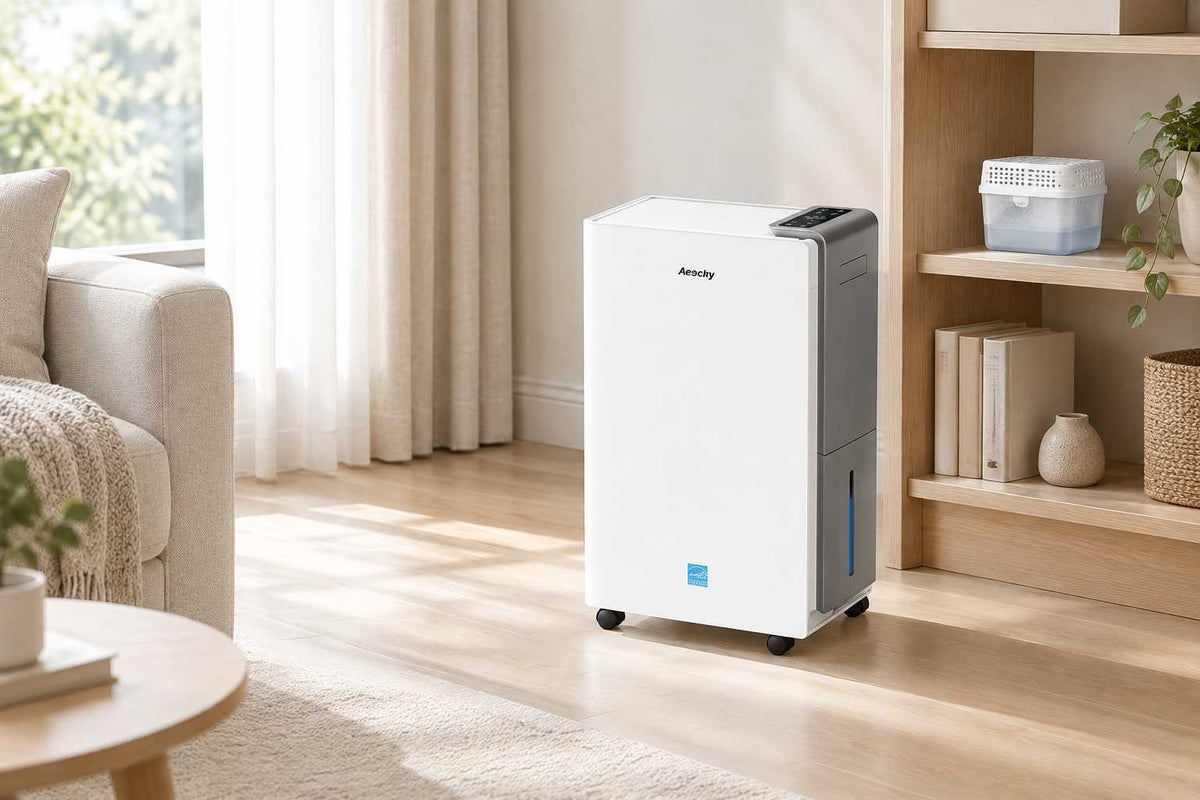
A dehumidifier and a moisture absorber both help manage excess moisture, but they work at different scales. An electric dehumidifier circulates air and collects water, making it suitable for controlling humidity across a room or larger area. A passive moisture absorber uses materials such as calcium chloride or silica gel to capture moisture in a smaller, enclosed space. When comparing a dehumidifier vs. moisture absorber, the right choice depends on how damp the area is, how much moisture needs to be removed, and whether you need ongoing humidity control. For a persistently humid room, an electric unit is usually the more practical option. For a wardrobe or storage cabinet, a moisture absorber may be enough.
What Is the Difference Between a Dehumidifier and a Moisture Absorber?
The main difference is how each product collects water from the air. One uses an electric system to process room air; the other relies on a moisture-attracting material.
How Electric Dehumidifiers Work
Most household electric dehumidifiers draw humid air through the appliance with a fan. In compressor models, the air passes over a cold coil, causing water vapor to condense into liquid. The collected water goes into a tank or through a compatible drain hose, while drier air returns to the room.
This active process makes an electric unit useful when humidity remains high for extended periods. Models with a humidistat can monitor relative humidity and adjust operation to help maintain a chosen setting.
For example, homeowners comparing options for regular indoor humidity management can review the Aeocky Rhea Series dehumidifier. Check the specifications for the exact model, including its rated extraction capacity, coverage recommendations, and installation requirements, before deciding whether it suits your space.
How Moisture Absorbers Work
A passive moisture absorber contains a material that attracts water vapor. Calcium chloride products absorb moisture and gradually dissolve into a liquid brine that collects in a reservoir. Silica gel works differently: its porous structure captures moisture and, in reusable products, can often be regenerated according to the manufacturer's instructions.
These products do not need continuous electricity, and many are small enough to place inside wardrobes, cupboards, or storage containers. Their main limitation is capacity. They are designed for localized moisture control, not for quickly drying a large, persistently damp room.
Dehumidifier vs. Moisture Absorber: Key Differences
Moisture Removal and Effectiveness
An electric dehumidifier is generally better suited to a room with persistent humidity because it repeatedly processes the surrounding air and collects water. Its actual performance depends on rated capacity, temperature, room conditions, and the amount of moisture entering the space.
A passive absorber works more slowly and treats the air around it. It can help reduce dampness in a closed cabinet or wardrobe, but one small container is unlikely to control humidity throughout a large bedroom or basement.
Upfront Price and Ongoing Costs
Moisture absorbers usually cost less to buy initially. However, disposable products need replacement refills when their material becomes saturated. If several units are needed and replacements are frequent, the ongoing cost can add up.
An electric dehumidifier has a higher purchase price and uses electricity. Depending on its design and operating schedule, it may also need its tank emptied and its filter cleaned. Compare estimated energy use, replacement supplies, and expected running time rather than looking at the initial price alone.
Convenience, Maintenance, and Noise
A passive absorber is quiet, portable, and easy to position in a small space. It does not need an outlet, although its collected liquid must be handled carefully and the unit replaced or recharged as directed.
An electric dehumidifier takes up more space and produces some operating noise. In return, it can process more air, offer adjustable humidity settings, and provide continuous moisture removal when correctly sized and installed.
Do Moisture Absorbers Actually Work?
Yes. Moisture absorbers actually work by attracting and capturing water vapor. Their usefulness depends on the space and the amount of moisture involved.
In a closed wardrobe, a moisture absorber may help protect stored clothing from localized dampness. In a shoe cabinet or storage box, it can be a convenient way to manage moisture in a limited volume of air. Silica gel packets are also useful in suitable enclosed packaging.
But an absorber is not a fix for a leaking pipe, water entering through a wall, or inadequate ventilation. It also cannot be expected to perform like a full-size electric dehumidifier in a damp living room. If the reservoir fills quickly or musty odors keep returning, investigate the underlying moisture source and consider a more capable solution.
When to Use a Moisture Absorber Instead of a Dehumidifier
Choose a passive absorber when the problem is limited to a small, enclosed space and the moisture load is modest. It is often a reasonable choice for wardrobes, cabinets, lockers, luggage, and stored belongings. Look for a product intended for the specific location, and follow its instructions for placement and disposal.
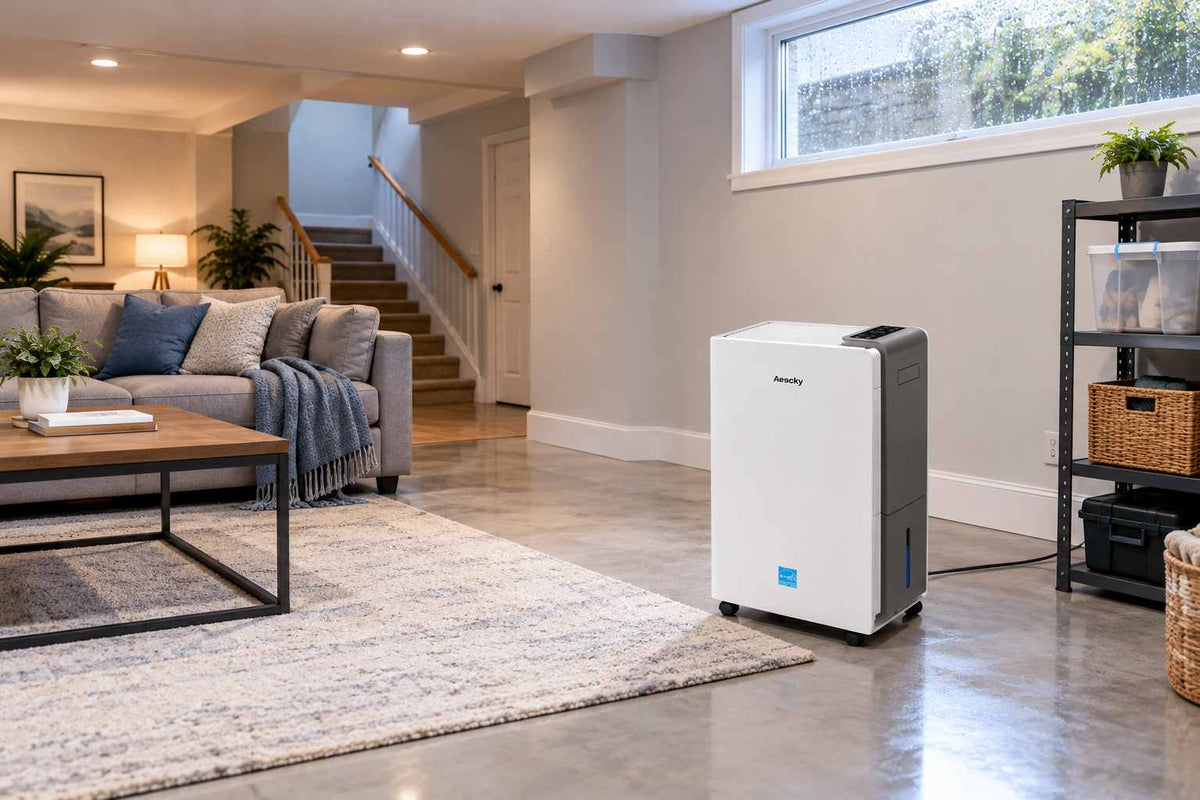
Choose an electric dehumidifier when you need to manage humidity across an occupied room, a larger storage area, or a basement that remains damp. A larger space, recurring condensation, or consistently elevated humidity may call for more active moisture removal.
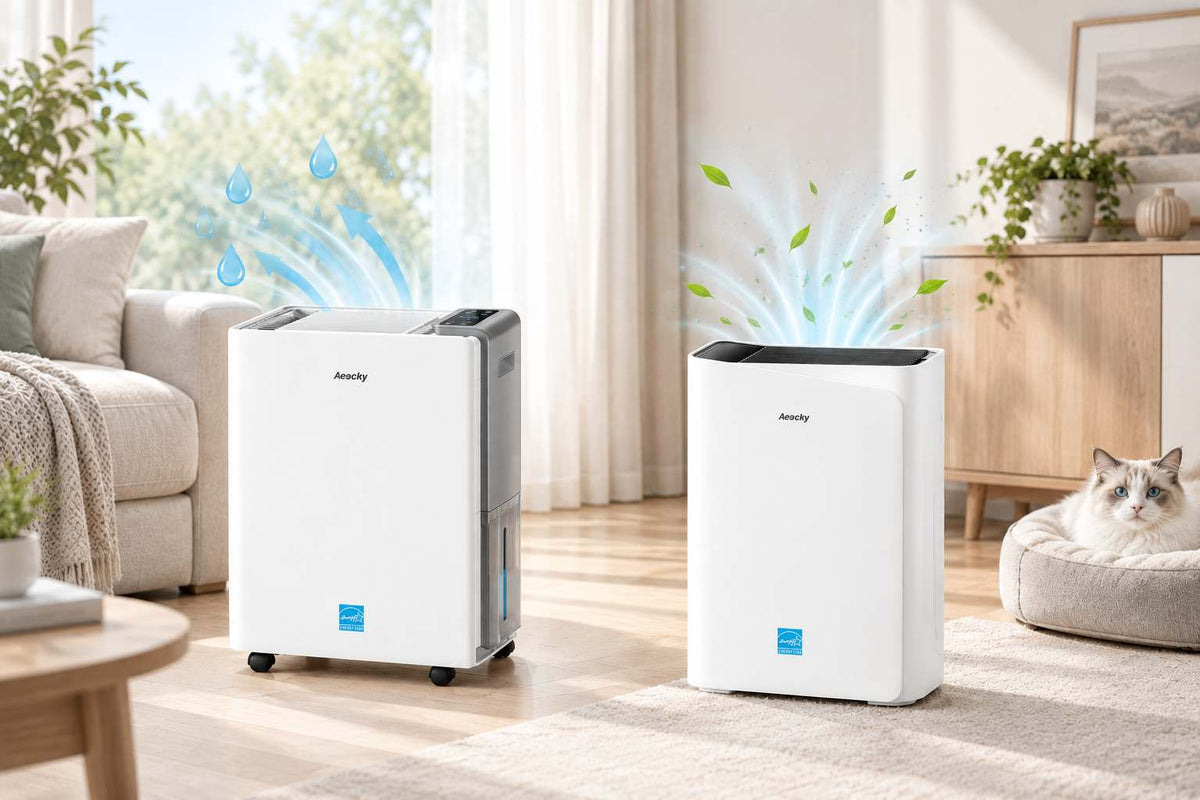
If you are comparing products for a whole room or connected living area, the Aeocky dehumidifier range is a starting point for reviewing available models. Compare each model's specifications and suitability rather than assuming every unit has the same capacity or energy performance.
How to Control Indoor Humidity Effectively
Choosing equipment is only one part of managing indoor moisture. A few practical steps can help you decide whether an absorber is sufficient or a dehumidifier is needed.
Measure Relative Humidity
Use a digital hygrometer to measure indoor relative humidity instead of relying on how the air feels. A range of roughly 30%–50% is a common general target for indoor spaces, although climate and building conditions can affect what is practical. If humidity frequently remains above 60%, investigate the cause and consider more effective moisture control.
Improve Ventilation and Fix Moisture Sources
Use exhaust fans when showering or cooking, ventilate rooms when outdoor conditions are suitable, and dry wet surfaces promptly. Check for plumbing leaks, water intrusion, and condensation on cold surfaces. Neither an absorber nor a dehumidifier can permanently solve a building leak.
Choose the Right Equipment
For a small cupboard, a passive absorber may be enough. For a room with recurring high humidity, compare electric dehumidifiers by extraction capacity, recommended room size, humidity controls, drainage, and energy use. For more background, read this guide to what a dehumidifier does.
Can a Moisture Absorber Replace a Dehumidifier?
Usually not when the goal is to control humidity across an entire room. A moisture absorber can complement a dehumidifier by providing localized protection in a wardrobe or storage container, but the two products are not interchangeable in every situation.
If your main problem is a musty closet, start with better airflow and a suitable absorber. If the whole room feels damp, condensation keeps returning, or humidity readings remain high, assess ventilation and moisture sources before choosing a properly sized electric dehumidifier.
Frequently Asked Questions
Which is better, a dehumidifier or a moisture absorber?
A dehumidifier is generally better for persistent humidity across a room. A moisture absorber is more practical for small, enclosed spaces where convenience and electricity-free operation matter.
Are moisture absorbers worth buying?
Yes, when used for localized moisture control in places such as wardrobes, cabinets, and storage containers. They are less suitable for drying large rooms or dealing with serious damp problems.
Can I use both products together?
Yes. An electric dehumidifier can manage overall room humidity while a passive absorber provides extra protection in an enclosed cabinet or wardrobe.
How can I control indoor humidity effectively?
Monitor relative humidity, use ventilation, repair leaks, reduce avoidable moisture sources, and select equipment appropriate to the size and severity of the problem.
Final Thoughts
The choice between a dehumidifier and a moisture absorber comes down to the scale of the moisture problem. Passive absorbers are compact, quiet, and useful for small enclosed areas. Electric dehumidifiers are better suited to ongoing humidity control in rooms and larger spaces. Neither option can replace repairing leaks or improving inadequate ventilation. Start by measuring humidity and identifying where the moisture comes from, then choose equipment that fits the space. Matching the solution to the problem helps avoid unnecessary purchases and makes it easier to keep your home dry.


Leave a comment
This site is protected by hCaptcha and the hCaptcha Privacy Policy and Terms of Service apply.